


der Leser
reader
A person who reads a text, for example in a book, a newspaper, or on a website.
EXAMPLE
Der Autor erhielt viele positive Rückmeldungen von seinen Lesern.
The author received a lot of positive feedback from his readers.
reader
Loading your saved state.
reader
A person who reads a text, for example in a book, a newspaper, or on a website.
Der Autor erhielt viele positive Rückmeldungen von seinen Lesern.
The author received a lot of positive feedback from his readers.
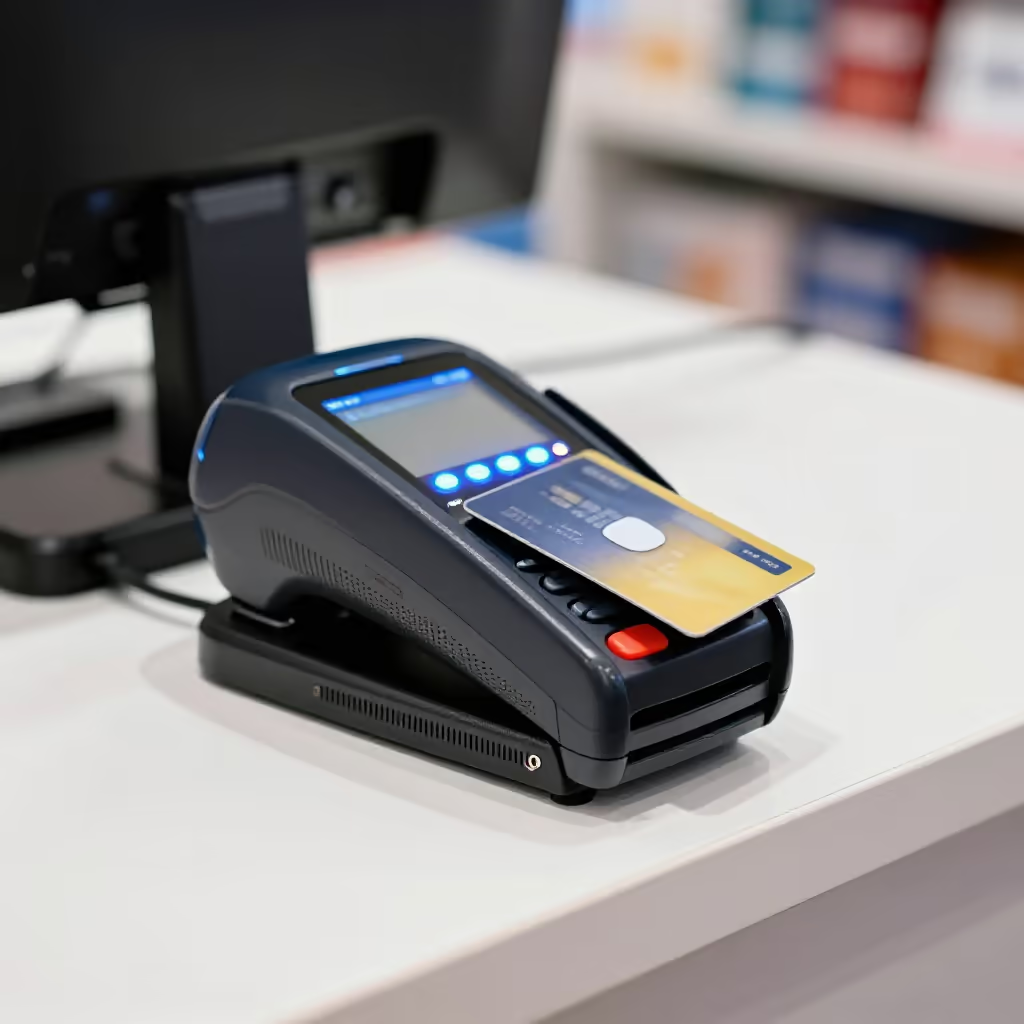
reader
A technical device that reads data from a storage medium.
Mein neuer Laptop hat keinen CD-Leser mehr, deshalb brauche ich ein externes Laufwerk.
My new laptop no longer has a CD reader, so I need an external drive.

reader
A person who professionally reviews and evaluates manuscripts or texts, for example for a publishing house or an agency.
Als Leser bei einem großen Verlag muss man täglich viele neue Manuskripte sichten.
As a reader at a large publishing house, you have to review many new manuscripts every day.
The word 'Leser' (reader) is derived directly from the verb 'lesen' (to read). The ending '-er' refers to a person or device that performs the action of the verb.
Ein guter Autor versteht, was seine Leser erwarten.
A good author understands what their readers expect.
You can tell from context whether a person or a device is meant. Words like 'Buch' (book), 'Zeitung' (newspaper), or 'Autor' (author) point to the person. Technical terms like 'Karte' (card), 'CD' (CD), or 'Daten' (data) point to the device.
Bitte stecken Sie Ihre Bankkarte in den Leser.
Please insert your bank card into the reader.
For the person who reads, there are typical collocations such as 'ein begeisterter Leser' (an enthusiastic reader), 'ein treuer Leser' (a loyal reader), or 'Leser ansprechen' (to appeal to readers). The word 'Leserbrief' (letter to the editor) as a response to an article is also a common combination.
Als begeisterter Leser kauft er jede Woche mehrere Bücher.
As an enthusiastic reader, he buys several books every week.
The meaning as a person who professionally reviews texts for a publishing house is specialized language from the book and media industry. This meaning is rare in everyday language.
Das Manuskript wurde von drei verschiedenen Lesern abgelehnt.
The manuscript was rejected by three different readers.
critic
A Leser (reader) professionally reviews and evaluates a manuscript, for example internally for a publishing house. A Kritiker (critic) evaluates literature or other works of art for an audience, typically in a published review. The key distinction is whether the focus is on editorial evaluation or public criticism.

Der Leser prüft den neuen Roman vor der Entscheidung des Verlags.
The reader reviews the new novel before the publishing house makes its decision.
Der Kritiker beurteilt den neuen Roman nach seiner Veröffentlichung in der Zeitung.
The critic reviews the new novel in the newspaper after its publication.