


letztens
recently
A short time ago; the other day. It refers to an unspecified point in the recent past.
EXAMPLE
Ich habe ihn letztens zufällig in der Stadt getroffen.
I ran into him by chance in town recently.
recently
Loading your saved state.
recently
A short time ago; the other day. It refers to an unspecified point in the recent past.
Ich habe ihn letztens zufällig in der Stadt getroffen.
I ran into him by chance in town recently.
'Letztens' is an adverb of time and often appears at the beginning of the sentence (position 1). In this case, the verb follows directly after it, before the subject (inversion).
Letztens habe ich einen sehr interessanten Dokumentarfilm gesehen.
Recently, I watched a very interesting documentary.
The word is derived from the adjective 'letzt' (last) and ends in '-ens', similar to other adverbs (e.g. 'bestens' (very well), 'spätestens' (at the latest)). It describes an unspecified point in the recent past.
Ich habe das Buch gelesen, das du mir letztens empfohlen hast.
I read the book that you recommended to me recently.
'Letztens' is very commonly used in spoken language and informal texts to talk about an event in the recent past.
Weißt du noch, was wir letztens besprochen haben?
Do you remember what we discussed the other day?
last / recently
Zuletzt refers to the most recent of several occasions. Letztens generally refers to an unspecified point in the recent past. When it matters when something happened most recently, zuletzt is appropriate; for an approximate reference to time, letztens works well.
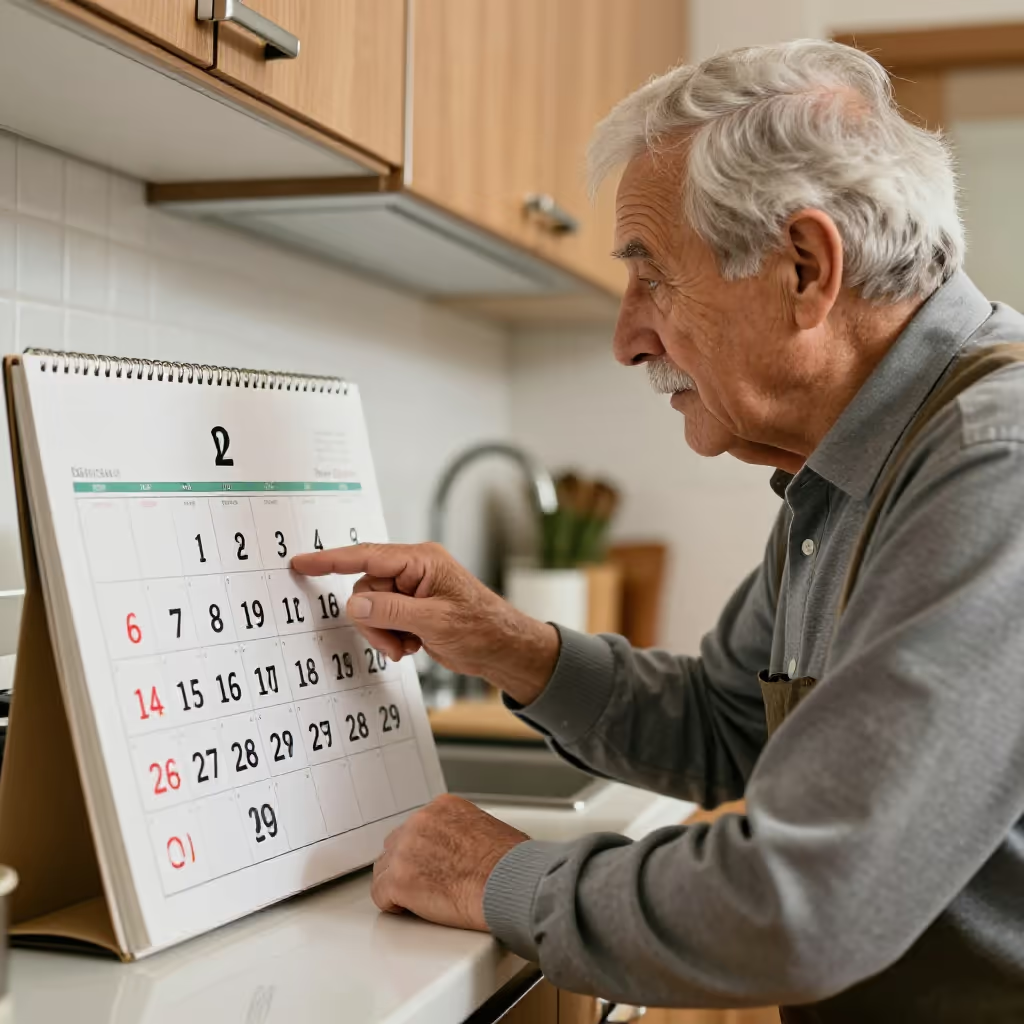
Ich habe Lara letztens im Bus gesehen.
I saw Lara on the bus recently.
Ich habe Lara zuletzt am Dienstag im Bus gesehen.
The last time I saw Lara was on the bus on Tuesday.