


der Kurs
course
A class or series of lessons on a specific topic.
EXAMPLE
Ich habe mich für einen Italienischkurs angemeldet.
I signed up for an Italian course.
course / rate
Loading your saved state.
course
A class or series of lessons on a specific topic.
Ich habe mich für einen Italienischkurs angemeldet.
I signed up for an Italian course.

rate
The price at which a currency, stock, or other security is traded.
Der Kurs der Aktie ist heute um fünf Prozent gestiegen.
The stock's rate rose by five percent today.

course
The fixed or chosen direction in which a vehicle, especially a ship or aircraft, is moving.
Der Kapitän änderte den Kurs, um dem Eisberg auszuweichen.
The captain changed course to avoid the iceberg.
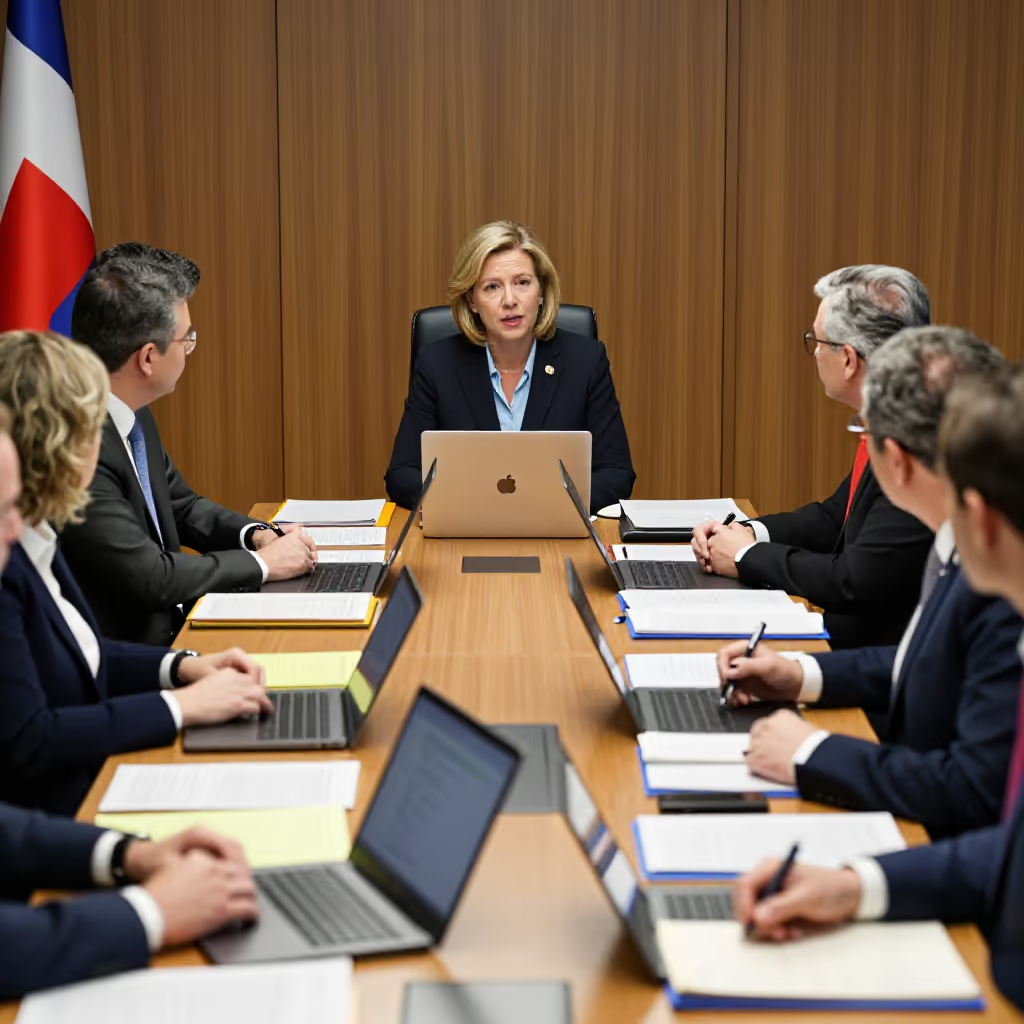
course
The general direction or strategy in politics, business, or personal action.
Die neue Regierung will einen strengeren Kurs in der Finanzpolitik fahren.
The new government wants to pursue a stricter course in financial policy.
The meaning of 'Kurs' depends heavily on context. Pay attention to the verbs and nouns in the sentence: Is it about learning (m01), money (m02), a direction (m03), or politics (m04)?
Ich mache einen Kochkurs.
I'm taking a cooking course.
In an educational context, 'Kurs' is often used with verbs such as 'besuchen' (to attend), 'machen' (to take/do), or 'belegen' (to take/enroll in). You can also 'sich für einen Kurs anmelden' (sign up for a course).
Nächstes Semester möchte ich einen Spanischkurs belegen.
Next semester I want to take a Spanish course.
In a financial context, people talk about the 'Kurs einer Aktie' (the rate/price of a stock) or 'einer Währung' (of a currency). Typical verbs are 'steigen' (to rise), 'fallen' (to fall), 'sinken' (to drop), or 'stabil sein' (to be stable).
Der Kurs der Technologie-Aktien ist heute stark gestiegen.
The rate of technology stocks rose sharply today.
In shipping or aviation, 'Kurs' is used with verbs such as 'halten' (to maintain), 'ändern' (to change), or 'verlassen' (to leave). The phrase 'vom Kurs abkommen' means to leave the planned route.
Der Pilot musste den Kurs ändern, um das Gewitter zu umfliegen.
The pilot had to change course to fly around the thunderstorm.
When it comes to politics or a company strategy, 'Kurs' is used with verbs such as 'fahren' (to pursue), 'verfolgen' (to follow/pursue), or 'beibehalten' (to maintain).
Die Firma verfolgt einen neuen, umweltfreundlichen Kurs.
The company is pursuing a new, environmentally friendly course.
direction
Richtung refers to a general movement or tendency in politics. Kurs places greater emphasis on a consciously chosen and pursued political strategy. Richtung is appropriate for a general classification; Kurs is more appropriate for specific strategic goals and measures.

Die neue Regierung verfolgt bewusst einen strengeren wirtschaftspolitischen Kurs.
The new government is deliberately pursuing a stricter economic policy course.
Die politische Richtung der neuen Regierung ist bereits deutlich erkennbar.
The political direction of the new government is already clearly apparent.