


die Luft
air
The mixture of gases that surrounds the Earth and that living beings need in order to breathe.
EXAMPLE
Lass uns nach draußen gehen, um frische Luft zu schnappen.
Let's go outside to get some fresh air.
air
Loading your saved state.
air
The mixture of gases that surrounds the Earth and that living beings need in order to breathe.
Lass uns nach draußen gehen, um frische Luft zu schnappen.
Let's go outside to get some fresh air.
space
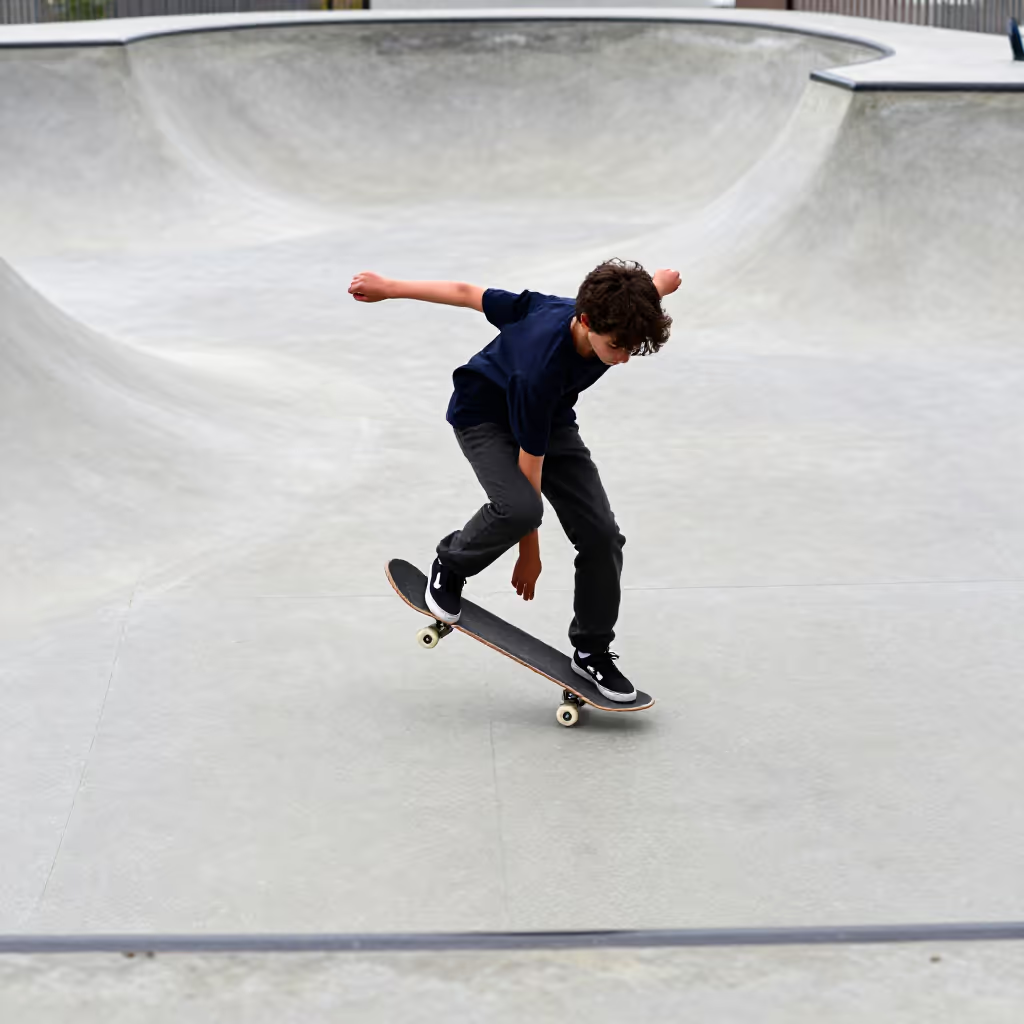
Free space or room available for movement or an activity.
Zwischen den Möbeln war kaum noch Luft zum Durchgehen.
There was hardly any space left between the furniture to walk through.
to be in the air
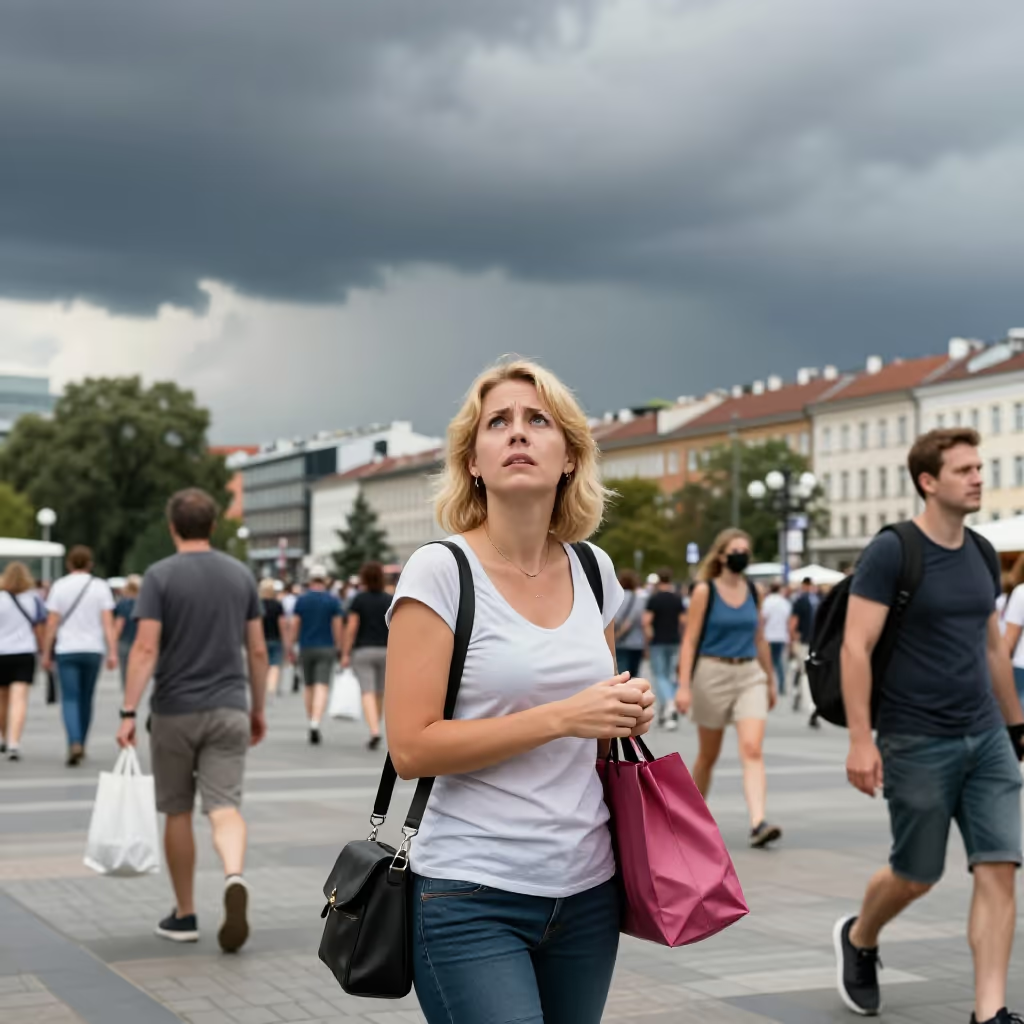
A certain mood or event is noticeable or expected.
Man spürte es genau: Eine große Veränderung lag in der Luft.
You could feel it clearly: a major change was in the air.

to be made up
A claim or accusation that is completely invented and has no basis whatsoever.
Seine Anschuldigungen waren völlig aus der Luft gegriffen.
His accusations were completely made up.

to throw someone out
To throw someone out or dismiss them.
Nachdem er wiederholt zu spät kam, wurde er von seinem Chef an die frische Luft gesetzt.
After he repeatedly came late, he was thrown out by his boss.
'Luft' (air) is a very productive base word for many compound nouns. When you see 'Luft-' at the beginning of a word, it often has to do with air, flying, or the sky, e.g. in 'Luftballon' (balloon), 'Luftdruck' (air pressure), or 'Flugzeug' (airplane).
Der Wetterbericht meldet hohen Luftdruck.
The weather report is forecasting high air pressure.
In connection with breathing, 'Luft' (air) is often used with verbs like 'Luft holen' (to take a breath) or 'die Luft anhalten' (to hold one's breath). The expression 'an die frische Luft gehen' means to go outside.
Nach dem langen Meeting musste ich erst einmal tief Luft holen.
After the long meeting, I first had to take a deep breath.
In the meaning of 'space', 'Luft' (air) is often used to express a lack, e.g. 'kaum Luft haben' (to have hardly any space). The idiom 'Luft nach oben haben' means that there is still room for improvement.
Mit all den Koffern im Auto haben wir kaum noch Luft zum Sitzen.
With all those suitcases in the car, we hardly have any space left to sit.
The idiom 'etwas liegt in der Luft' (something is in the air) means that you can sense a certain mood or an upcoming event. The subject is the thing that is expected.
Vor der wichtigen Ankündigung lag eine spürbare Anspannung in der Luft.
Before the important announcement, a noticeable tension was in the air.
The expression 'aus der Luft gegriffen sein' (to be plucked out of thin air) describes a claim that has no real basis and is invented. It is often intensified with adverbs like 'völlig' (completely) or 'total' (totally).
Der Vorwurf, er habe das Geld gestohlen, war völlig aus der Luft gegriffen.
The accusation that he had stolen the money was completely made up.
The idiom 'jemanden an die frische Luft setzen' (to put someone out into the fresh air) is a colloquial way of saying that someone is being thrown out or dismissed. The person who is dismissed is in the accusative.
Weil er die Miete nicht zahlte, wurde der Mieter an die frische Luft gesetzt.
Because he didn't pay the rent, the tenant was thrown out.
place / space
Both words can refer to free space for an activity. „Der Platz“ emphasizes the available area or capacity, while „die Luft“ focuses more on the necessary room to move or distance from other things. Use „Platz“ when something needs to be accommodated and „Luft“ when people need to move freely.
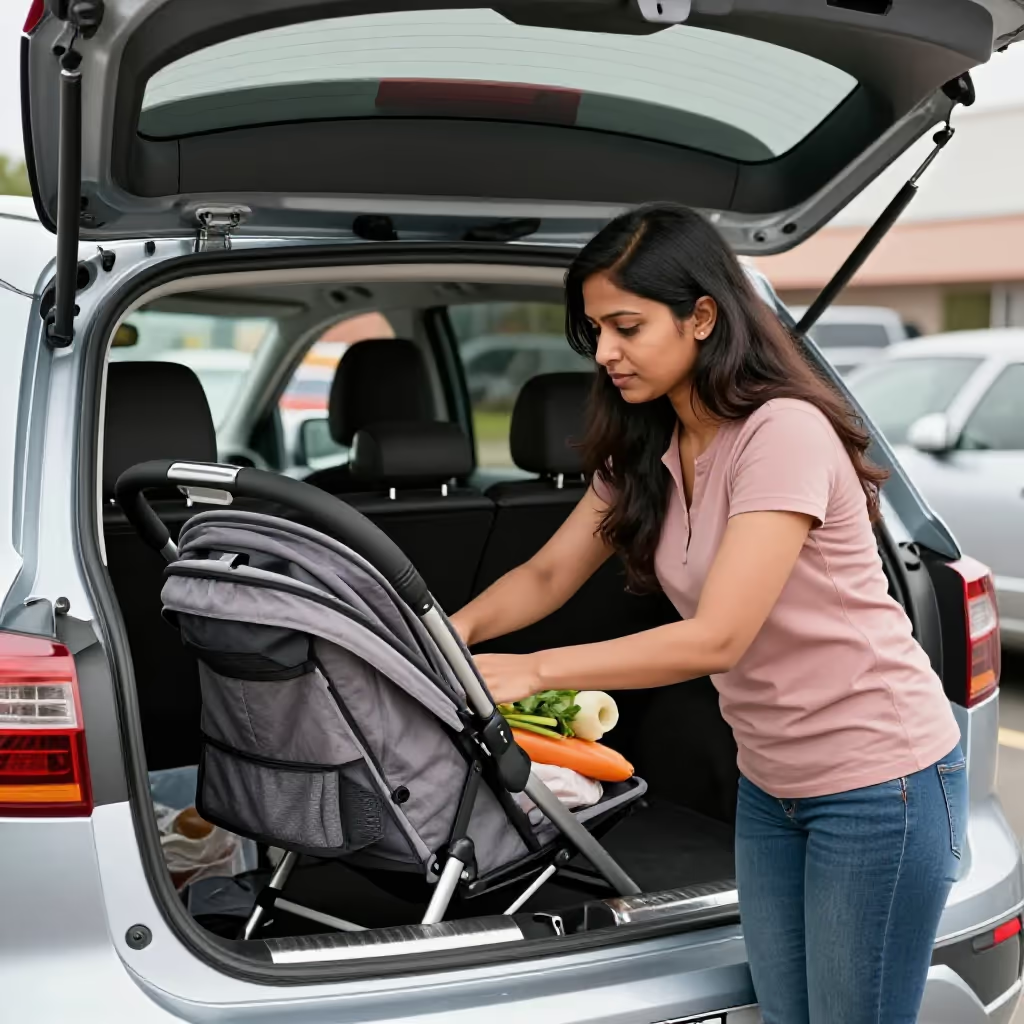
Für die Übungen brauchen wir zwischen den Turnmatten etwas Luft.
We need some space between the exercise mats for the exercises.
Für die Turnmatten ist in der Ecke noch genug Platz.
There is still enough space in the corner for the exercise mats.