

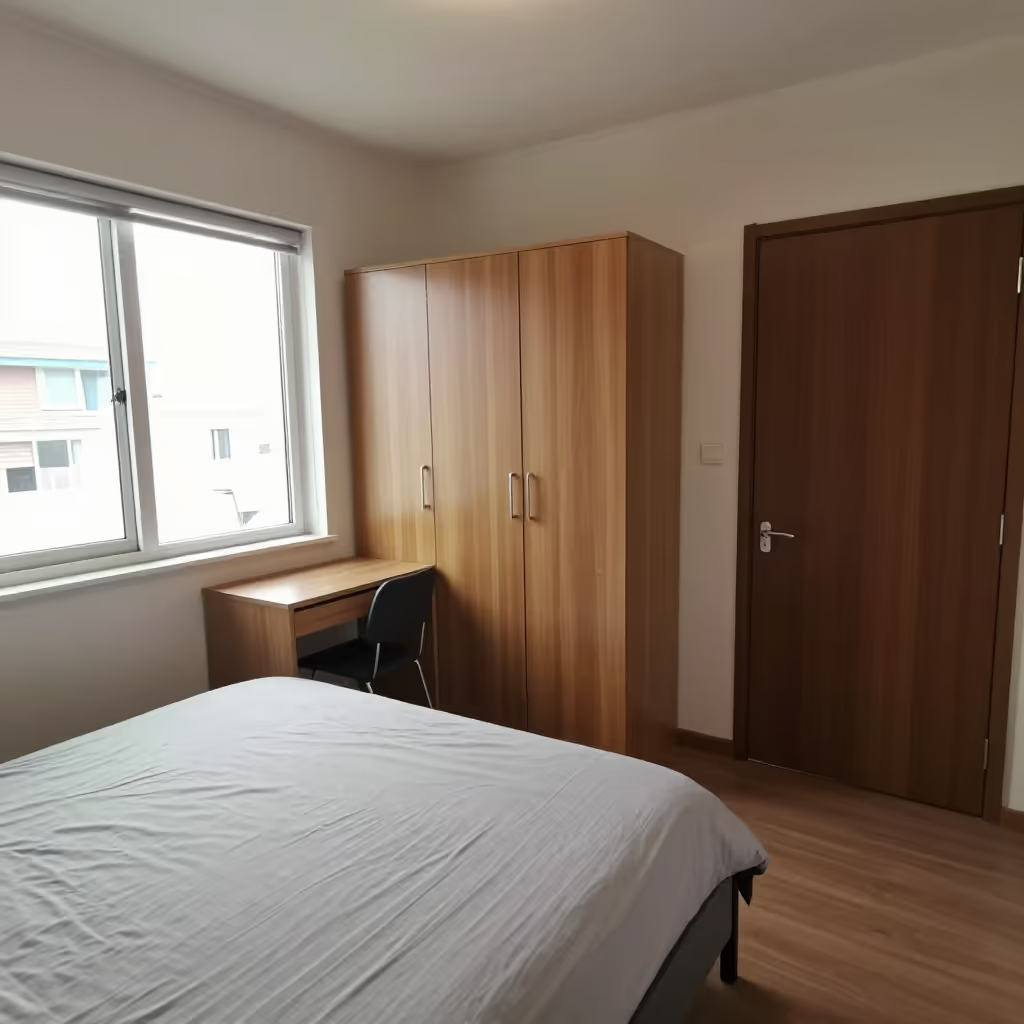
der Raum
room
A limited, usually enclosed area inside a building, such as a room or a hall.
EXAMPLE
Die Wohnung hat vier Räume, eine Küche und ein Bad.
The apartment has four rooms, a kitchen, and a bathroom.
room / space
Loading your saved state.
room
A limited, usually enclosed area inside a building, such as a room or a hall.
Die Wohnung hat vier Räume, eine Küche und ein Bad.
The apartment has four rooms, a kitchen, and a bathroom.

space
An unlimited or limited area; the expanse in which things can exist and move. This can refer to outer space, a geographic area, or an abstract area.
In diesem Projekt gibt es viel Raum für Kreativität.
In this project, there is a lot of space for creativity.
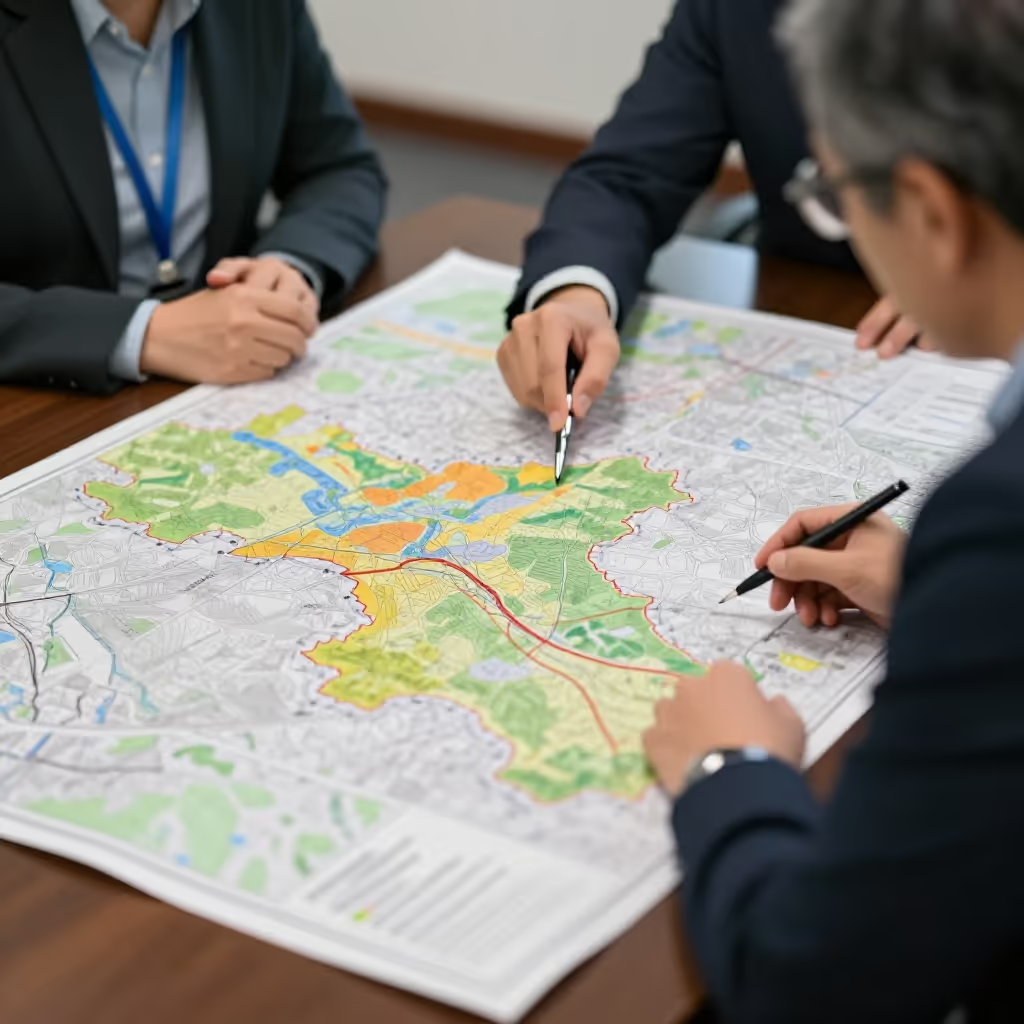
area / region
A geographic area or region, often with shared characteristics.
Im gesamten süddeutschen Raum ist dieser Dialekt verbreitet.
This dialect is widespread throughout the entire southern German region.
'Raum' (room/space) is the basis for many useful compound nouns. Examples include 'Wohnraum' (living space), 'Stauraum' (storage space), or 'Weltraum' (outer space/the universe).
Unter dem Bett gibt es viel Stauraum für Kisten.
There is a lot of storage space for boxes under the bed.
Pay attention to the difference between accusative and dative with the preposition 'in'. 'In den Raum gehen' (to go into the room, accusative) describes movement, while 'im Raum sein' (to be in the room, dative) describes a location.
Bitte bringen Sie die Stühle in den Besprechungsraum.
Please bring the chairs into the meeting room.
In the abstract meaning of 'space' or 'opportunity', 'Raum' is often combined with verbs such as 'geben' (to give), 'lassen' (to leave/allow), 'schaffen' (to create), or 'bieten' (to offer). It is usually followed by the preposition 'für' (for).
Ein guter Chef gibt seinem Team Raum für eigene Ideen.
A good boss gives their team space for their own ideas.
When 'Raum' is used with abstract nouns such as 'Kreativität' (creativity), 'Ideen' (ideas), 'Gefühle' (feelings), or 'Entwicklung' (development), it almost always has the figurative meaning of 'space' or 'opportunity', not a physical room.
In dieser Beziehung war kein Raum für persönliche Entwicklung.
In this relationship, there was no space for personal development.
In geographic contexts, 'Raum' is often combined with an adjective to describe a region. Typical examples are 'der ländliche Raum' (rural areas) or 'der europäische Raum' (the European area/region).
Die Arbeitslosigkeit ist im ländlichen Raum höher als in den Städten.
Unemployment is higher in rural areas than in cities.
place / space
Both words can refer to free space for a person or thing. „Der Platz“ tends to mean practical capacity or a specific spot, while „der Raum“ emphasizes the extent of the space or freedom of movement. „Platz“ is usually the better choice when asking about specific capacity; when there is limited space, „Raum“ is more suitable.
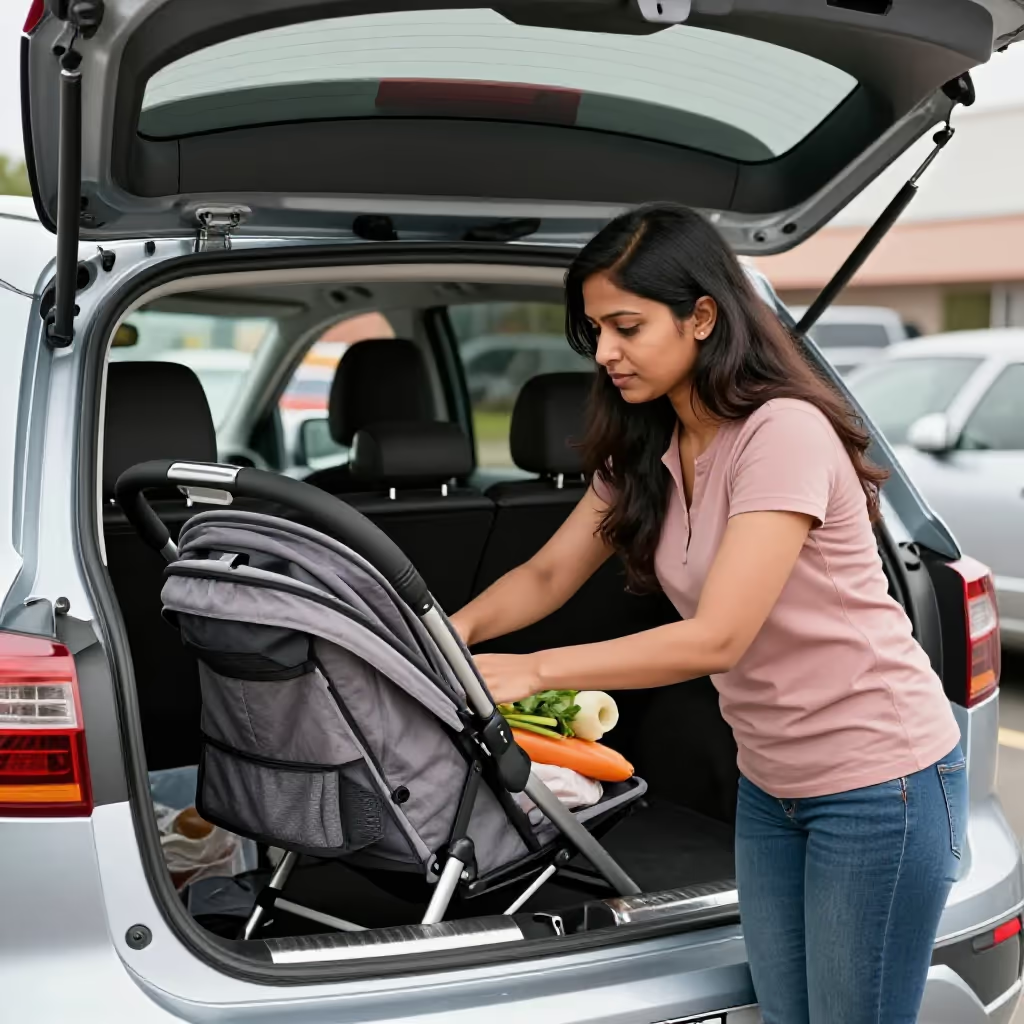
Im schmalen Flur ist wenig Raum, um den Kinderwagen zu bewegen.
There is little room to move the stroller in the narrow hallway.
Für den Kinderwagen ist im Flur noch genug Platz.
There is still enough space in the hallway for the stroller.