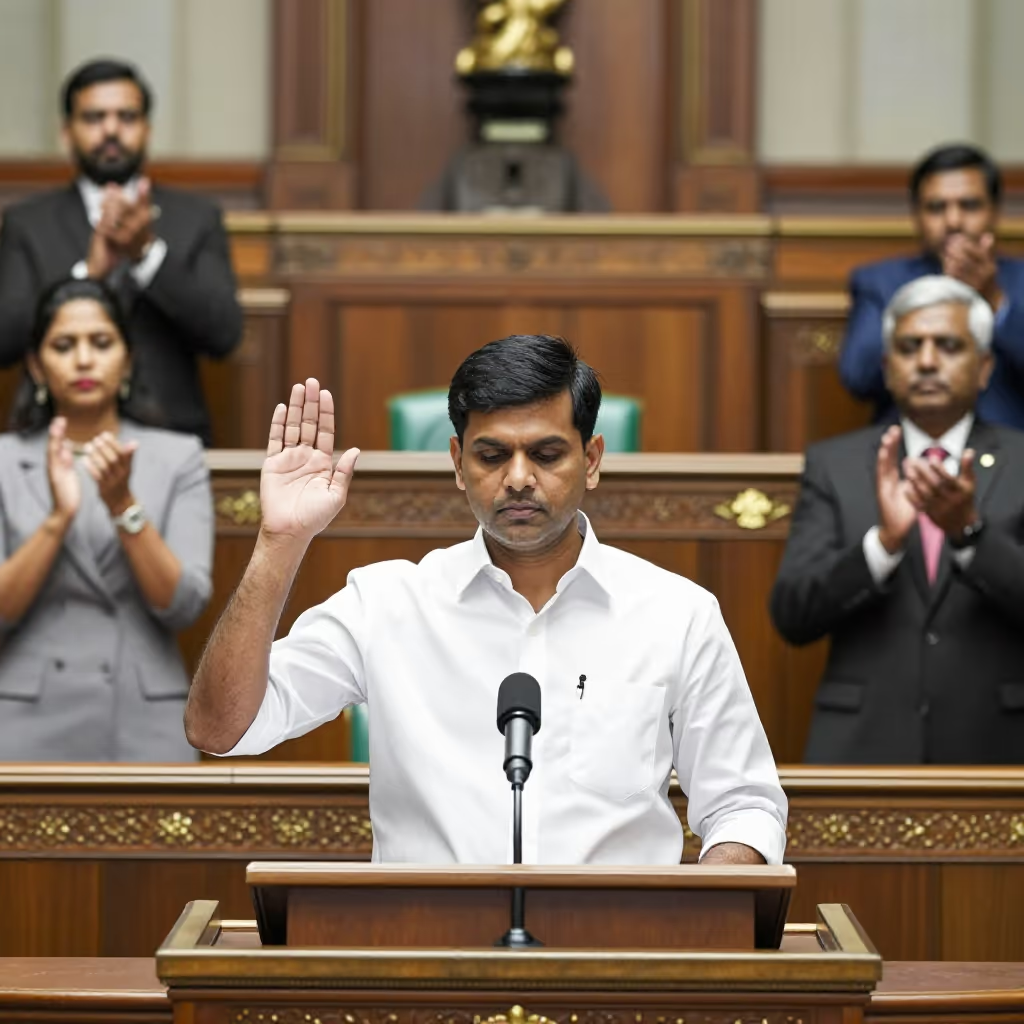
The ability or authority to influence, control, or make decisions about other people, groups, or events.
example
Der Vorstand hat die Macht, über die Zukunft des Unternehmens zu entscheiden.
The board has the power to decide the future of the company.
Usage tips
Word family
The noun 'Macht' (power) is closely related to the verb 'machen' (to make/do). It describes the ability to cause things to happen or to 'machen' (make/do) things and exert influence.
EXAMPLE
Ein Diktator kann machen, was er will, denn er hat die absolute Macht.
A dictator can do whatever he wants because he has absolute power.
Important prepositions
The prepositions 'an die' and 'an der' have different meanings. 'An die Macht kommen' (accusative; to come to power) describes the process of taking power, while 'an der Macht sein' (dative; to be in power) describes the state of possessing power.
EXAMPLE
Die Oppositionspartei hofft, bei der nächsten Wahl an die Macht zu kommen.
The opposition party hopes to come to power in the next election.
Typical verbs
In connection with influence and control, 'Macht' (power) is often combined with certain verbs. Common phrases are 'Macht ausüben' (to exercise power), 'Macht missbrauchen' (to abuse power), 'die Macht ergreifen' (to seize power), or 'die Macht verlieren' (to lose power).
EXAMPLE
Manche Politiker missbrauchen ihre Macht für persönliche Vorteile.
Some politicians abuse their power for personal advantage.
Common compounds
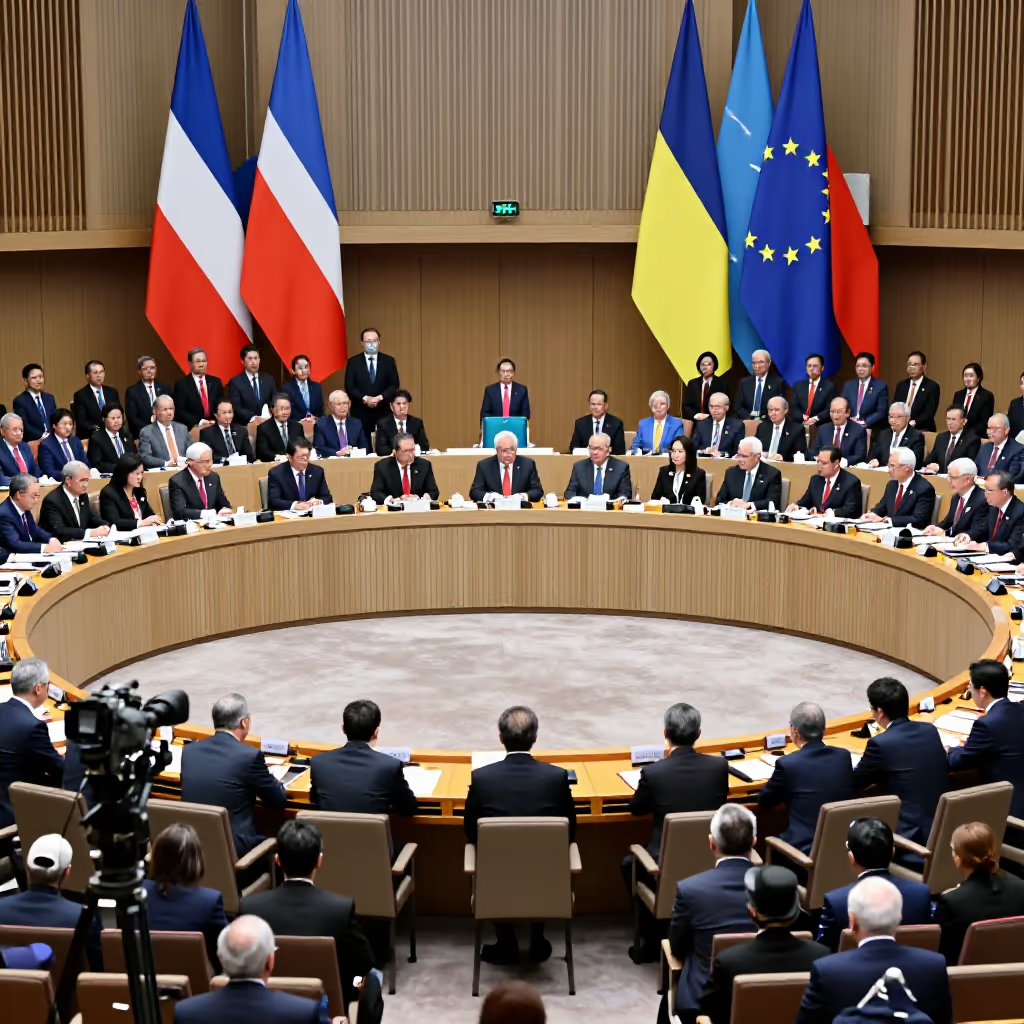
'Macht' (power) is often the second part of a compound word used to describe an influential nation or organization. Typical examples are 'Weltmacht' (world power), 'Wirtschaftsmacht' (economic power), 'Atommacht' (nuclear power), or 'Seemacht' (naval power).
EXAMPLE
China hat sich zu einer globalen Wirtschaftsmacht entwickelt.
China has developed into a global economic power.
Context clue: plural
In the plural ('die Mächte', the powers), the word often refers to abstract, supernatural, or fateful forces. Typical combinations are 'höhere Mächte' (higher powers) or 'finstere Mächte' (dark powers).
EXAMPLE
Er glaubte, dass höhere Mächte sein Schicksal lenken.
He believed that higher powers guided his fate.
Formal expression
The idiom 'in jemandes Macht stehen' (to be in someone's power) is rather formal. The structure is: 'Es steht in [possessive pronoun] Macht, etwas zu tun' (It is in [possessive pronoun] power to do something).
EXAMPLE
Es steht nicht in meiner Macht, die Regeln für Sie zu ändern.
It is not in my power to change the rules for you.
Compare with
near_synonym
Macht vs Hand
hand
'etwas in der Hand haben' (to have something in hand) and 'die Macht' both have to do with control or influence. 'Etwas in der Hand haben' is a figurative expression and means that someone can steer or decide a situation. 'die Macht' is the more general word for influence, control, or authority. It fits especially when the topic is politics, work, rules, or a clear position. 'In der Hand haben' often sounds more personal and concrete: a specific person can now do or decide something.
Macht
Die Behörde hat die Macht, den Antrag abzulehnen.
The authority has the power to reject the application.
Hand
Morgen hat der Arzt den nächsten Schritt in der Hand.
Tomorrow, the doctor will have the next step in his hands.