The use of physical force with the intention of injuring, harming, or forcing someone.
example
Der Täter wurde wegen der Anwendung von Gewalt gegen einen Polizisten verurteilt.
The offender was convicted for the use of violence against a police officer.
Usage tips
Word family
'Gewalt' (violence / authority / force) is related to the old verb 'walten' (to rule, exercise power) and the adjective 'gewaltig' (huge, mighty). This connection to the idea of power and strength helps explain the different meanings.
EXAMPLE
Die gewaltige Kraft des Wassers zerstörte die Brücke.
The tremendous force of the water destroyed the bridge.
Typical collocations
In connection with physical force, fixed collocations are very common. These include 'Gewalt anwenden' (to use violence), 'mit Gewalt drohen' (to threaten violence), 'Gewalt ausüben' (to exercise/use violence), or 'Opfer von Gewalt werden' (to become a victim of violence).
EXAMPLE
Der Einbrecher hat keine Gewalt angewendet.
The burglar did not use violence.
Direction of violence
To name the target or victim of the violence, the preposition 'gegen' with the accusative is almost always used.
EXAMPLE
Die Demonstration richtete sich gegen die Gewalt im Land.
The demonstration was directed against the violence in the country.
Context clue
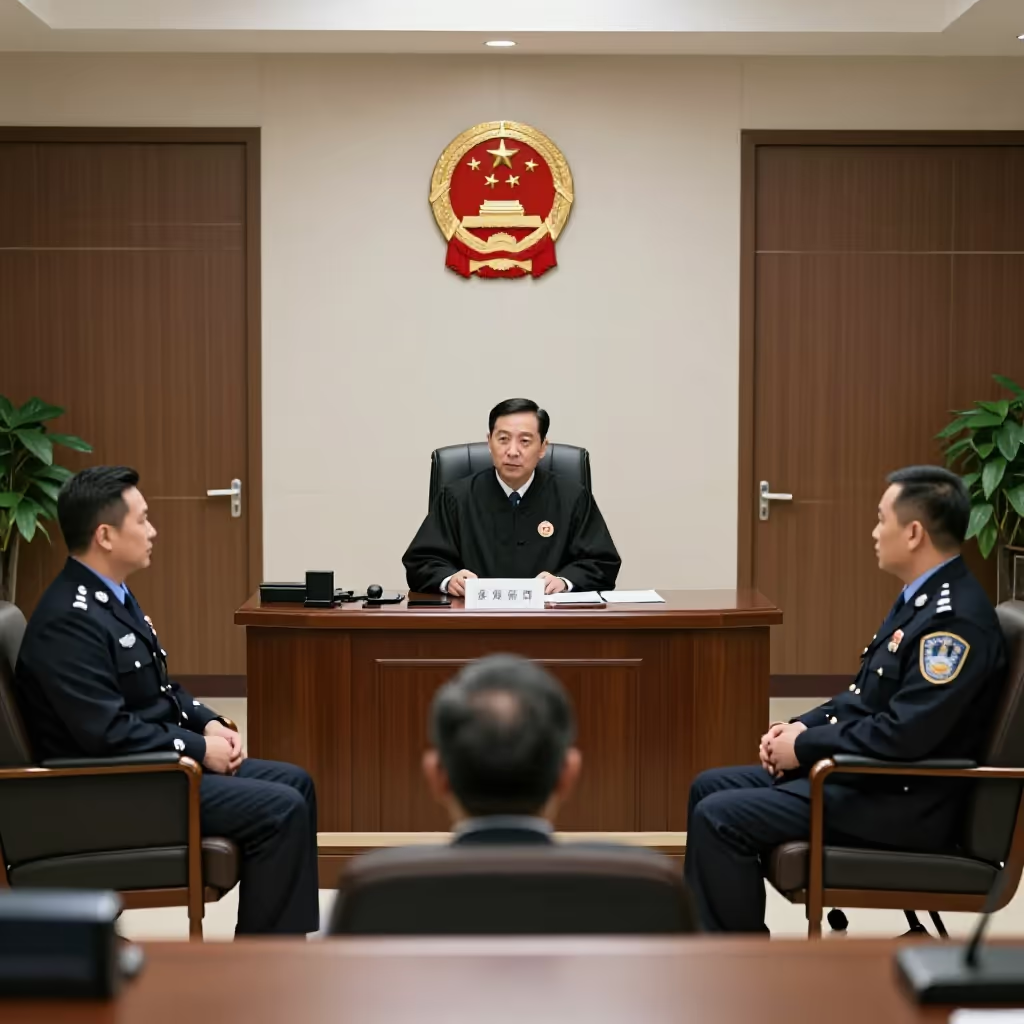
The meaning 'Staatsmacht' (state power/state authority) can be recognized from the context of politics and law. A clear signal is the plural form 'die Gewalten' (the powers/branches), which occurs almost exclusively in this context, as in 'Gewaltenteilung' (separation of powers).
EXAMPLE
Die Polizei ist Teil der exekutiven Gewalt.
The police are part of the executive authority.
Context clue
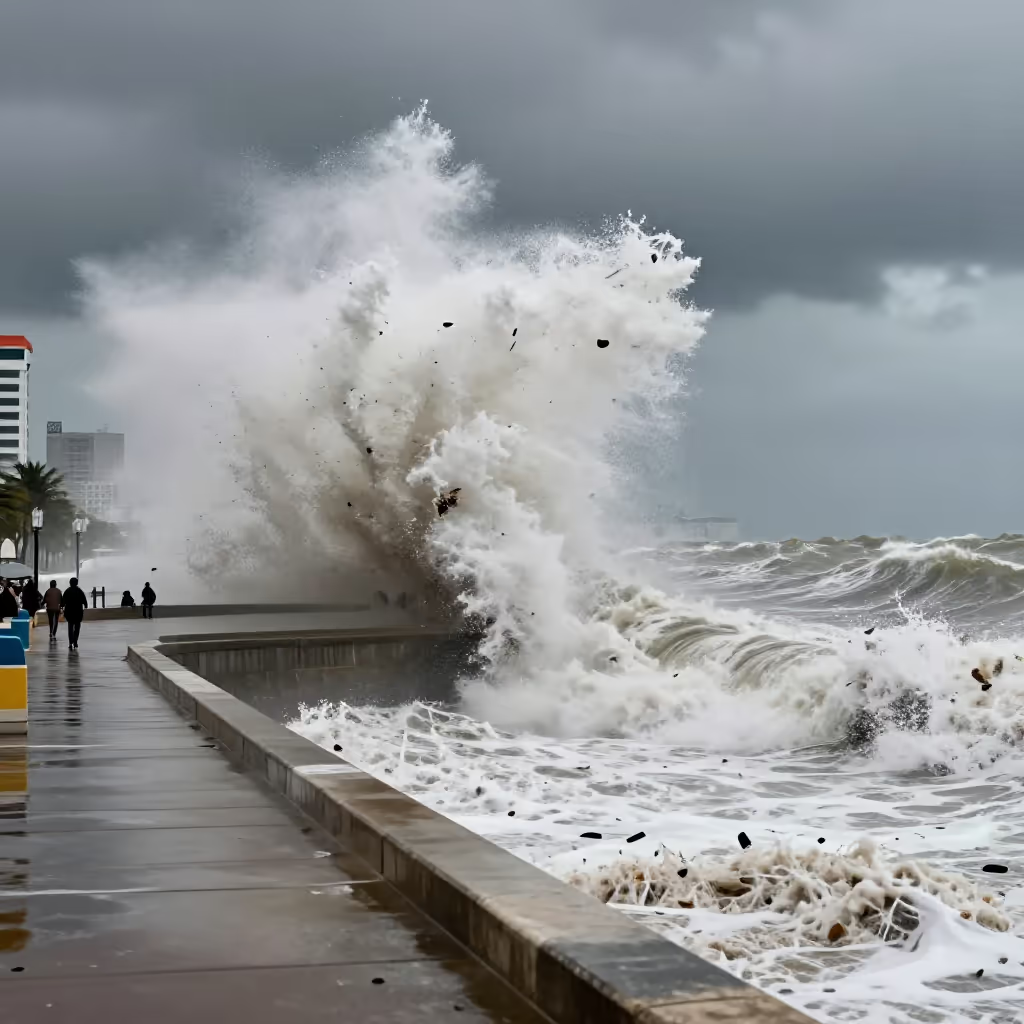
When 'Gewalt' describes a force of nature, it always appears in connection with natural phenomena. For example, people speak of 'der Gewalt des Sturmes' (the force of the storm), 'der Gewalt der Wellen' (the force of the waves), or 'der Gewalt eines Erdbebens' (the force of an earthquake).
EXAMPLE
Die Segler unterschätzten die Gewalt des Sturmes.
The sailors underestimated the force of the storm.
Fixed expression
The meaning 'Selbstbeherrschung' (self-control) occurs only in the fixed, reflexive expression 'sich in der Gewalt haben' (to have oneself under control). The person controlling themselves is the subject of the sentence.
EXAMPLE
Atme tief durch und versuche, dich in der Gewalt zu haben.
Take a deep breath and try to control yourself.
Compare with
near_synonym · confusable
Gewalt vs Kraft
strength / force
'die Kraft' and 'die Gewalt' can both describe something strong that has an effect. 'die Kraft' is neutral: it can mean physical strength, energy, or a natural force. 'die Gewalt' is much more negative when people are involved, because then it means physical force used to injure, harm, or force someone. With natural events, 'Gewalt' can also mean a very strong, often destructive force. Learners may confuse the words because both have to do with strength. The important point is: 'Kraft' can be positive or neutral, while 'Gewalt' usually means harm, coercion, or uncontrollable destruction.
Gewalt
Die Schule spricht mit den Eltern, weil Gewalt auf dem Pausenhof nicht akzeptiert wird.
The school talks with the parents because violence in the schoolyard is not accepted.
Kraft
Anna braucht viel Kraft, um den schweren Koffer die Treppe hochzutragen.
Anna needs a lot of strength to carry the heavy suitcase up the stairs.