


die Kraft
strength
The physical strength or energy of a person or animal.
EXAMPLE
Er hat nicht genug Kraft, um die schwere Kiste allein zu heben.
He doesn't have enough strength to lift the heavy box by himself.
strength / force
Loading your saved state.
strength
The physical strength or energy of a person or animal.
Er hat nicht genug Kraft, um die schwere Kiste allein zu heben.
He doesn't have enough strength to lift the heavy box by himself.

strength
The mental or emotional strength to cope with difficult situations.
Sie fand die Kraft, nach dem Schicksalsschlag weiterzumachen.
She found the strength to carry on after the blow of fate.
force / power
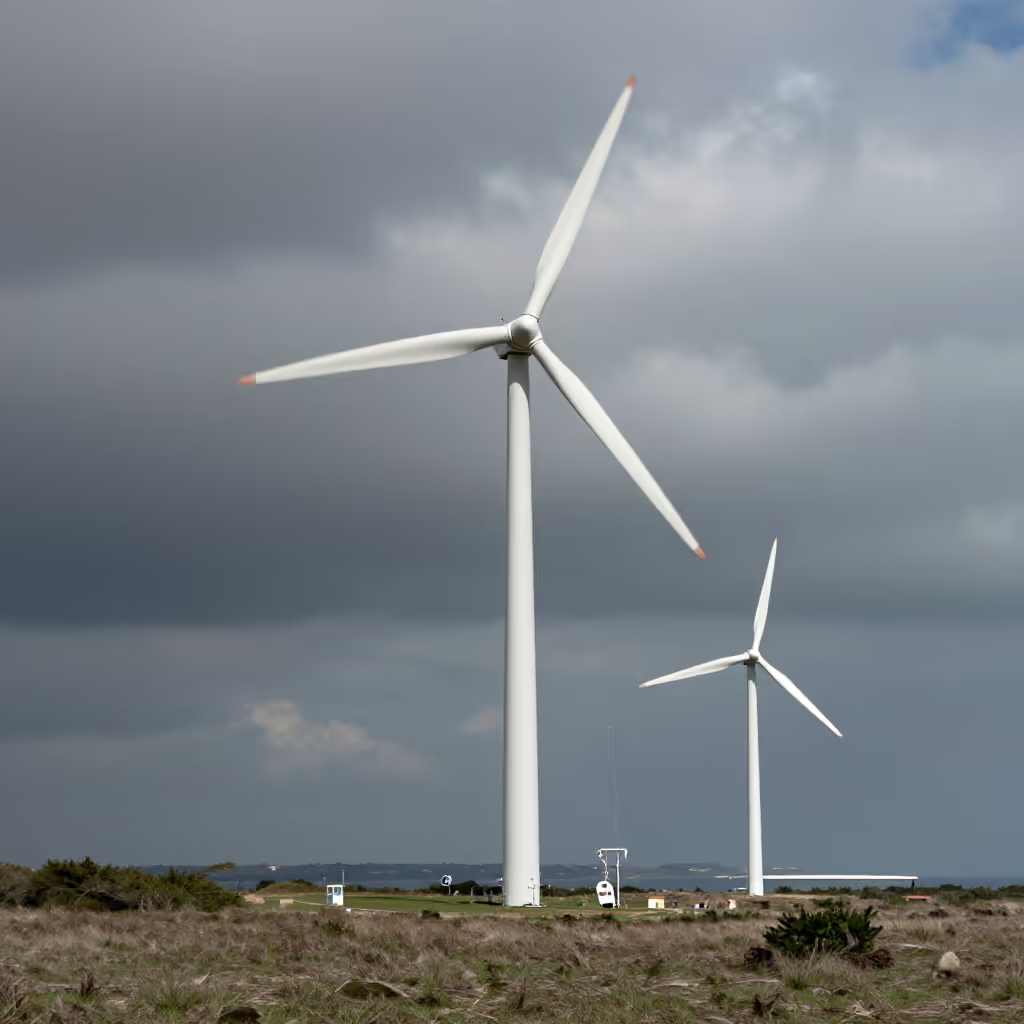
An active power or energy that has an effect. This can be physical, natural, or abstract.
Die Kraft der Worte sollte niemals unterschätzt werden.
The power of words should never be underestimated.
force
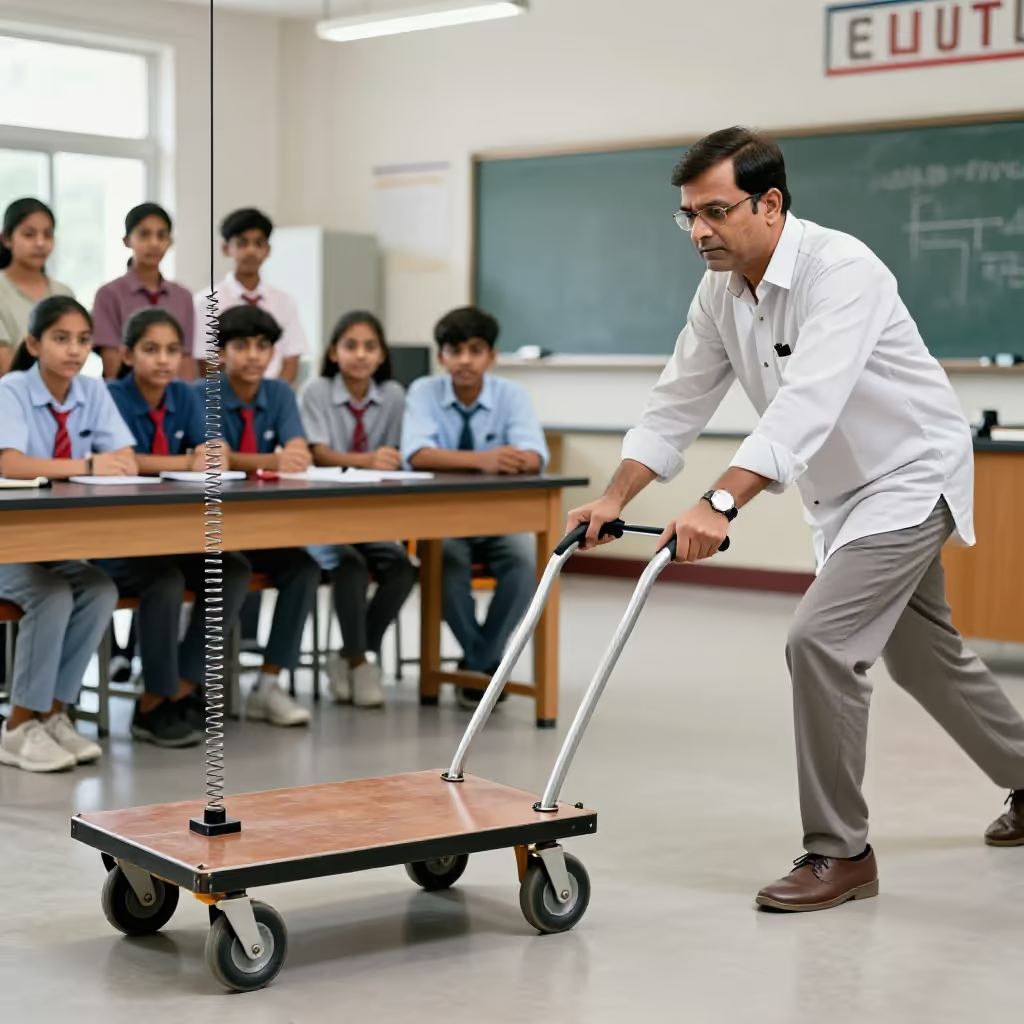
In physics, an influence that can accelerate or deform a body.
Die Gravitation ist eine Kraft, die alle Objekte mit Masse anzieht.
Gravity is a force that attracts all objects with mass.

worker / staff member
A person who works; an employee. Often used in compounds such as 'Arbeitskraft' (worker/labor) or 'Fachkraft' (specialist/skilled worker).
In unserer IT-Abteilung fehlt eine qualifizierte Fachkraft.
Our IT department is missing a qualified specialist.
to come into force
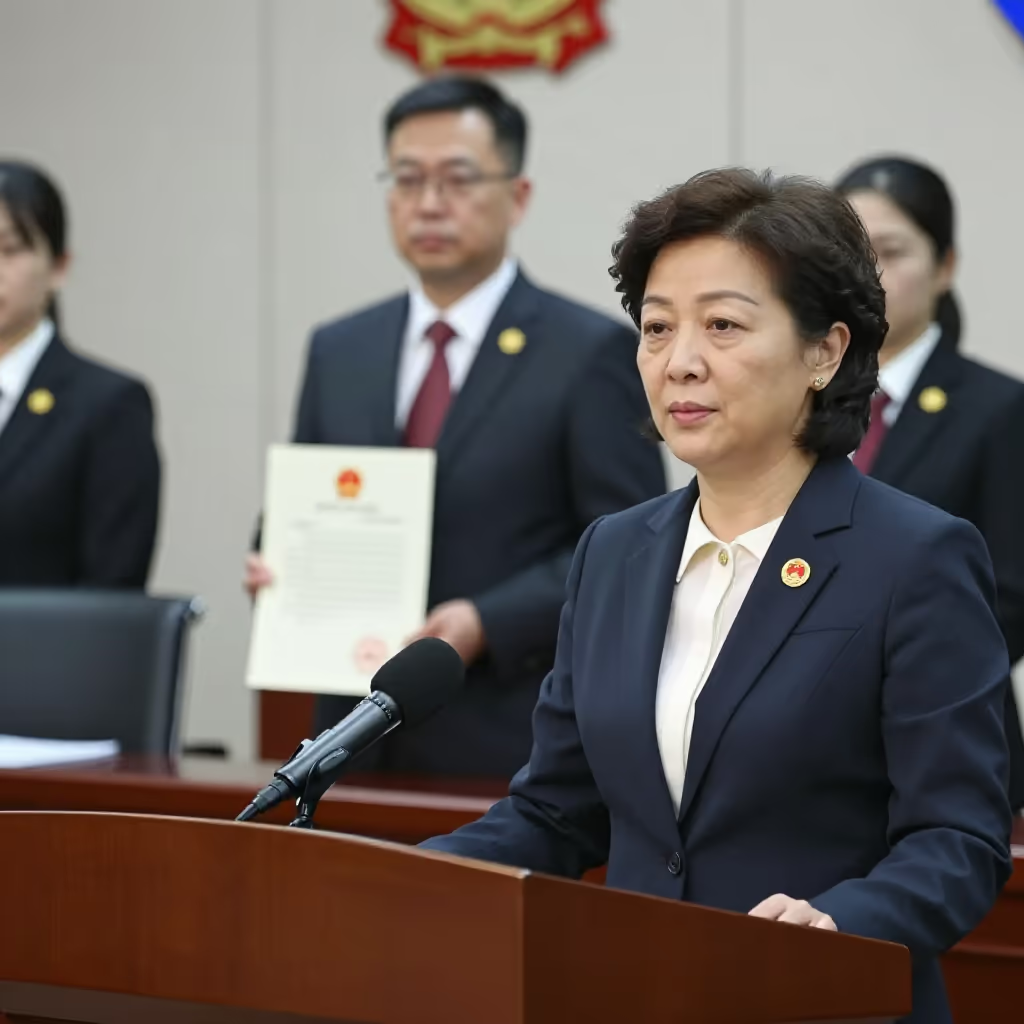
For a law, rule, or contract: to become valid or effective.
Das neue Gesetz tritt am 1. Januar in Kraft.
The new law comes into force on January 1.
The noun 'die Kraft' (strength/force) belongs to the word family of the adjective 'kräftig' (strong). A person who has a lot of strength is 'kräftig' (strong).
Für diese Arbeit braucht man einen kräftigen Helfer.
For this work, you need a strong helper.
The phrase 'aus eigener Kraft' means that someone accomplishes something without outside help. It is often used to emphasize independence and achievement.
Sie hat das Unternehmen aus eigener Kraft aufgebaut.
She built the company through her own efforts.
When referring to physical or mental strength, 'Kraft' (strength) is often used with verbs such as 'haben' (to have), 'brauchen' (to need), 'sammeln' (to gather), or 'kosten' (to cost/take).
Nach der langen Wanderung hatte ich keine Kraft mehr.
After the long hike, I had no strength left.
To describe an abstract or metaphorical force, the genitive or the preposition 'von' (of/from) is often used. Typical examples are 'die Kraft der Natur' (the force of nature) or 'die Kraft der Worte' (the power of words).
Die Kraft der Musik kann Menschen tief berühren.
The power of music can deeply move people.
In the meaning of 'employee' or 'worker', 'Kraft' is used almost only as the second part of compound nouns. Examples are 'Arbeitskraft' (worker/labor), 'Fachkraft' (specialist/skilled worker), or 'Lehrkraft' (teacher/teaching staff member).
Wir suchen dringend eine neue Lehrkraft für Mathematik.
We urgently need a new math teacher.
The phrase 'in Kraft treten' is used for laws and regulations and means 'to become valid'. The opposite is 'etwas außer Kraft setzen' (to invalidate/suspend something).
Die neue Regelung tritt ab nächstem Monat in Kraft.
The new regulation comes into force starting next month.
employee
Mitarbeiter and Kraft can both refer to a person who works in a business. Mitarbeiter explicitly names the person and sounds neutral, while Kraft is a more impersonal term from workplace and personnel language. Use Mitarbeiter for the person and Kraft in corresponding job titles.

Für die neue Abteilung sucht die Firma eine zusätzliche Kraft.
The company is looking for an additional staff member for the new department.
Für die neue Abteilung sucht die Firma einen zusätzlichen Mitarbeiter.
The company is looking for an additional employee for the new department.