

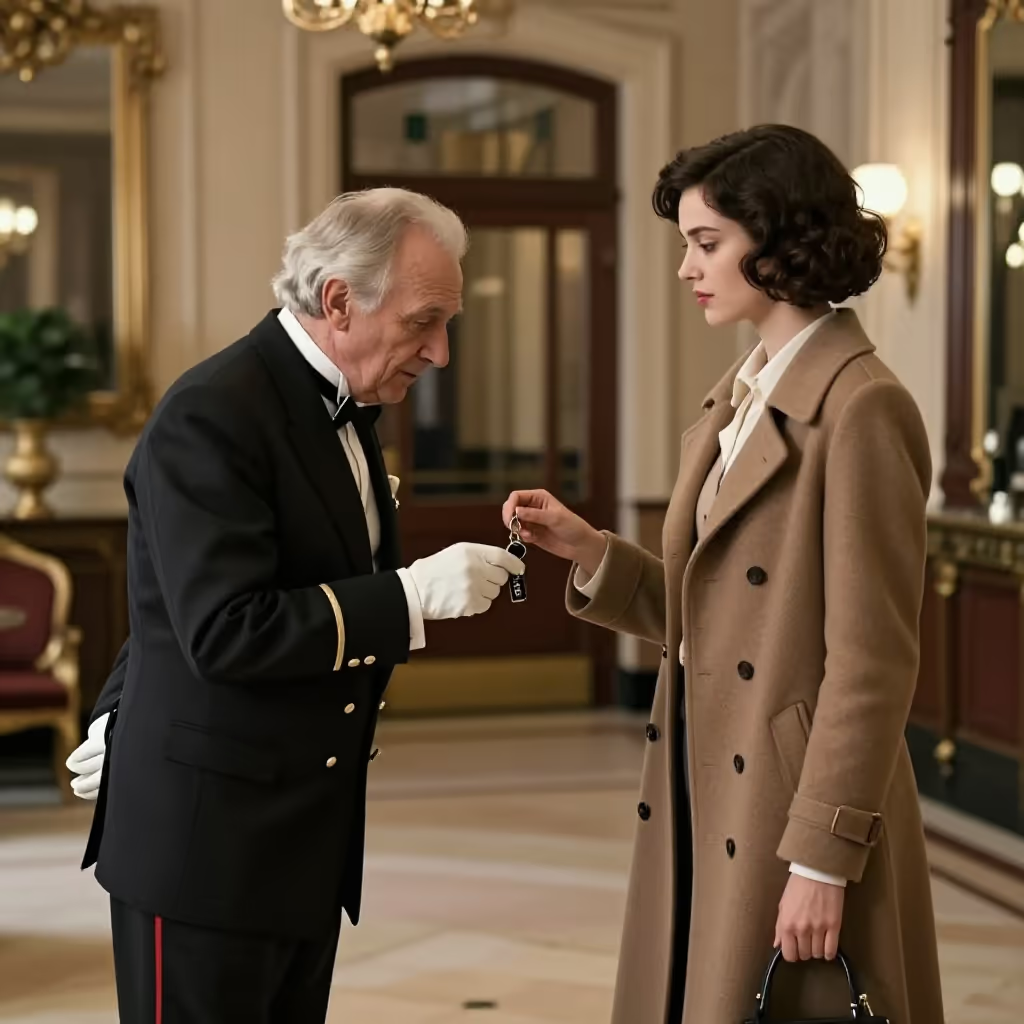
The French form of address for an unmarried woman, corresponding to the German 'Fräulein' (Miss). In German, it is often used to address a French woman or to create an elegant, old-fashioned, or ironic tone.
example
Der Kellner wandte sich an die junge Touristin: „Mademoiselle, wünschen Sie noch ein Dessert?“
The waiter turned to the young tourist: "Mademoiselle, would you like another dessert?"

Usage tips
Origin from French
'Mademoiselle' is a loanword from French and literally means 'my young lady' (ma demoiselle). In German, it is used to create a French atmosphere or to address a young woman directly.
EXAMPLE
In dem Film über Paris spricht der Hauptdarsteller alle jungen Frauen mit „Mademoiselle“ an.
In the film about Paris, the main character addresses all young women as 'Mademoiselle'.
Use as a form of address
As a direct form of address, 'Mademoiselle' is used without an article. It appears at the beginning of a sentence or is inserted like a name.
EXAMPLE
Mademoiselle, Ihr Kaffee wird sofort serviert.
Mademoiselle, your coffee will be served right away.
Style and register
The form of address 'Mademoiselle', much like the German 'Fräulein' (Miss), is considered outdated today. It is mostly used only in a historical context, to sound especially polite, or also slightly ironic.
EXAMPLE
Er machte eine altmodische Verbeugung und sagte: „Guten Abend, Mademoiselle.“
He made an old-fashioned bow and said, "Good evening, Mademoiselle."
Compare with
near_synonym · confusable
Mademoiselle vs Frau
woman / wife
'die Frau' and 'die Mademoiselle' can both relate to a female person or a form of address. 'die Frau' is the normal German word for an adult female person and also the usual polite form of address with a last name, for example 'Frau Müller' (Ms. Müller). 'die Mademoiselle' is a French word and is used in German only in special situations, for example as a French form of address or with an elegant, old-fashioned, or ironic tone. They can be confused because both can seem like forms of address. In normal German, 'Frau' is almost always correct; 'Mademoiselle' sounds deliberately special.
Mademoiselle
Der Kellner sagte scherzhaft „Mademoiselle“, als er meiner Freundin den Kaffee brachte.
The waiter jokingly said "Mademoiselle" as he brought my friend her coffee.
Frau
Die Frau an der Information half mir freundlich weiter.
The woman at the information desk kindly helped me.