

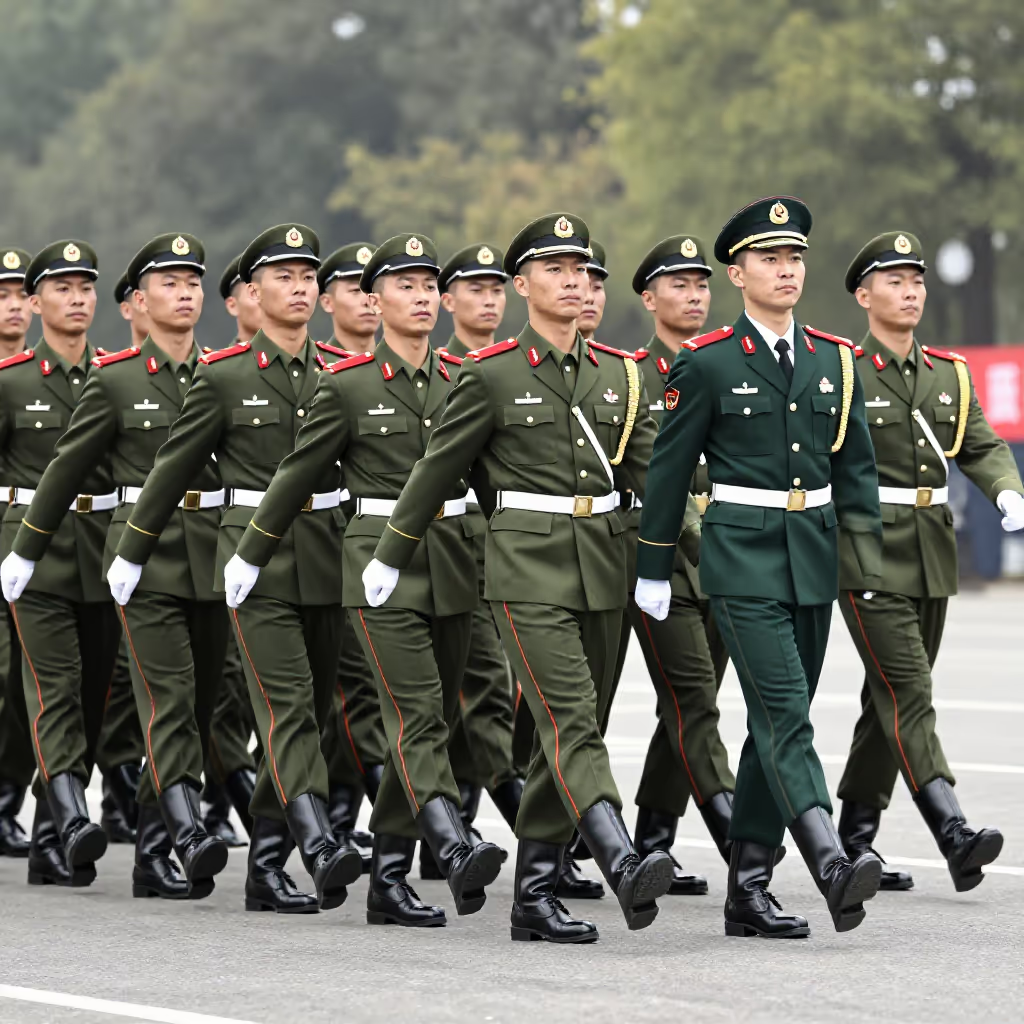
marschieren
to march
To move in a disciplined, rhythmic way, typically in a group such as soldiers or at a demonstration.
Die Soldaten marschierten im Gleichschritt über den Paradeplatz.
The soldiers marched in step across the parade ground.


to march
Loading your saved state.
to march
To move in a disciplined, rhythmic way, typically in a group such as soldiers or at a demonstration.
Die Soldaten marschierten im Gleichschritt über den Paradeplatz.
The soldiers marched in step across the parade ground.

As a verb of motion, 'marschieren' (to march) always forms the perfect tense with the auxiliary verb 'sein' (to be), not with 'haben' (to have). This applies to all meanings of the word.
Die Wandergruppe ist den ganzen Tag durch den Wald marschiert.
The hiking group marched through the forest all day.
'Marschieren' (to march) is often combined with prepositions that describe a direction or path. Typical prepositions are 'durch' (through), 'zu' (to), 'auf' (onto/toward), and 'in' (into).
Die Demonstranten marschierten durch die Innenstadt.
The demonstrators marched through the city center.
You can tell from the context whether the colloquial meaning is intended. If words like 'Soldaten' (soldiers) or 'Demonstration' (demonstration) are missing and purposeful or emotional walking is described instead, it is the figurative meaning.
Nach dem Telefonat marschierte sie entschlossen in sein Büro.
After the phone call, she marched determinedly into his office.
When 'marschieren' (to march) describes quick, energetic walking, it is used mainly in colloquial language. It often expresses a certain determination or even anger.
Ich muss jetzt los, ich marschiere mal schnell zur Post.
I have to go now; I'm quickly marching over to the post office.
to go
'gehen' and 'marschieren' both describe movement on foot. 'gehen' is the normal, neutral word for this movement. 'marschieren' sounds stronger and more specific: it can be orderly and rhythmic, for example with soldiers or at a demonstration. Colloquially, it can also mean that someone walks quickly and energetically. The words can be confused because both describe movement without a vehicle. In everyday language, 'gehen' is usually correct; 'marschieren' fits when the manner of walking is noticeably strict, fast, or determined.

Nach dem Streit marschierte Tom ohne ein Wort aus dem Zimmer.
After the argument, Tom marched out of the room without a word.
Wir gehen jeden Morgen zu Fuß zur Bäckerei.
We walk to the bakery every morning.