


laufen
to run
To move quickly on one's own feet, faster than walking.
EXAMPLE
Die Kinder laufen im Garten um die Wette.
The children are running races in the garden.
to run
Loading your saved state.
to run
To move quickly on one's own feet, faster than walking.
Die Kinder laufen im Garten um die Wette.
The children are running races in the garden.

to run
To be in operation; to function (of machines, devices, programs).
Lass den Motor noch ein paar Minuten laufen.
Let the engine run for a few more minutes.

to go
To develop or progress in a particular way.
Die Geschäfte laufen im Moment sehr gut.
Business is going very well at the moment.
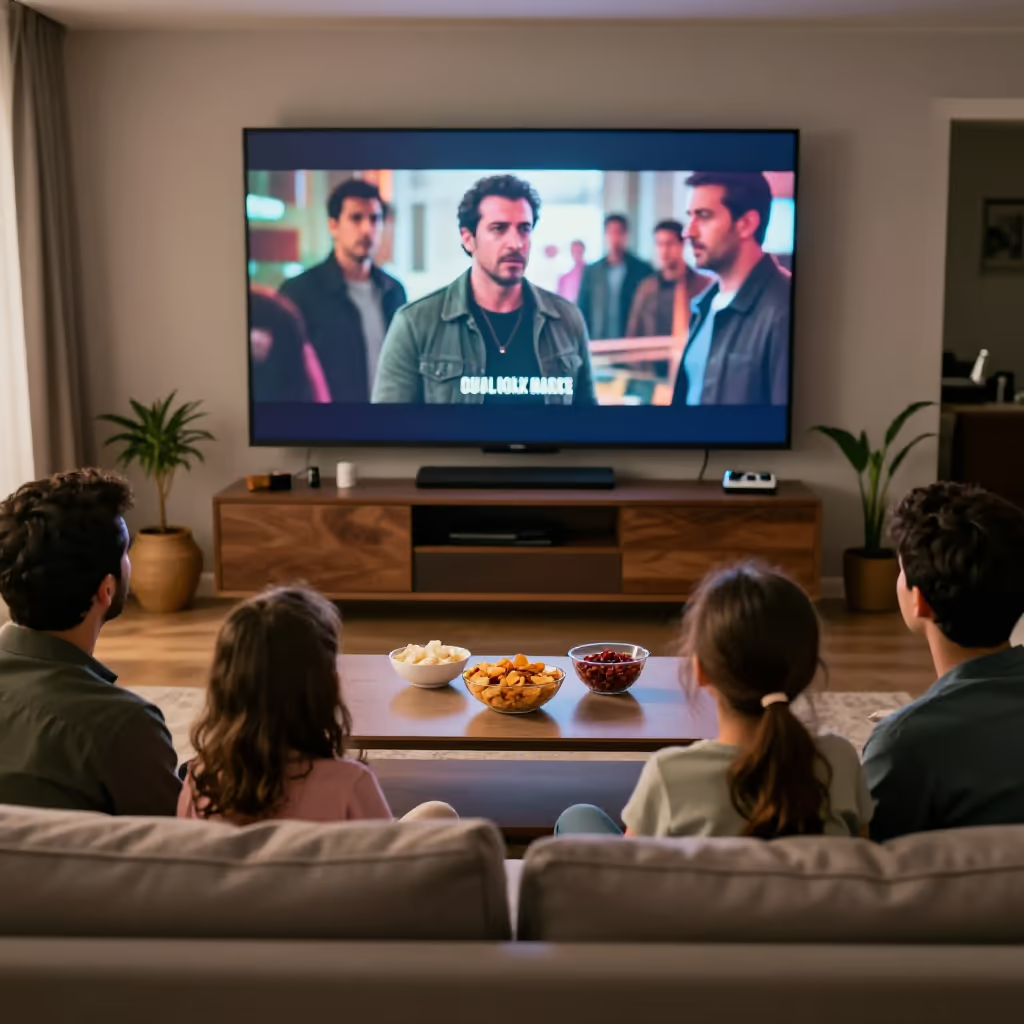
to be showing
To be shown or broadcast (of films, television programs).
Im Kino läuft gerade ein interessanter neuer Dokumentarfilm.
An interesting new documentary is currently showing at the cinema.

to run
To be valid or continue for a period of time (of contracts, deadlines).
Mein Handyvertrag läuft noch ein ganzes Jahr.
My mobile phone contract runs for another whole year.

to run
To discharge fluid, especially with a cold when the nose is running.
Wegen meiner Allergie läuft mir ständig die Nase.
Because of my allergy, my nose is constantly running.
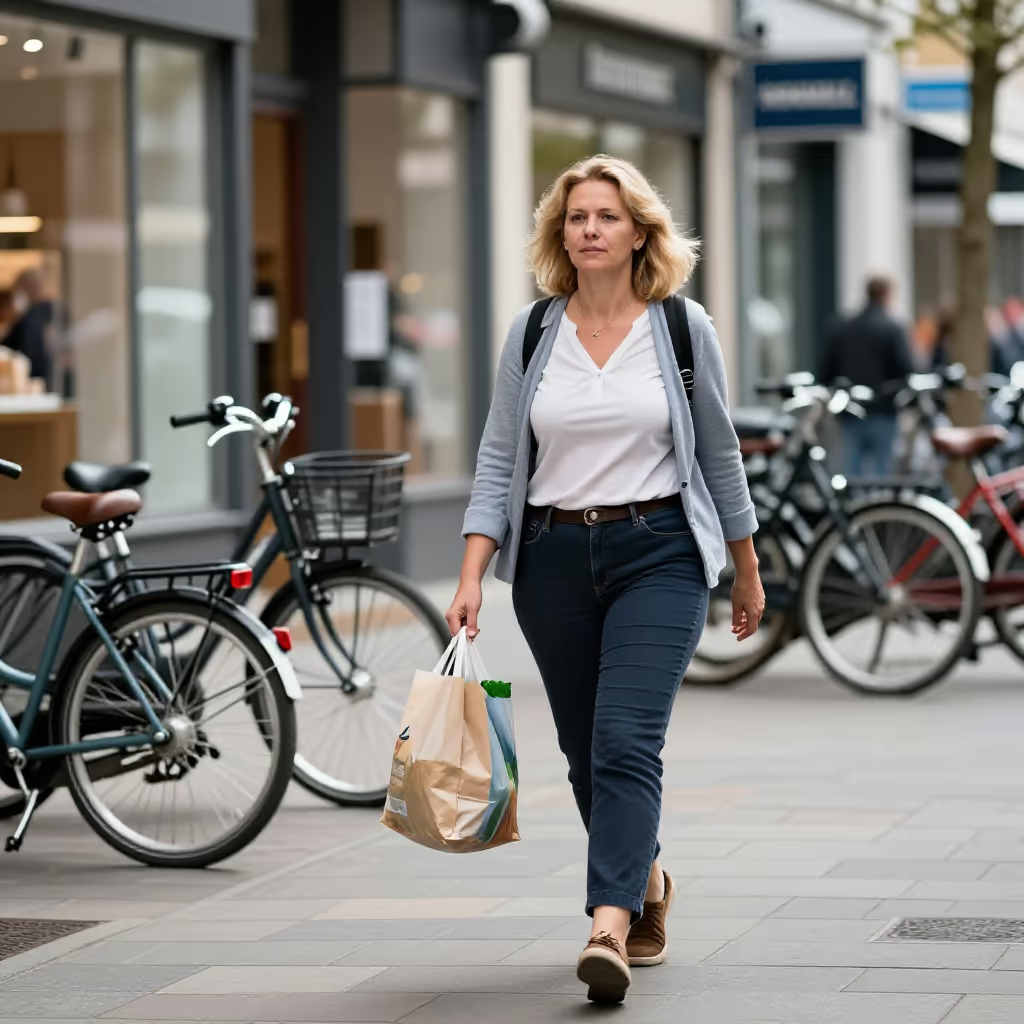
to walk
Colloquially, to go on foot.
Ich bin heute Morgen zur Arbeit gelaufen, weil das Wetter so schön war.
I walked to work this morning because the weather was so nice.
As a verb of movement, 'laufen' (to run/walk) forms the perfect and pluperfect with the auxiliary verb 'sein' (to be). This applies to both the literal meaning and the colloquial meaning of walking.
Ich bin gestern fünf Kilometer gelaufen.
I ran five kilometers yesterday.
Important nouns are derived from 'laufen' (to run), such as 'der Lauf' (the act of running or a race) and 'der Läufer' (the person who runs).
Beim Marathon in Berlin waren tausende Läufer am Start.
Thousands of runners were at the starting line for the marathon in Berlin.
When it is about machines, engines, or computer programs, 'laufen' (to run) means that they are switched on and functioning. The opposite would be 'stehen' (to be stopped) or 'aus sein' (to be off).
Welches Betriebssystem läuft auf deinem Computer?
Which operating system runs on your computer?
To describe how a process or business is progressing, 'laufen' (to go) is often combined with adverbs like 'gut' (well), 'schlecht' (badly), or 'nach Plan' (according to plan).
Ich hoffe, bei deiner Präsentation läuft alles gut.
I hope everything goes well with your presentation.
In connection with media such as cinema or television, 'laufen' (to be showing/airing) means that something is currently being shown or broadcast. The typical structure is: '[Film] läuft in/im [Kino]' ([film] is showing in/at the [cinema]).
Welche Filme laufen diese Woche im Kino?
Which films are showing at the cinema this week?
For contracts, subscriptions, or deadlines, 'laufen' (to run) means that they are valid. The duration is often given with 'bis' (until) or 'seit' (since).
Mein Fitnessstudio-Vertrag läuft noch sechs Monate.
My gym contract runs for another six months.
The expression 'die Nase läuft' (the nose is running) is fixed. The person affected by it is in the dative. So you say 'Mir läuft die Nase' (My nose is running; literally: To me runs the nose).
Ich glaube, ich bekomme eine Erkältung, mir läuft die ganze Zeit die Nase.
I think I'm getting a cold; my nose is running all the time.
In everyday language, 'laufen' (to walk) is very often used instead of 'gehen' (to go/walk) to describe moving on foot, without it having to be fast.
Wollen wir ein Stück laufen? Die frische Luft tut gut.
Shall we walk for a bit? The fresh air will do us good.
to go
Gehen is the regionally neutral choice for normal movement on foot. Laufen can also colloquially mean gehen, but its use varies by region and it can otherwise refer to faster movement. For a statement that is clear everywhere, gehen is therefore usually the better choice.

Bei uns laufen wir nach dem Essen gemütlich nach Hause.
Where I live, we walk home at a leisurely pace after dinner.
Wir gehen nach dem Essen gemütlich nach Hause.
We walk home at a leisurely pace after dinner.