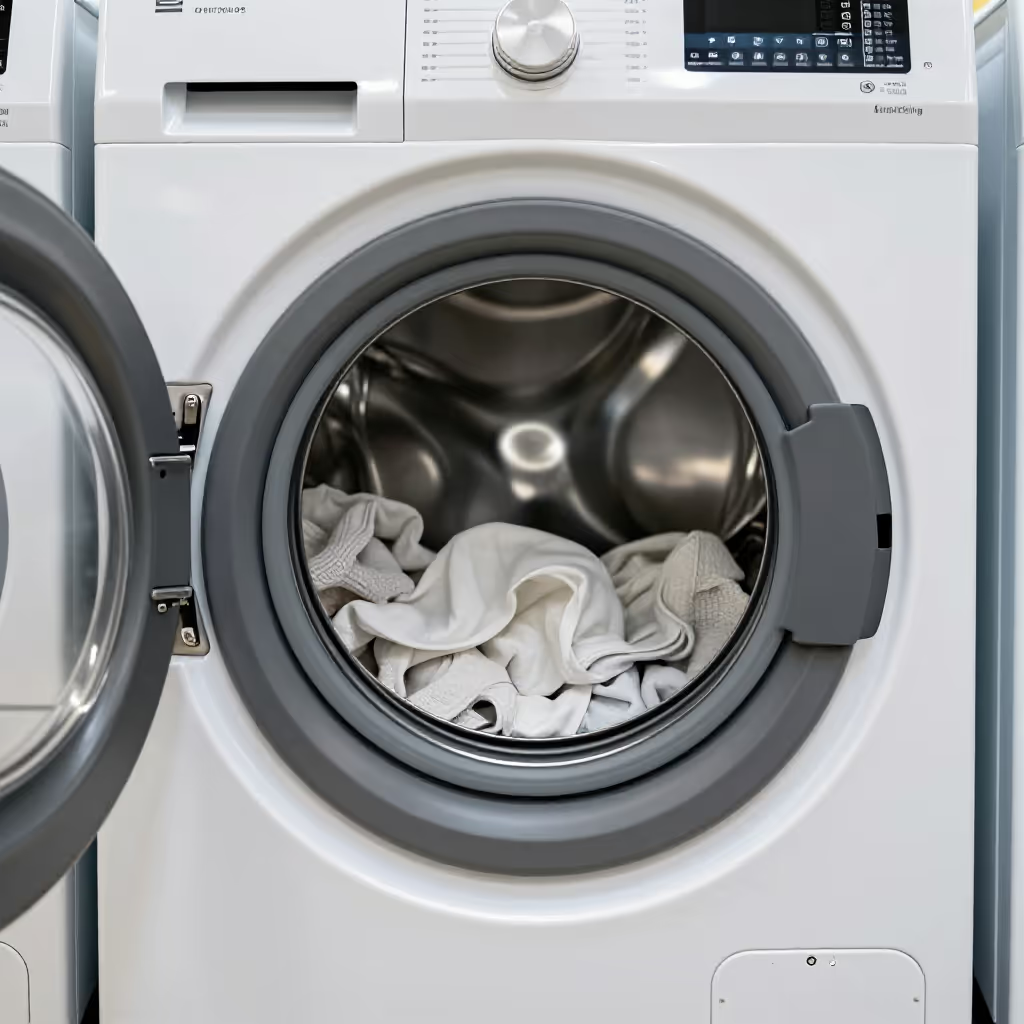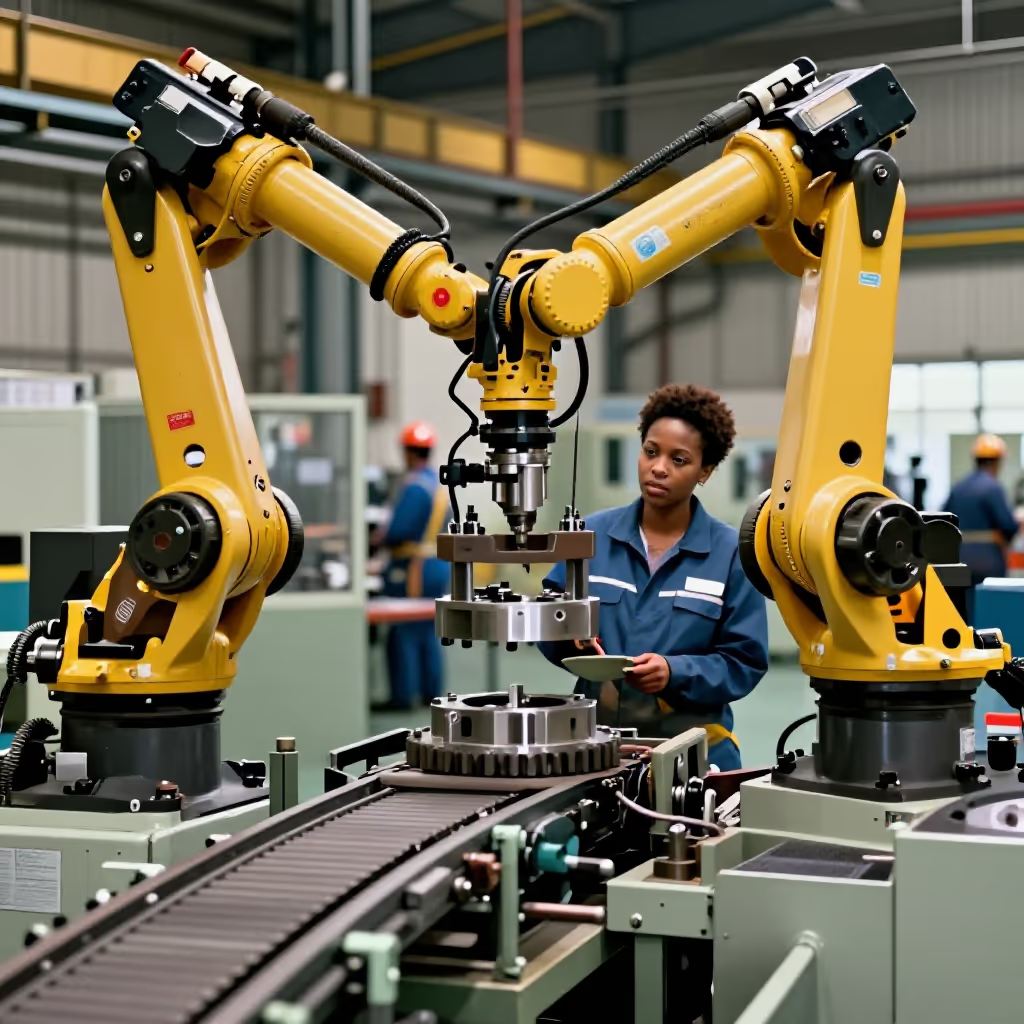
Relating to mechanics or functioning with the help of a machine. It describes processes based on the laws of motion and force.
example
Eine mechanische Uhr wird durch ein Federwerk angetrieben, nicht durch eine Batterie.
A mechanical watch is powered by a spring mechanism, not by a battery.

Usage tips
Word family
The adjective 'mechanisch' (mechanical) belongs to the noun 'die Mechanik' (mechanics), the study of motion and forces. It therefore describes things that function according to the principles of mechanics.
EXAMPLE
Die Mechanik ist ein wichtiger Teil des Physikunterrichts.
Mechanics is an important part of physics class.
Context: technology
In its basic meaning, 'mechanisch' (mechanical) always refers to technology, machines, or physical processes. It is often contrasted with 'elektronisch' (electronic) or 'digital' (digital).
EXAMPLE
Die alte Schreibmaschine funktioniert rein mechanisch, ohne Strom.
The old typewriter works purely mechanically, without electricity.
Metaphorical use
The figurative meaning describes a human action that happens automatically and without feeling or thought, almost like with a machine.
EXAMPLE
Er nickte nur mechanisch, während er an etwas anderes dachte.
He only nodded mechanically while thinking about something else.
Compare with
antonym
mechanisch vs bewusst
conscious / deliberate
'bewusst' and 'mechanisch' can describe how someone does something. Here, however, they are opposites. 'bewusst' means: you do something intentionally and think about it while doing it. 'mechanisch' means: you do something automatically, out of habit, and without really thinking. If an action is planned and intended, 'bewusst' fits. If it just happens as part of a routine, 'mechanisch' fits.
mechanisch
Nach dem langen Arbeitstag schließt er die Tür fast mechanisch ab.
After the long workday, he locks the door almost mechanically.
bewusst
Im Gespräch wählt sie bewusst ruhige Worte.
During the conversation, she deliberately chooses calm words.