

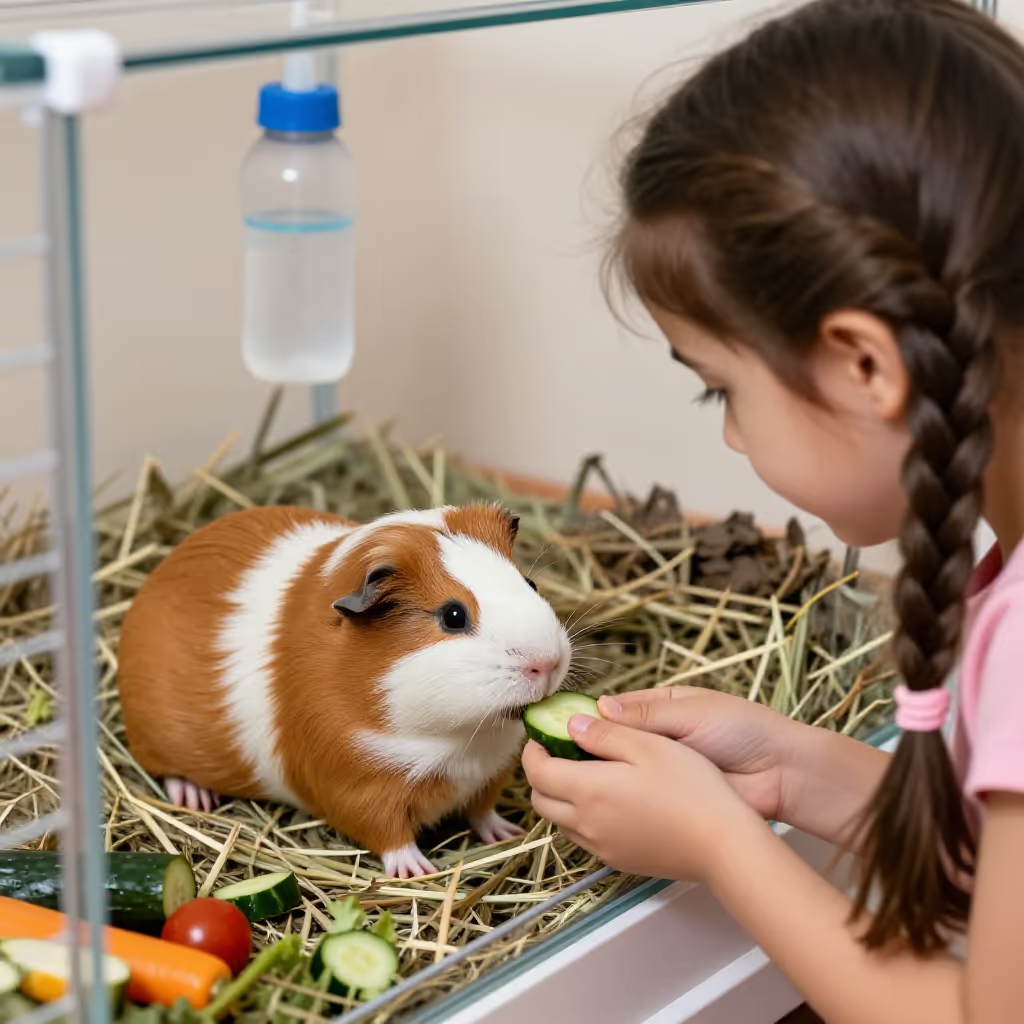
A small rodent originally from South America that is often kept as a pet and is known for its squeaking sounds.
example
Die Kinder wünschen sich ein Meerschweinchen zum Geburtstag.
The children want a guinea pig for their birthday.
Usage tips
Compound word
The word is made up of 'Meer' (sea) and 'Schweinchen' (little pig). The animals came to Europe across the sea and make noises reminiscent of pigs, hence the name 'Meer-Schwein' (sea pig).
EXAMPLE
Obwohl sie „Meerschweinchen“ heißen, können sie nicht schwimmen.
Although they are called 'Meerschweinchen' (guinea pigs), they cannot swim.
Diminutive ending
The ending '-chen' is a diminutive form. Words with this ending are always neuter and take the article 'das', as in 'das Schwein' (the pig) → 'das Schweinchen' (the little pig).
EXAMPLE
Ein kleines Meerschweinchen braucht viel Pflege.
A small guinea pig needs a lot of care.
Typical verbs
In the context of pets, 'Meerschweinchen' (guinea pig) is often used with the verbs 'halten' (to keep), 'füttern' (to feed), or 'pflegen' (to care for).
EXAMPLE
Man sollte Meerschweinchen niemals alleine halten.
You should never keep guinea pigs alone.
Compare with
confusable
Meerschweinchen vs Maus
mouse
'die Maus' and 'das Meerschweinchen' are both small rodents, so they may seem similar to learners. However, a mouse is much smaller, has a long thin tail, and is often seen as a pest. A guinea pig is larger, has no visible long tail, and is often kept as a pet. The words can be confused if you are only thinking of a 'small animal in a cage'. 'Maus' is more natural for wild or very small rodents, while 'Meerschweinchen' is used for the typical pet that squeaks.
Meerschweinchen
Das Meerschweinchen meiner Schwester quiekt laut, wenn es frisches Gemüse bekommt.
My sister's guinea pig squeaks loudly when it gets fresh vegetables.
Maus
Im Keller hat Lisa eine kleine Maus hinter den Kisten gesehen.
Lisa saw a small mouse behind the boxes in the basement.