

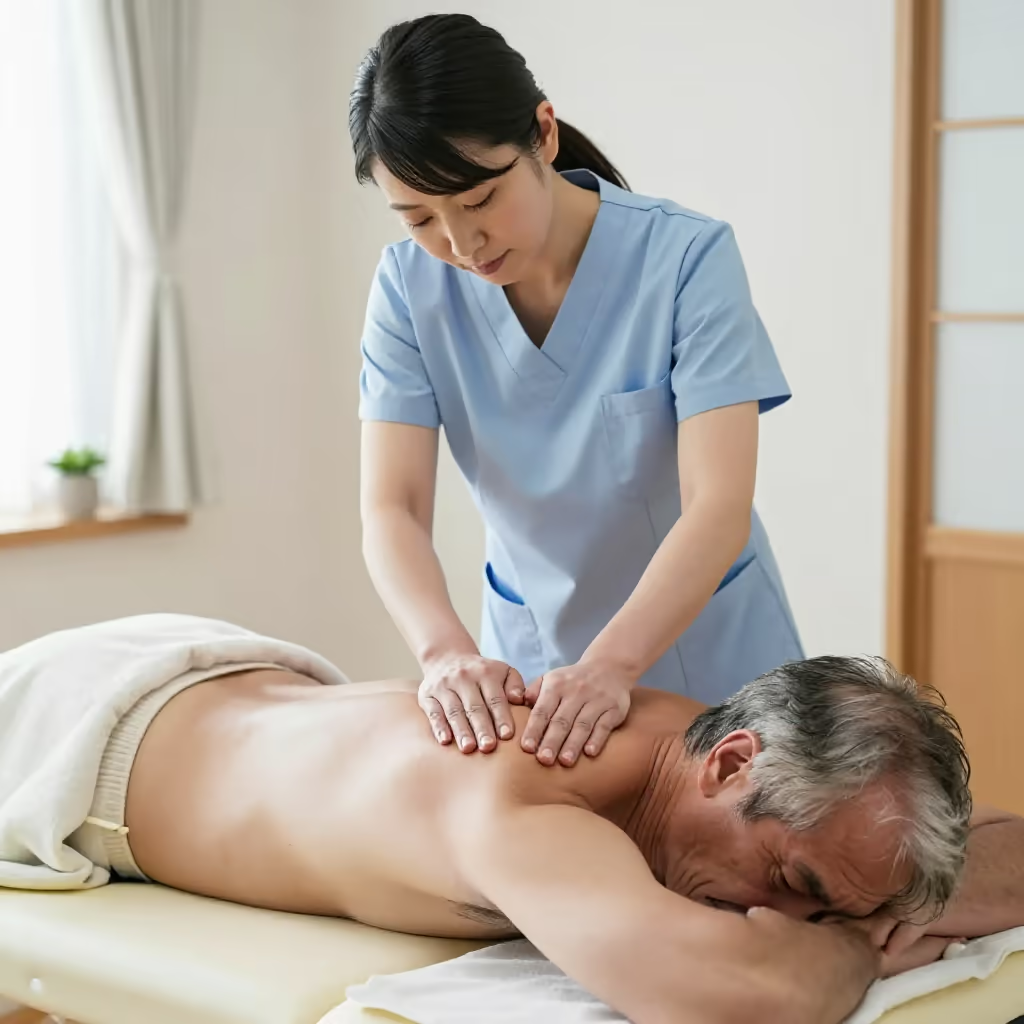
To knead, stroke, and rub the body, especially the muscles, with the hands in order to release tension, relieve pain, or promote circulation.
example
Nach dem Sport lasse ich mir gerne den Rücken massieren.
After exercising, I like to have my back massaged.
Usage tips
Accusative object
The verb 'massieren' (to massage) almost always needs an accusative object. This object is the person or body part receiving the massage.
EXAMPLE
Der Physiotherapeut massiert meinen Rücken.
The physiotherapist massages my back.
Sich massieren lassen
To express that another person is massaging you, the construction 'sich massieren lassen' (to have oneself massaged / to get a massage) is used very frequently. The person receiving the massage is in the dative or accusative.
EXAMPLE
Ich lasse mir nach dem Training die Beine massieren.
After training, I have my legs massaged.
Typical collocations
Common body parts that are massaged are 'den Nacken' (the neck), 'den Rücken' (the back), 'die Füße' (the feet), or 'die Schultern' (the shoulders). You can also massage someone 'sanft' (gently) or 'kräftig' (firmly).
EXAMPLE
Eine kräftige Massage kann bei Verspannungen helfen.
A firm massage can help with tension.
Compare with
confusable
massieren vs Massage
massage
'die Massage' and 'massieren' are closely related, but they are different parts of speech. 'Die Massage' is the treatment itself, meaning the event or appointment. 'massieren' is the action: someone kneads or rubs muscles with their hands. Learners may confuse the words because they look almost the same. In practical terms: you receive or book a massage, but a person massages the back, neck, or shoulders.
massieren
Der Physiotherapeut massiert heute meinen verspannten Nacken.
The physical therapist is massaging my tense neck today.
Massage
Nach der Massage fühlte sich mein Rücken viel entspannter an.
After the massage, my back felt much more relaxed.