

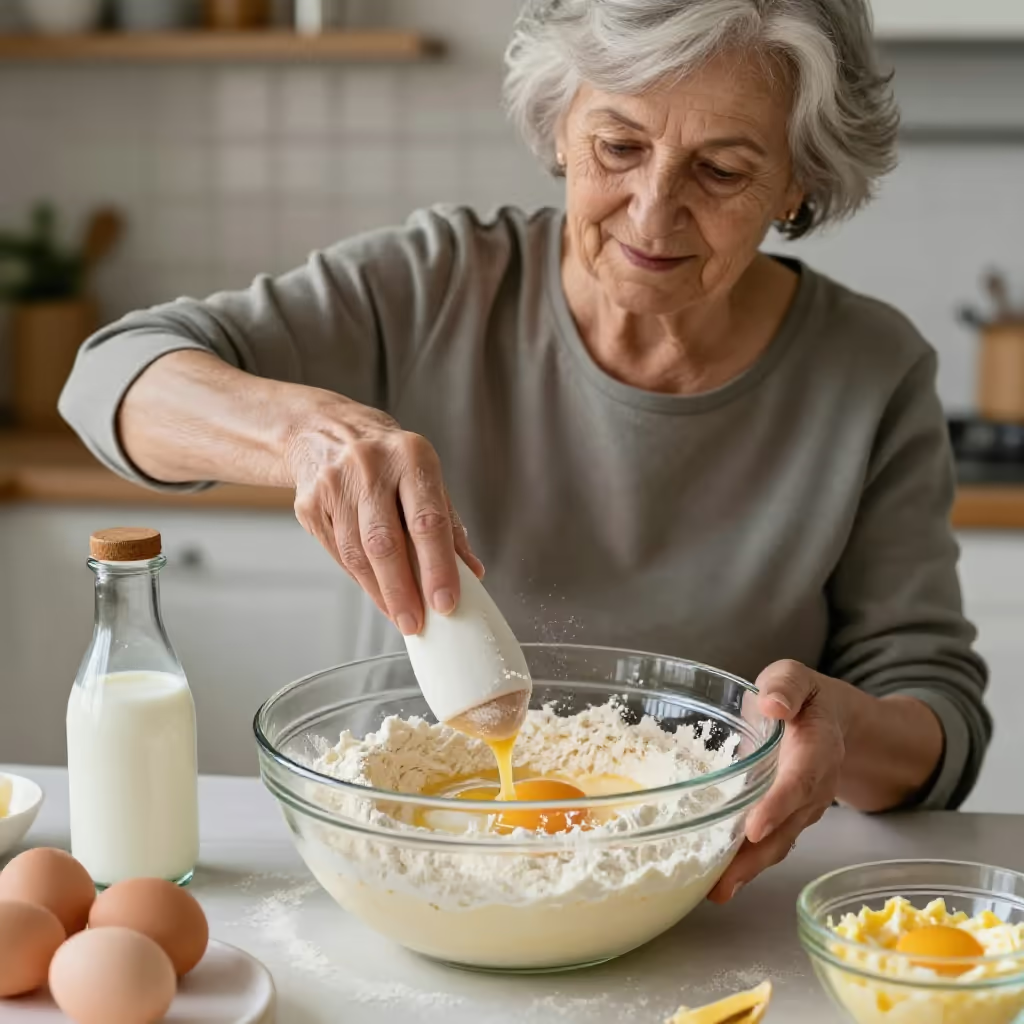
mischen
to mix
To combine different substances or ingredients into a uniform mass or liquid.
EXAMPLE
Für den Cocktail mischt man einfach Saft und Sekt.
For the cocktail, you simply mix juice and sparkling wine.
to mix
Loading your saved state.
to mix
To combine different substances or ingredients into a uniform mass or liquid.
Für den Cocktail mischt man einfach Saft und Sekt.
For the cocktail, you simply mix juice and sparkling wine.

to shuffle
To put things, especially playing cards, into a random order.
Du bist dran mit Karten mischen.
It's your turn to shuffle the cards.

to interfere in
To interfere in other people's affairs; to get involved in something that is none of one's business.
Misch dich bitte nicht in meine privaten Angelegenheiten!
Please don't interfere in my private affairs!

to mingle with
To move into a crowd of people and become part of it, often in order to remain unnoticed.
Der Geheimagent mischte sich unbemerkt unter die Gäste.
The secret agent mingled unnoticed with the guests.
As a reflexive verb, 'sich mischen' changes its meaning depending on the preposition. 'Sich in etwas (Akkusativ) mischen' means to interfere where one is not wanted. 'Sich unter jemanden (Akkusativ) mischen' means to become part of a group.
Bitte misch dich nicht in meine Angelegenheiten!
Please don't interfere in my affairs!
In its basic meaning, 'mischen' (to mix) is often combined with things that are joined together. Typical phrases are: 'Zutaten mischen' (to mix ingredients), 'Farben mischen' (to mix colors), 'einen Salat mischen' (to toss a salad), or 'Getränke mischen' (to mix drinks).
Der Maler mischt die Farben auf seiner Palette.
The painter mixes the colors on his palette.
In the context of games, 'Karten mischen' (to shuffle cards) is a fixed expression. It means to put the playing cards into a random order before dealing them.
Wer ist als Nächstes mit dem Mischen der Karten dran?
Whose turn is it next to shuffle the cards?
The phrase 'sich in etwas mischen' always follows this pattern: reflexive verb + preposition 'in' + accusative. The object is often an abstract noun such as 'Angelegenheiten' (affairs), 'ein Gespräch' (a conversation), or 'Politik' (politics).
Er hat die schlechte Angewohnheit, sich immer in fremde Gespräche zu mischen.
He has the bad habit of always interfering in other people's conversations.
to combine
Both words can describe bringing ingredients or other things together. “Mischen” emphasizes blending them into a uniform mass or liquid, whereas “kombinieren” tends to refer to a suitable arrangement of different components. Use “mischen” when they merge into one another and “kombinieren” when they remain recognizably separate.
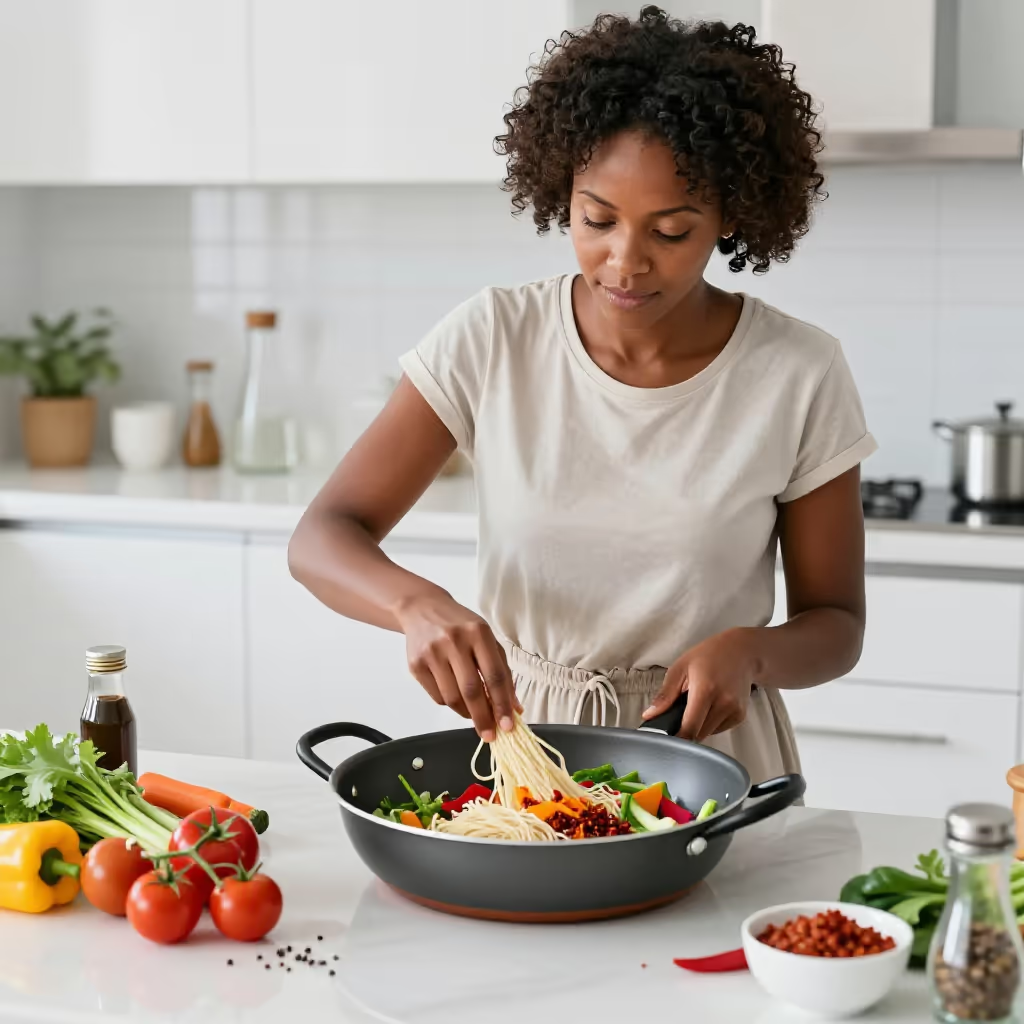
Für das Dressing mischte sie Öl und Essig zu einer einheitlichen Flüssigkeit.
For the dressing, she mixed the oil and vinegar into a uniform liquid.
Für den Salat kombinierte sie knackiges Gemüse mit gerösteten Nüssen.
For the salad, she combined crisp vegetables with roasted nuts.