

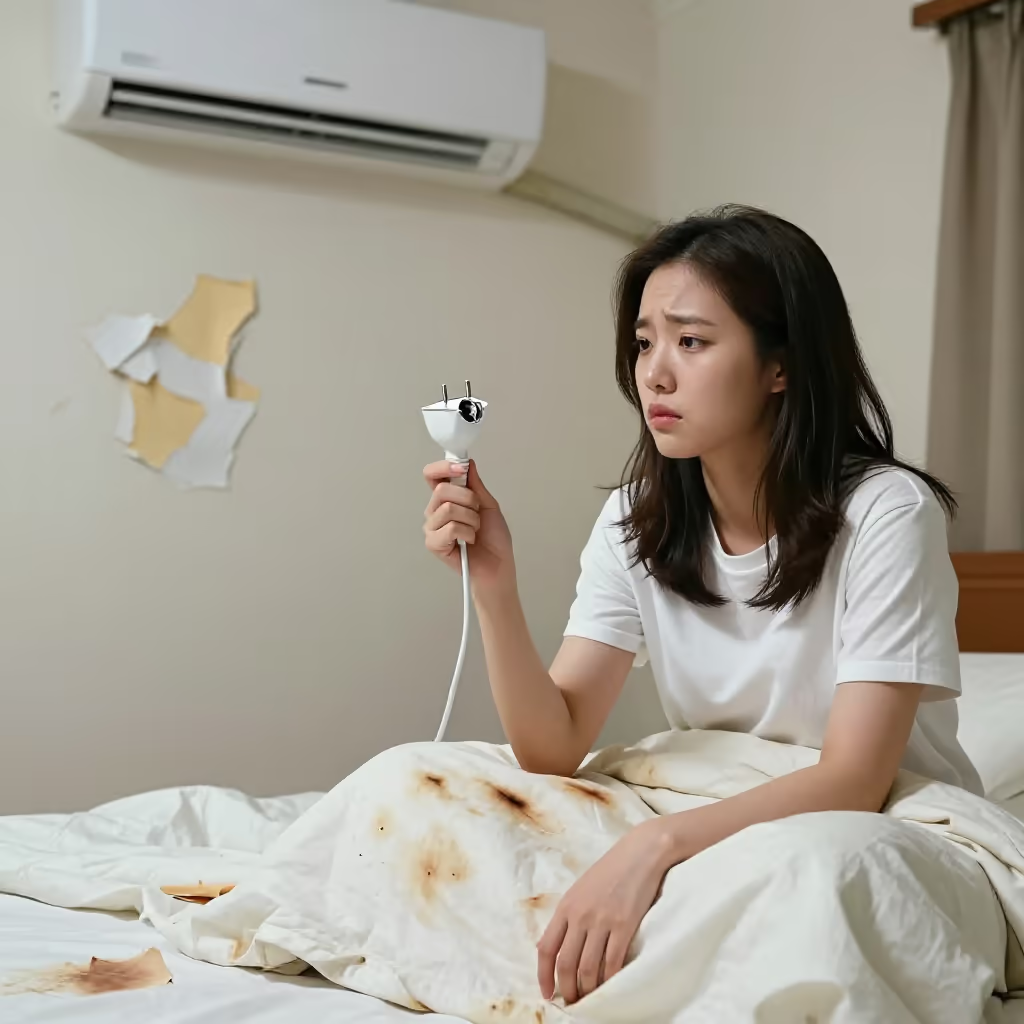
mies
lousy
Colloquial for very bad, of poor quality, or unpleasant.
EXAMPLE
Der Film war total mies, ich bin fast eingeschlafen.
The film was totally lousy; I almost fell asleep.
lousy / awful
Loading your saved state.
lousy
Colloquial for very bad, of poor quality, or unpleasant.
Der Film war total mies, ich bin fast eingeschlafen.
The film was totally lousy; I almost fell asleep.

awful
Colloquial for feeling physically or emotionally unwell, miserable, or bad.
Mir ist heute richtig mies, ich glaube, ich bekomme eine Grippe.
I feel really awful today; I think I'm coming down with the flu.

mean
Colloquial for unfair, nasty, or morally bad.
Es war eine miese Tour, ihn einfach so im Stich zu lassen.
It was a mean thing to do, just abandoning him like that.
'Mies' (lousy/awful) is a colloquial word and is mainly used in spoken or informal communication. It is rather uncommon in formal texts.
Ich hatte heute einen richtig miesen Tag im Büro.
I had a really lousy day at the office today.
If 'mies' refers to a person or action, it often means 'mean'. If it refers to a thing or situation, it means 'of poor quality'. When used with 'mir ist...' (I feel...), it describes physical discomfort.
Das war eine miese Aktion von dir!
That was a mean thing for you to do!
To express that someone feels unwell, you use the construction 'jemandem ist mies' (someone feels awful). The person is in the dative case. Alternatively, you can also say 'sich mies fühlen' (to feel awful).
Iss das lieber nicht, sonst ist dir nachher mies.
You'd better not eat that, or you'll feel awful later.
bad
Schlecht and mies can both express poor quality. Schlecht is a neutral evaluation in standard German. Mies is colloquial, sounds more emotional, and is often more disparaging; it is therefore especially suitable in casual conversations.

Unter Freunden sagt die Prüferin, dass das Essen echt mies war.
Among friends, the examiner says that the food was really lousy.
Im Bericht bewertet die Prüferin die Qualität des Essens als schlecht.
In the report, the examiner rates the quality of the food as poor.