


miteinander
with each other
Together; in a mutual relationship or action.
EXAMPLE
Die beiden Abteilungen müssen besser miteinander kommunizieren.
The two departments need to communicate better with each other.
with each other
Loading your saved state.
with each other
Together; in a mutual relationship or action.
Die beiden Abteilungen müssen besser miteinander kommunizieren.
The two departments need to communicate better with each other.
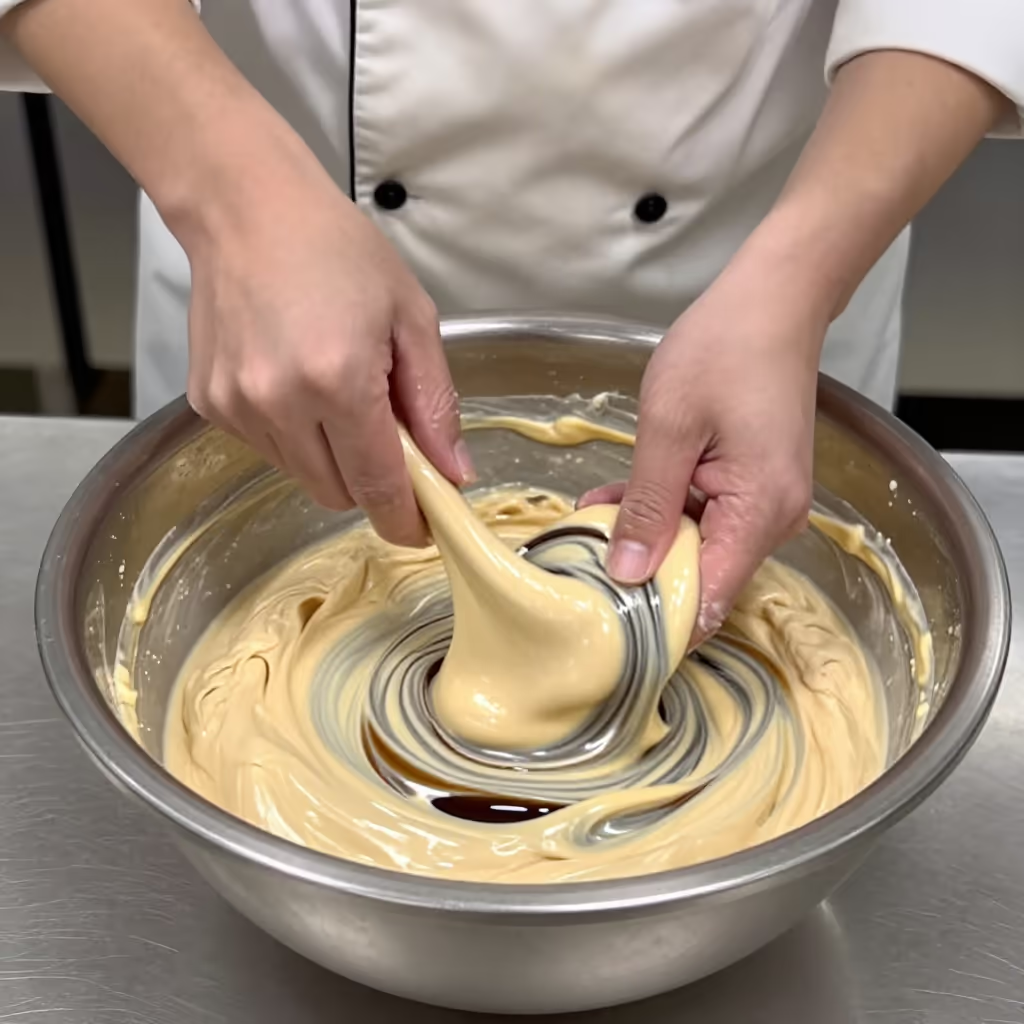
together
Expresses a mixing or connection of things.
In diesem Gericht sind süße und salzige Aromen harmonisch miteinander verbunden.
In this dish, sweet and salty flavors are harmoniously combined together.
The word is a compound of the preposition 'mit' (with) and the reciprocal pronoun 'einander' (each other). So it literally means 'with each other' or 'with one another.'
Wir sollten offen miteinander über das Problem reden.
We should talk openly with each other about the problem.
As an adverb, 'miteinander' (with each other) usually comes after the conjugated verb and any objects. It describes how an action is carried out.
Die Teammitglieder arbeiten sehr produktiv miteinander.
The team members work very productively with each other.
'Miteinander' (with each other) is often used with verbs that express a mutual action or relationship. Typical examples are: 'miteinander reden' (to talk with each other), 'miteinander arbeiten' (to work with each other), 'miteinander auskommen' (to get along with each other), or 'miteinander Zeit verbringen' (to spend time with each other).
Es ist wichtig, dass Nachbarn gut miteinander auskommen.
It is important that neighbors get along well with each other.
In this meaning, 'miteinander' (together) is often used with verbs such as 'verbinden' (to connect), 'vermischen' (to mix), or 'kombinieren' (to combine). It emphasizes that different elements are joined into a whole.
In dem Rezept werden Mehl und Zucker zuerst miteinander vermischt.
In the recipe, flour and sugar are first mixed together.
together
For a shared action, both zusammen and miteinander can be idiomatic. Zusammen mainly emphasizes coming together or simultaneity, while miteinander focuses more strongly on the relationship or interaction between the people involved. Choose miteinander when the people are reacting to each other or doing something for each other.

Die Kinder sprechen miteinander über ihren Turm.
The children are talking to each other about their tower.
Die Kinder bauen zusammen einen Turm.
The children are building a tower together.