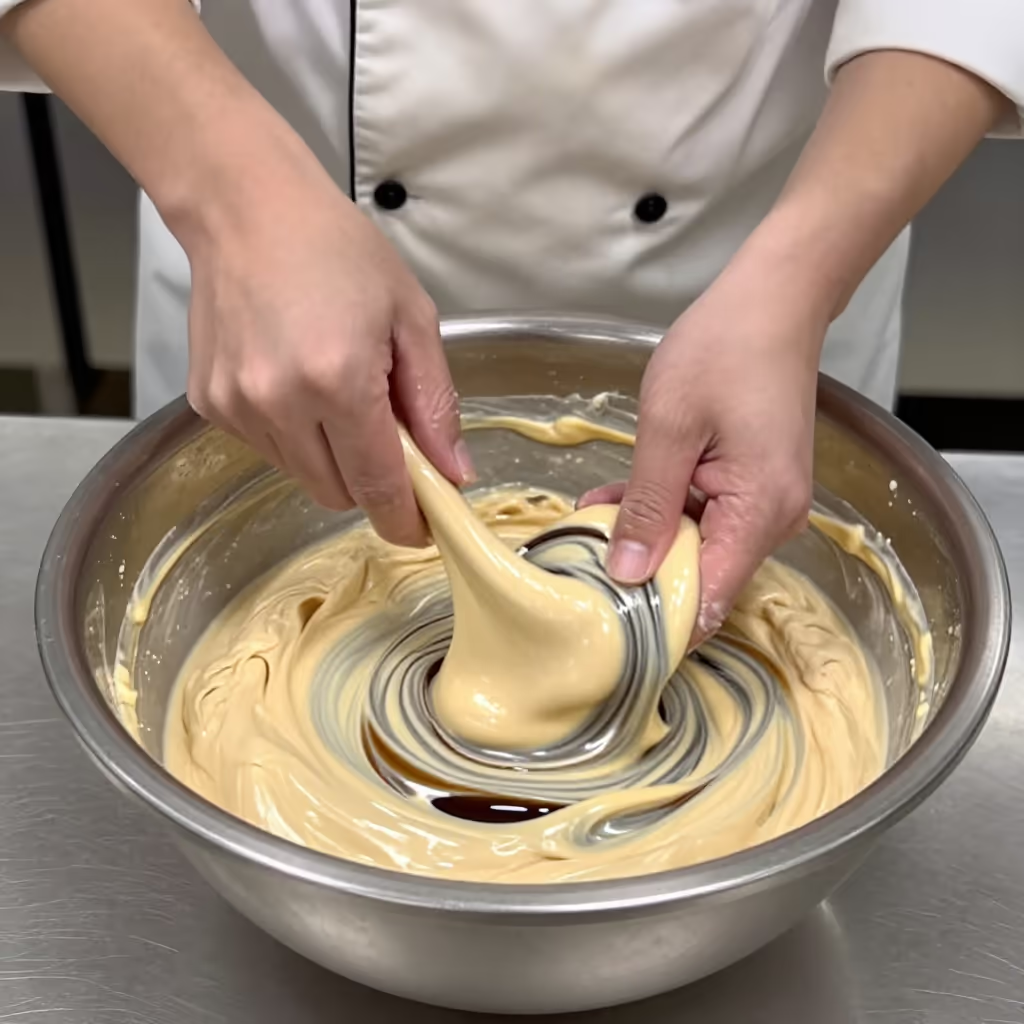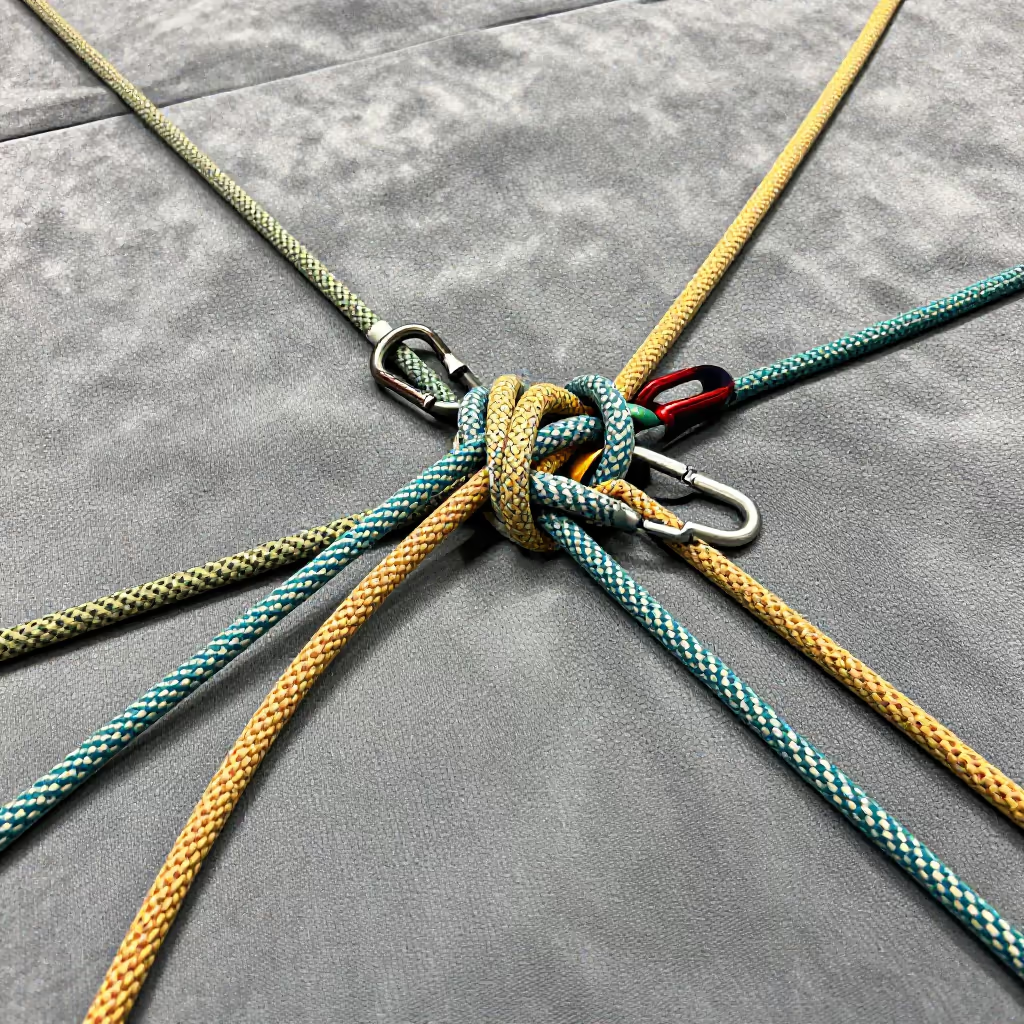
Expresses that two or more things or people are interlaced, intertwined, or merging into one another. It describes a close, often complex spatial connection.
example
Die beiden Zahnräder greifen perfekt ineinander.
The two gears mesh perfectly into each other.

Usage tips
Word structure
The word consists of the parts 'in' and 'einander' (each other). It literally means 'into each other' and always describes a mutual, interlocking relationship between at least two things.
EXAMPLE
Die Puzzleteile passten perfekt ineinander.
The puzzle pieces fit perfectly into each other.
Sentence position
As an adverb, 'ineinander' usually comes directly after the conjugated verb or at the end of a clause. It describes the manner in which the action of the verb takes place.
EXAMPLE
Die beiden Tänzer bewegten sich fließend ineinander.
The two dancers moved fluidly into each other.
Typical collocations
In the literal meaning, 'ineinander' is often used with verbs of connection or movement. Typical combinations are 'ineinandergreifen' (to interlock/mesh), 'ineinander verkeilt sein' (to be wedged into each other), or 'ineinander verschlungen sein' (to be intertwined).
EXAMPLE
Die Arme der beiden Ringer waren fest ineinander verkeilt.
The arms of the two wrestlers were firmly wedged into each other.
Typical collocations
In the figurative meaning, 'ineinander' often describes processes or concepts. Common verbs here are 'ineinander übergehen' (to transition into each other), 'ineinanderfließen' (to flow into each other), or 'miteinander verwoben sein' (to be interwoven with each other).
EXAMPLE
In seiner Musik fließen Jazz und klassische Elemente ineinander.
In his music, jazz and classical elements flow into each other.
Compare with
near_synonym · confusable
ineinander vs miteinander
with each other
'miteinander' and 'ineinander' can both express that things are connected. 'miteinander' is more general: things are brought together, mixed, or used together. 'ineinander' is more specific and describes something spatially or conceptually passing into something else, intertwining, or being closely connected. Learners may confuse the words because both express closeness and connection. 'miteinander' fits for general interaction or combination, while 'ineinander' fits for a close connection or a transition from one thing into another.
ineinander
Im Garten waren die Zweige der beiden Bäume ineinander gewachsen.
In the garden, the branches of the two trees had grown into each other.
miteinander
Im Kurs vergleichen wir heute zwei Lösungen miteinander.
In the course, we are comparing two solutions with each other today.