

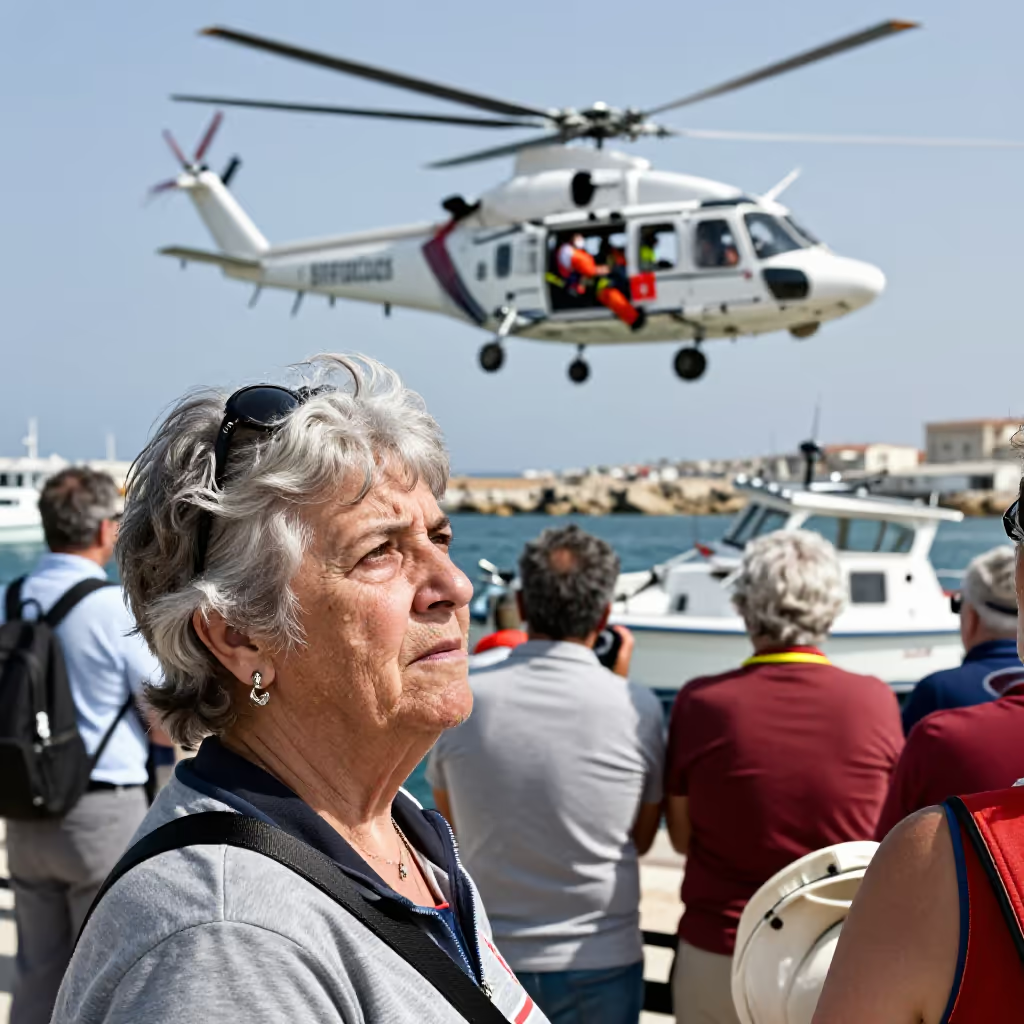
To experience an event personally and directly as someone present or as a witness.
example
Meine Großeltern haben die Zeit des Wirtschaftswunders noch selbst miterlebt.
My grandparents still experienced the time of the economic miracle themselves.

Usage tips
Separable verb
'Miterleben' (to experience firsthand) is a separable verb. The prefix 'mit-' goes to the end in main clauses. In subordinate clauses and in the infinitive with 'zu', the verb stays together.
EXAMPLE
Ich erlebte die Feierlichkeiten live mit.
I experienced the celebrations live.
Word structure
The word consists of the prefix 'mit-' and the verb 'erleben' (to experience). The prefix 'mit-' here means that you are present at something that is happening and experience it personally.
EXAMPLE
Er hat den Fall der Berliner Mauer als Kind miterlebt.
He experienced the fall of the Berlin Wall as a child.
Typical collocations
People often experience important or historical events firsthand. Typical combinations are: 'eine Zeit miterleben' (to experience a period), 'einen Wandel miterleben' (to experience a change), 'ein Ereignis miterleben' (to experience an event), or 'die Geschichte miterleben' (to experience history).
EXAMPLE
Sie durfte die Krönung des Königs aus nächster Nähe miterleben.
She was able to experience the king's coronation up close.
Compare with
near_synonym · confusable
miterleben vs erleben
to experience
'erleben' and 'miterleben' both have to do with an event that you experience yourself. 'erleben' is broader: you can have something as your own experience, or simply live long enough to see an event. 'miterleben' emphasizes more strongly that you are directly present or are a witness while something is happening. The words can be confused because both fit with events. As a simple guide: 'miterleben' says more clearly 'I was there'; 'erleben' says more generally 'that happened to me or I experienced it'.
miterleben
Sie hat den Unfall auf dem Weg zur Arbeit direkt miterlebt.
She directly witnessed the accident on her way to work.
erleben
In der neuen Schule erlebt das Kind viele Veränderungen.
At the new school, the child experiences many changes.