


erleben
to experience
To personally go through and experience an event or situation, often with an emotional impact.
EXAMPLE
Auf seiner Weltreise hat er viele Abenteuer erlebt.
On his trip around the world, he experienced many adventures.
to experience
Loading your saved state.
to experience
To personally go through and experience an event or situation, often with an emotional impact.
Auf seiner Weltreise hat er viele Abenteuer erlebt.
On his trip around the world, he experienced many adventures.
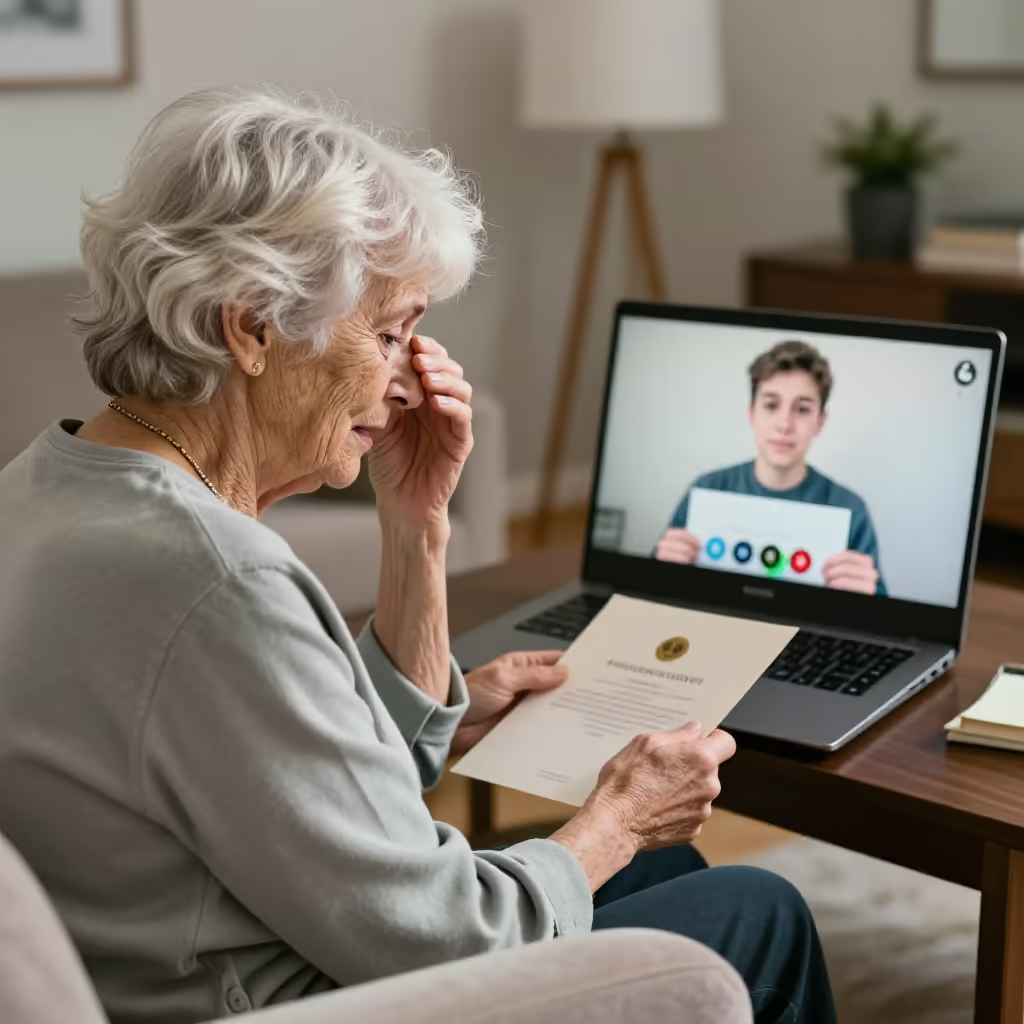
to live to see
To be a witness to an event; to live long enough to experience something specific.
Meine Großmutter hat die Einführung des Internets noch erlebt.
My grandmother lived to see the introduction of the internet.

to perceive
To perceive or experience someone or something in a particular way.
Ich erlebe sie als eine sehr kompetente und hilfsbereite Kollegin.
I perceive her as a very competent and helpful colleague.
'Erleben' (to experience) is an inseparable verb made up of the prefix 'er-' and the verb 'leben' (to live). The prefix 'er-' often indicates that an action leads to a result or an experience for the person.
Ich hoffe, du erlebst einen wunderschönen Tag.
I hope you experience a wonderful day.
The verb 'erleben' (to experience) is transitive and always needs a direct object in the accusative. You always experience 'etwas' (something).
Letztes Jahr haben wir einen sehr milden Winter erlebt.
Last year we experienced a very mild winter.
'Erleben' (to experience) is often combined with emotional or significant events. Typical collocations are 'ein Abenteuer erleben' (to experience an adventure), 'eine Überraschung erleben' (to experience a surprise), 'schöne Momente erleben' (to experience beautiful moments), or 'eine Enttäuschung erleben' (to experience a disappointment).
Bei ihrem ersten Fallschirmsprung hat sie puren Nervenkitzel erlebt.
During her first skydive, she experienced pure excitement.
To express how one perceives a person or thing, the structure 'jemanden/etwas als ... erleben' (to experience/perceive someone/something as ...) is used. The word 'als' (as) is essential for this meaning.
Obwohl er streng aussieht, habe ich ihn als sehr herzlichen Menschen erlebt.
Although he looks strict, I experienced him as a very warm person.
to live
Leben describes how someone spends a particular period or the circumstances under which it passes. Erleben, by contrast, takes the situation or experience itself as its object and emphasizes personal participation. Erleben is therefore the better choice when the experience itself is the focus.

Sie erlebte ein Jahr voller großer Unsicherheit.
She experienced a year full of great uncertainty.
Sie lebte ein Jahr lang in großer Unsicherheit.
She lived with great uncertainty for a year.