

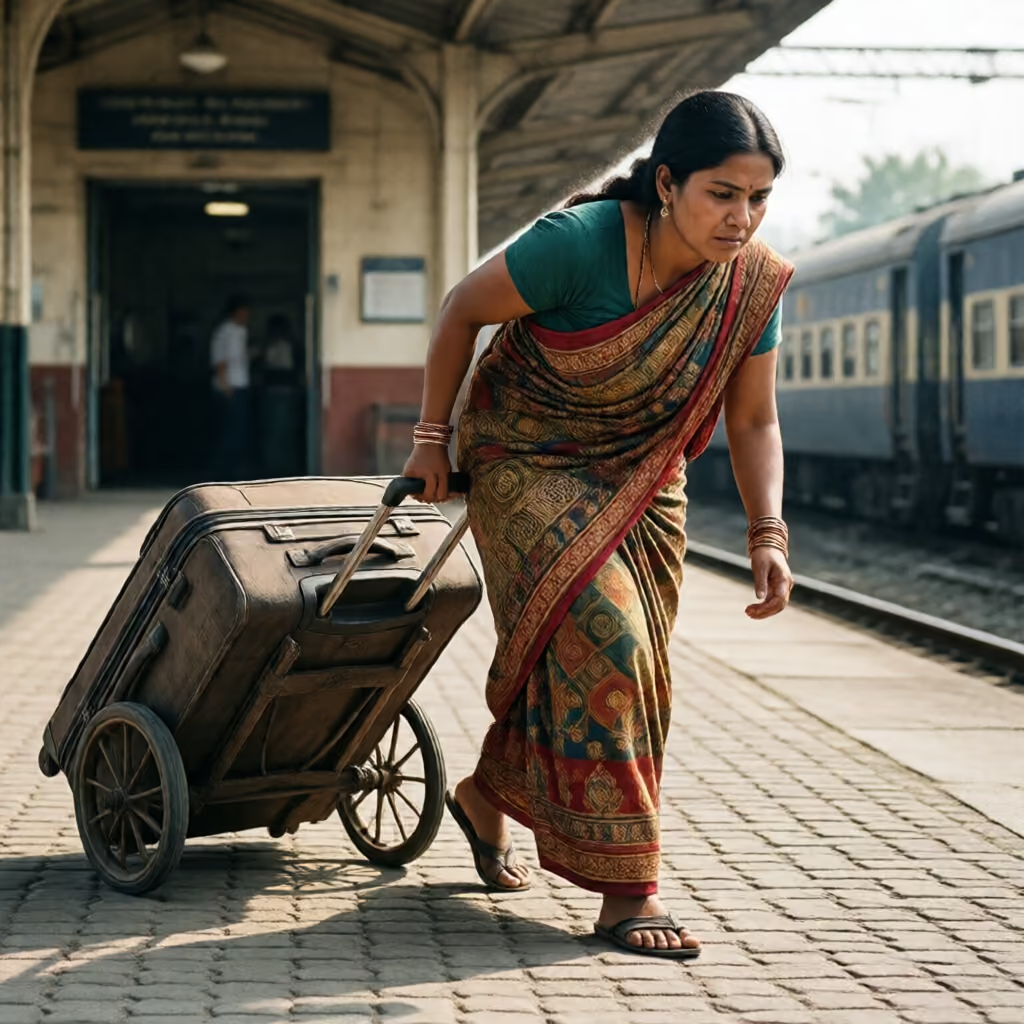
mitschleppen
to lug along
To carry or pull something heavy or cumbersome along while walking.
EXAMPLE
Sie musste den schweren Koffer den ganzen Weg mitschleppen.
She had to lug the heavy suitcase along the entire way.
to lug along
mitschleppen – schleppte mit – hat mitgeschleppt
Loading your saved state.
to lug along
To carry or pull something heavy or cumbersome along while walking.
Sie musste den schweren Koffer den ganzen Weg mitschleppen.
She had to lug the heavy suitcase along the entire way.

to drag along
To take someone along against their will or without much consideration, forcing the person to participate in an activity.
Warum schleppst du mich immer zu solchen langweiligen Partys mit?
Why do you always drag me along to such boring parties?

to carry around
To carry a burdensome thing, trait, or problem with you over a long period of time without getting rid of it.
Er schleppt seit Jahren die Folgen dieses Fehlers mit.
He has been carrying around the consequences of this mistake for years.
| ich | schleppe mit |
|---|---|
| du | schleppst mit |
| er/sie/es | schleppt mit |
| wir | schleppen mit |
| ihr | schleppt mit |
| sie | schleppen mit |
| ich | schleppte mit |
|---|---|
| du | schlepptest mit |
| er/sie/es | schleppte mit |
| wir | schleppten mit |
| ihr | schlepptet mit |
| sie | schleppten mit |
| ich | habe mitgeschleppt |
|---|---|
| du | hast mitgeschleppt |
| er/sie/es | hat mitgeschleppt |
| wir | haben mitgeschleppt |
| ihr | habt mitgeschleppt |
| sie | haben mitgeschleppt |
| du | schlepp mit! schleppe mit! |
|---|---|
| ihr | schleppt mit! |
| Sie | schleppen Sie mit! |
| ich | hatte mitgeschleppt |
|---|---|
| du | hattest mitgeschleppt |
| er/sie/es | hatte mitgeschleppt |
| wir | hatten mitgeschleppt |
| ihr | hattet mitgeschleppt |
| sie | hatten mitgeschleppt |
| ich | werde mitschleppen |
|---|---|
| du | wirst mitschleppen |
| er/sie/es | wird mitschleppen |
| wir | werden mitschleppen |
| ihr | werdet mitschleppen |
| sie | werden mitschleppen |
| ich | schleppe mit |
|---|---|
| du | schleppest mit |
| er/sie/es | schleppe mit |
| wir | schleppen mit |
| ihr | schleppet mit |
| sie | schleppen mit |
Used for reported speech.
| ich | schleppte mit |
|---|---|
| du | schlepptest mit |
| er/sie/es | schleppte mit |
| wir | schleppten mit |
| ihr | schlepptet mit |
| sie | schleppten mit |
Used for wishes and “would”.
| infinitive | mitschleppen |
|---|---|
| with zu | mitzuschleppen |
| present participle | mitschleppend |
| past participle | mitgeschleppt |
'Mitschleppen' (to lug along) is a separable verb made up of 'mit' (along) and 'schleppen' (to lug). In a main clause, 'mit' comes at the end of the sentence; in a subordinate clause, the verb stays together. With 'zu' (to), 'zu' comes between the prefix and the verb.
Sie schleppte den schweren Rucksack den ganzen Berg hinauf mit.
She lugged the heavy backpack all the way up the mountain.
Er war müde, weil er den Koffer so lange mitschleppte.
He was tired because he had been lugging the suitcase around for so long.
Es ist anstrengend, diese Tasche jeden Tag mitzuschleppen.
It is tiring to lug this bag around every day.
'Mitschleppen' (to lug along) is often used colloquially and has a critical or annoyed tone. The word often emphasizes that something is heavy, bothersome, or unwanted.
Warum schleppst du immer so viele Sachen mit?
Why do you always lug so many things around?
When it means carrying something, 'mitschleppen' (to lug along) is often used with heavy luggage or cumbersome objects. Typical collocations include lugging suitcases, bags, backpacks, and heavy equipment around.
Für die Reise musste er zwei große Koffer mitschleppen.
He had to lug two large suitcases around for the trip.
When someone is taken along against their will, that person usually appears as the accusative object of 'mitschleppen' (to drag along). An expression of place or event with 'zu' (to) or 'auf' (to) often follows as well.
Sie schleppte ihren Bruder gegen seinen Willen zur Familienfeier mit.
She dragged her brother to the family celebration against his will.
When referring to long-term burdens, 'mitschleppen' (to carry around) is often used with words such as 'Folgen' (consequences), 'Probleme' (problems), 'Sorgen' (worries), or 'Schuldgefühle' (feelings of guilt). The construction describes a burden that continues to exist and is not put down.
Sie schleppt seit Jahren Schuldgefühle gegenüber ihrer Familie mit.
She has been carrying around feelings of guilt toward her family for years.