


mitspielen
to join in
To take part together with others in a game, a sports activity, or a musical or theatrical performance.
EXAMPLE
Darf mein kleiner Bruder bei eurem Kartenspiel mitspielen?
Can my little brother join in your card game?
to join in / play along
mitspielen – spielte mit – hat mitgespielt
Loading your saved state.
to join in
To take part together with others in a game, a sports activity, or a musical or theatrical performance.
Darf mein kleiner Bruder bei eurem Kartenspiel mitspielen?
Can my little brother join in your card game?

to play a role
To play a role in an event or development; to be a factor that influences something.
Bei seiner Entscheidung, den Job anzunehmen, hat auch das gute Gehalt mitgespielt.
The good salary also played a role in his decision to accept the job.

to play along
To consciously cooperate in a plan, deception, or joke and act as if you know nothing or agree with it.
Obwohl sie von der Überraschungsparty wusste, hat sie perfekt mitgespielt und sich riesig gefreut.
Although she knew about the surprise party, she played along perfectly and acted absolutely delighted.
| ich | spiele mit |
|---|---|
| du | spielst mit |
| er/sie/es | spielt mit |
| wir | spielen mit |
| ihr | spielt mit |
| sie | spielen mit |
| ich | spielte mit |
|---|---|
| du | spieltest mit |
| er/sie/es | spielte mit |
| wir | spielten mit |
| ihr | spieltet mit |
| sie | spielten mit |
| ich | habe mitgespielt |
|---|---|
| du | hast mitgespielt |
| er/sie/es | hat mitgespielt |
| wir | haben mitgespielt |
| ihr | habt mitgespielt |
| sie | haben mitgespielt |
| du | spiel mit! spiele mit! |
|---|---|
| ihr | spielt mit! |
| Sie | spielen Sie mit! |
| ich | hatte mitgespielt |
|---|---|
| du | hattest mitgespielt |
| er/sie/es | hatte mitgespielt |
| wir | hatten mitgespielt |
| ihr | hattet mitgespielt |
| sie | hatten mitgespielt |
| ich | werde mitspielen |
|---|---|
| du | wirst mitspielen |
| er/sie/es | wird mitspielen |
| wir | werden mitspielen |
| ihr | werdet mitspielen |
| sie | werden mitspielen |
| ich | spiele mit |
|---|---|
| du | spielest mit |
| er/sie/es | spiele mit |
| wir | spielen mit |
| ihr | spielet mit |
| sie | spielen mit |
Used for reported speech.
| ich | spielte mit |
|---|---|
| du | spieltest mit |
| er/sie/es | spielte mit |
| wir | spielten mit |
| ihr | spieltet mit |
| sie | spielten mit |
Used for wishes and “would”.
| infinitive | mitspielen |
|---|---|
| with zu | mitzuspielen |
| present participle | mitspielend |
| past participle | mitgespielt |
'Mitspielen' (to join in/play along) is a separable verb. The prefix 'mit-' separates from the verb 'spielen' (to play) in main clauses and goes to the end. In subordinate clauses and in the infinitive with 'zu', the verb stays together.
Beim Fußball spielen alle Kinder zusammen mit.
All the children join in together when playing soccer.
To name the activity or event in which someone participates, the preposition 'bei' with the dative is used very often. This applies to both the literal and the figurative meaning.
Sie spielt bei einer Theateraufführung mit.
She is taking part in a theater performance.
In the figurative meaning 'ein Faktor sein' (to be a factor), the subject of the sentence is usually not a person, but an abstract thing. Typical subjects include 'das Wetter' (the weather), 'das Geld' (the money), or 'die Erfahrung' (the experience).
Für den Erfolg des Projekts spielte auch das Glück ein wenig mit.
Luck also played a small role in the success of the project.
In the literal meaning, 'mitspielen' is often used in contexts involving leisure activities. Common areas are sports, music, theater, or board games.
Er spielt seit zwei Jahren in einer Rockband mit.
He has been playing in a rock band for two years.
to play
Both words can express taking part together in a game, a sports activity, or a performance. „Spielen“ names the activity in general. „Mitspielen“ additionally emphasizes that someone is joining an already existing group or activity. Use „mitspielen“ when taking part with the others is explicitly important.
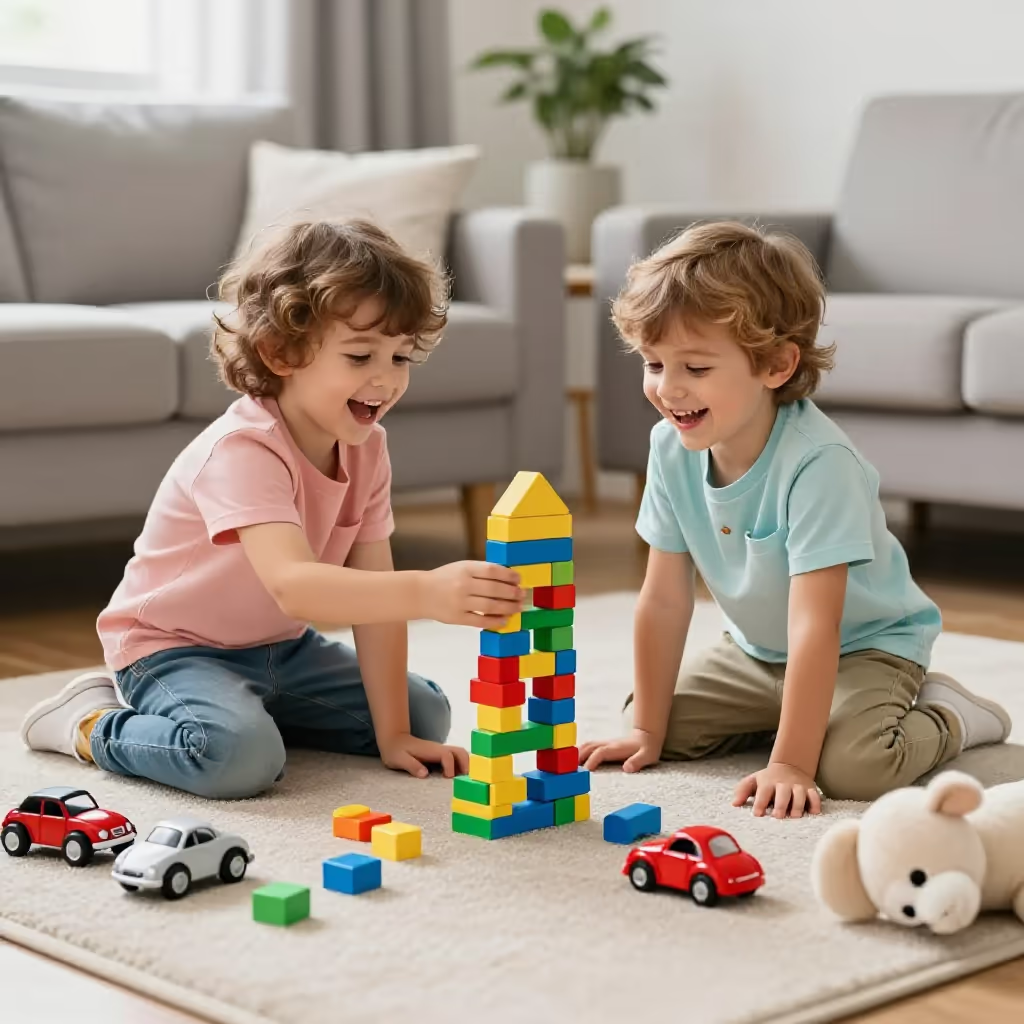
Als ein Kind fehlt, darf Paul im Garten mitspielen.
When one child is absent, Paul is allowed to join in in the garden.
Die Kinder spielen im Garten Fußball.
The children are playing soccer in the garden.