

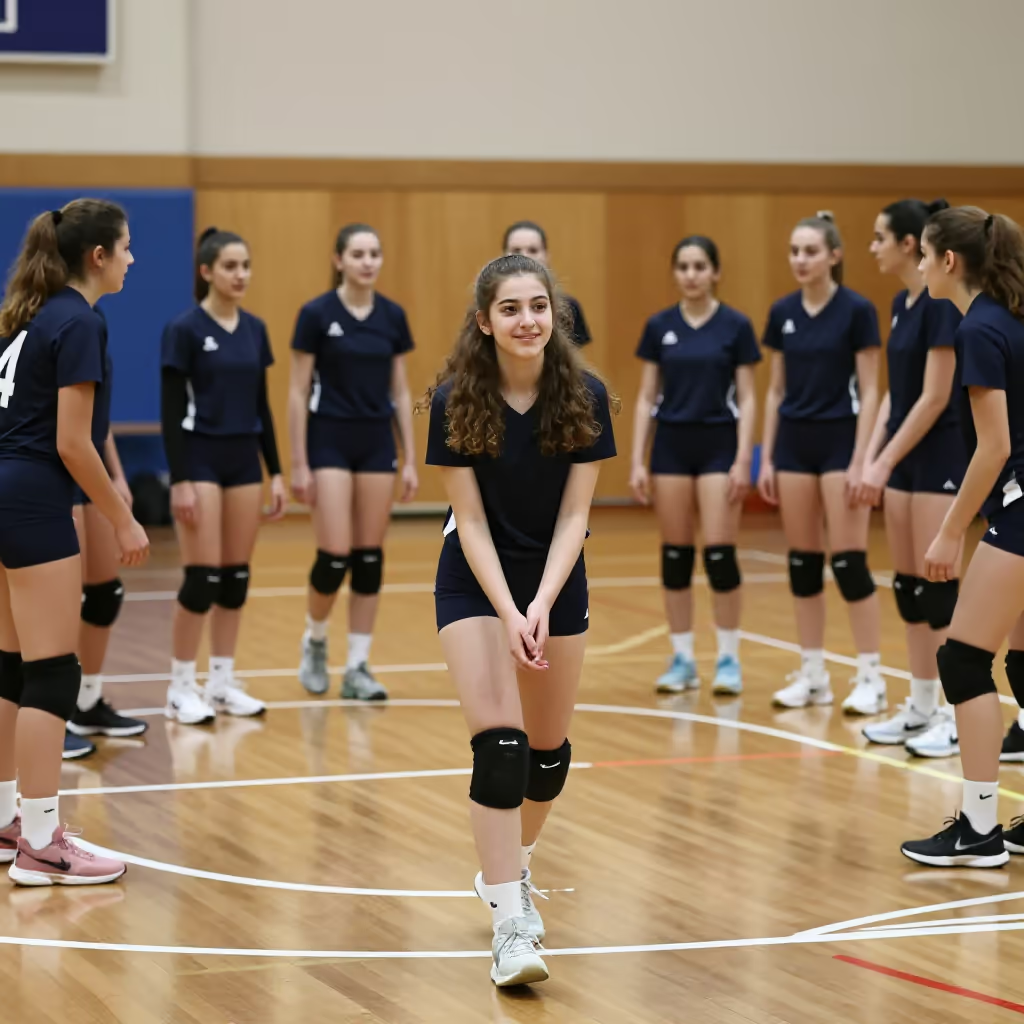
mitmachen
to join in
To take part in a shared activity, game, or campaign; to participate.
EXAMPLE
Wenn wir aufräumen, müssen alle mitmachen.
When we tidy up, everyone has to join in.
to join in / put up with
Loading your saved state.
to join in
To take part in a shared activity, game, or campaign; to participate.
Wenn wir aufräumen, müssen alle mitmachen.
When we tidy up, everyone has to join in.

to put up with
Colloquial for enduring or putting up with something unpleasant or difficult.
Ich mache diesen Lärm von der Baustelle nicht mehr lange mit.
I won't put up with this noise from the construction site much longer.
'Mitmachen' (to join in / to put up with) is a separable verb. The prefix 'mit-' goes at the end in a main clause, while in a subordinate clause it remains attached to the verb. In the infinitive, 'zu' goes between 'mit' and 'machen'.
Bei diesem Projekt mache ich gerne mit.
I'm happy to join in with this project.
The verb is made up of the prefix 'mit-' and the verb 'machen' (to make/do). The prefix 'mit-' means 'together with others', which logically explains the basic meaning 'to participate'.
Alle Kinder im Park machen beim Fangen-Spielen mit.
All the children in the park join in the game of tag.
If you want to say which activity you are taking part in, you use the preposition 'bei' followed by the dative.
Willst du bei unserem Spiel mitmachen?
Do you want to join in our game?
The colloquial meaning 'etwas ertragen' (to endure something) always refers to something negative and needs an accusative object. The main meaning 'teilnehmen' (to participate) refers to an activity and can also stand without an object.
Diesen ganzen Stress mache ich nicht länger mit!
I'm not putting up with all this stress any longer!
to participate / involve
Both words describe active participation in a shared activity. Sich beteiligen sounds more neutral and is used with „an“, whereas mitmachen is more colloquial and is usually used with „bei“ or without this addition. In formal texts, „sich beteiligen“ is generally more suitable; in everyday language, „mitmachen“ is often used.

Viele Anwohner machen bei der Aufräumaktion mit.
Many residents are joining in with the cleanup campaign.
Viele Anwohner beteiligen sich an der Aufräumaktion.
Many residents are participating in the cleanup campaign.