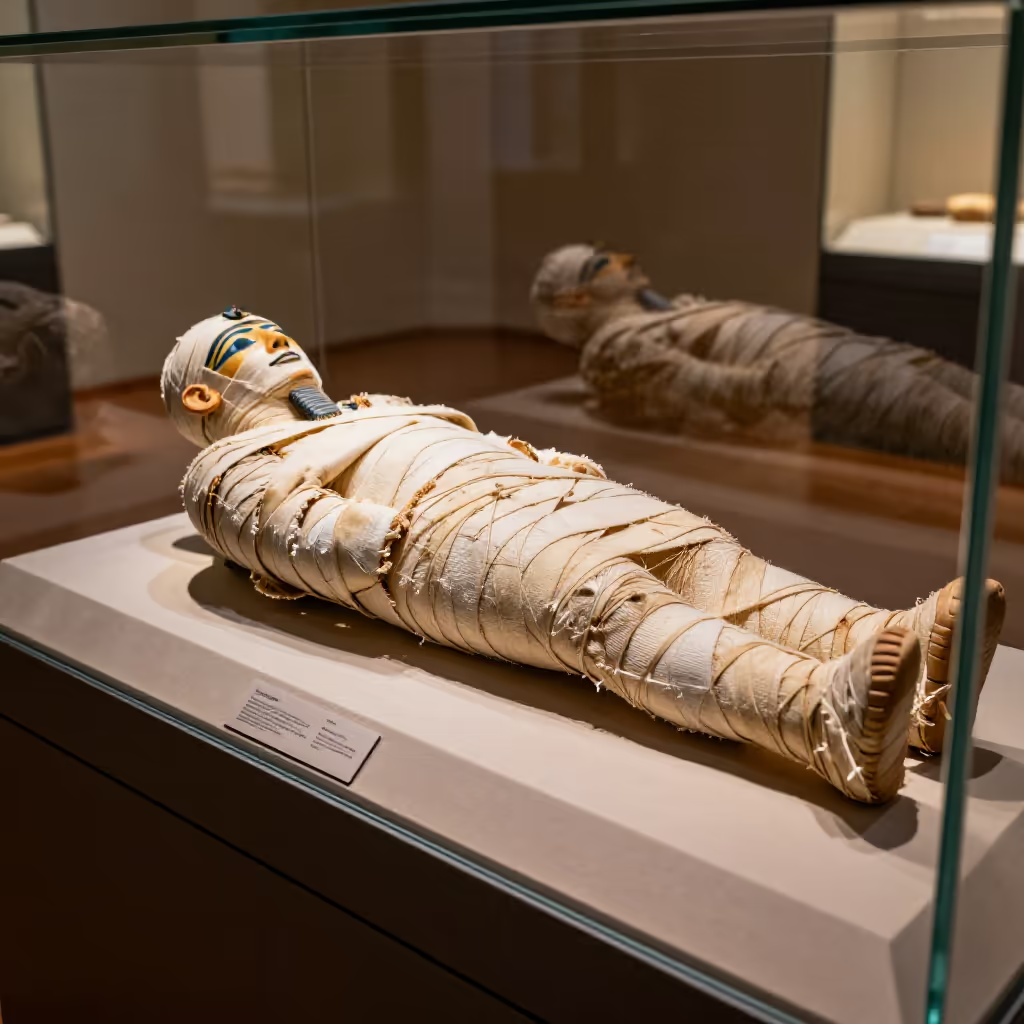
The corpse of a human or animal that has been preserved from decomposition through natural conditions (e.g., dryness, cold) or through artificial processes such as embalming.
example
Im Ägyptischen Museum sind zahlreiche gut erhaltene Mumien ausgestellt.
Numerous well-preserved mummies are on display in the Egyptian Museum.

Usage tips
Word family
The noun 'die Mumie' (the mummy) is the basis for the verb 'mumifizieren' (to mummify). This verb means to artificially preserve a body in order to turn it into a mummy.
EXAMPLE
Die alten Ägypter hatten komplexe Techniken, um ihre Pharaonen zu mumifizieren.
The ancient Egyptians had complex techniques for mummifying their pharaohs.
Context clue
The meanings are easy to distinguish: if people are talking about history, archaeology, or museums, the preserved corpse is meant. If the word is used to describe a living person, it has the derogatory, colloquial meaning.
EXAMPLE
Forscher haben eine bisher unbekannte Mumie in einem alten Grab entdeckt.
Researchers have discovered a previously unknown mummy in an ancient tomb.
Typical collocations
In a historical context, 'Mumie' (mummy) is often combined with certain verbs and adjectives. Typical phrases are 'eine Mumie entdecken/finden' (to discover/find a mummy), 'eine Mumie ausstellen' (to display a mummy), as well as the adjectives 'ägyptisch' (Egyptian) or 'gut erhalten' (well-preserved).
EXAMPLE
Die Mumie war über 3000 Jahre alt und erstaunlich gut erhalten.
The mummy was over 3,000 years old and surprisingly well preserved.
Register and style
Careful: this meaning is strongly derogatory and insulting. It is used only colloquially to describe a person as extremely old, slow, and mentally inflexible. It should be used with great caution.
EXAMPLE
„Beweg dich mal, du alte Mumie!“, rief er ungeduldig.
'Move it, you old fossil!' he shouted impatiently.
Compare with
near_synonym · confusable
Mumie vs Leiche
corpse
'die Leiche' and 'die Mumie' both refer to a dead body. 'Leiche' is the general term for the dead body of a human being. 'Mumie' is more specific: the body of a human or animal has been preserved, for example through dryness, cold, or embalming. The words can be confused because every mummy is a kind of corpse. But not every corpse is a mummy. 'Leiche' fits normal or crime-related situations, while 'Mumie' is more likely in history, archaeology, or museum contexts.
Mumie
Im Museum sahen wir eine ägyptische Mumie in einem Glassarg.
In the museum, we saw an Egyptian mummy in a glass coffin.
Leiche
Im Krimi wird die Leiche erst am Ende des Kapitels gefunden.
In the crime novel, the body is only found at the end of the chapter.