

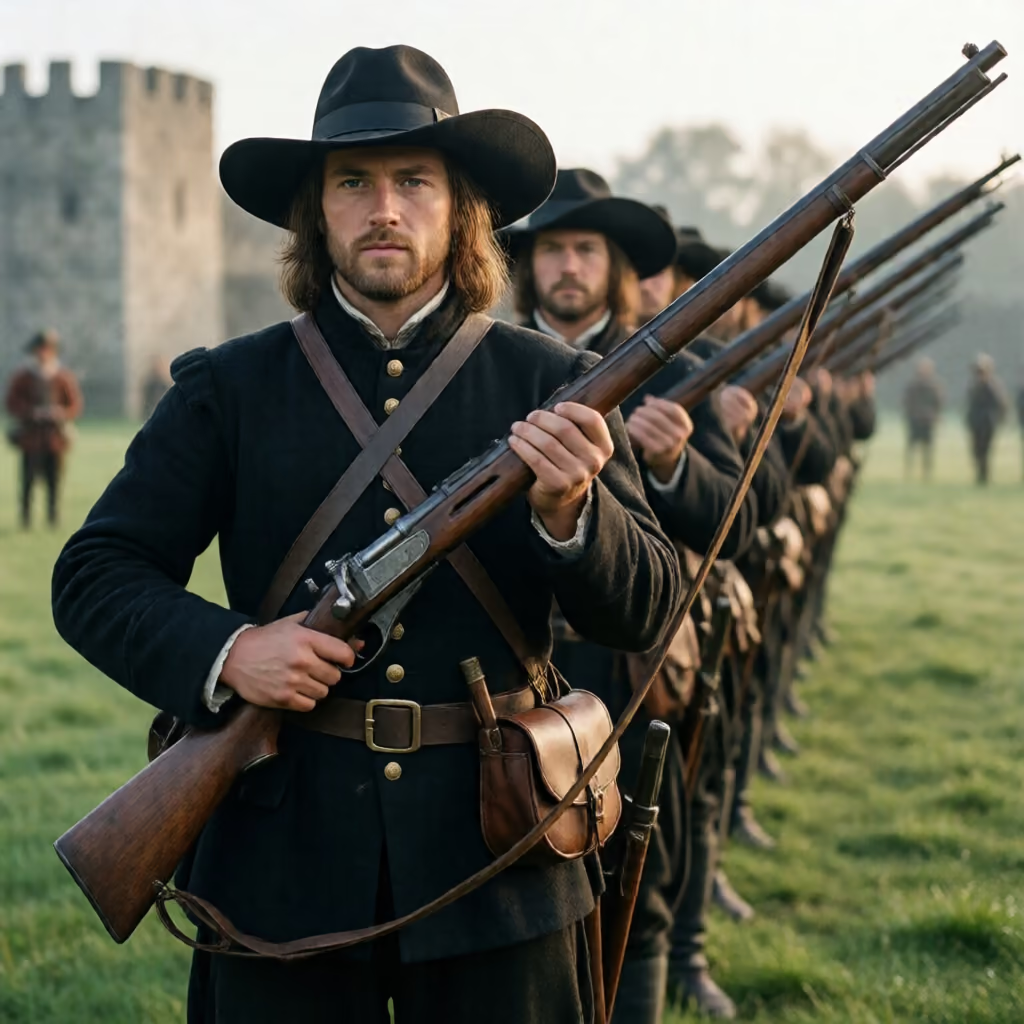
der Musketier
musketeer
A soldier armed with a musket, especially in earlier armies.
EXAMPLE
Der Musketier lud seine Muskete und stellte sich in die Reihe.
The musketeer loaded his musket and took his place in line.
musketeer
der Musketier, die Musketiere
Loading your saved state.
musketeer
A soldier armed with a musket, especially in earlier armies.
Der Musketier lud seine Muskete und stellte sich in die Reihe.
The musketeer loaded his musket and took his place in line.
| gender | masculine der |
|---|---|
| plural | die Musketiere |
| genitive | des Musketiers |
| singular | plural | |
|---|---|---|
| nominative | der Musketier | die Musketiere |
| accusative | den Musketier | die Musketiere |
| dative | dem Musketier | den Musketieren |
| genitive | des Musketiers | der Musketiere |
The article changes with the case; it is shown in colour.
The stem „Musket-“ also appears in „Muskete“ (musket), the name of the weapon. This connection can help you remember the musketeer's equipment.
Der Musketier trug seine Muskete über der Schulter.
The musketeer carried his musket over his shoulder.
To indicate a person's military role, German often uses „als Musketier dienen“ (to serve as a musketeer). After „als“ (as), the designation normally appears without an article.
Er diente mehrere Jahre als Musketier in der königlichen Armee.
He served for several years as a musketeer in the royal army.
You will often encounter the word in connection with the novel „Die drei Musketiere“ (The Three Musketeers) by Alexandre Dumas and its film adaptations. In the story, the famous musketeers belong to the guard of the French king.
Für die Rolle eines Musketiers in einer Verfilmung von „Die drei Musketiere“ lernte der Schauspieler fechten.
To play the role of a musketeer in a film adaptation of „Die drei Musketiere“ (The Three Musketeers), the actor learned fencing.