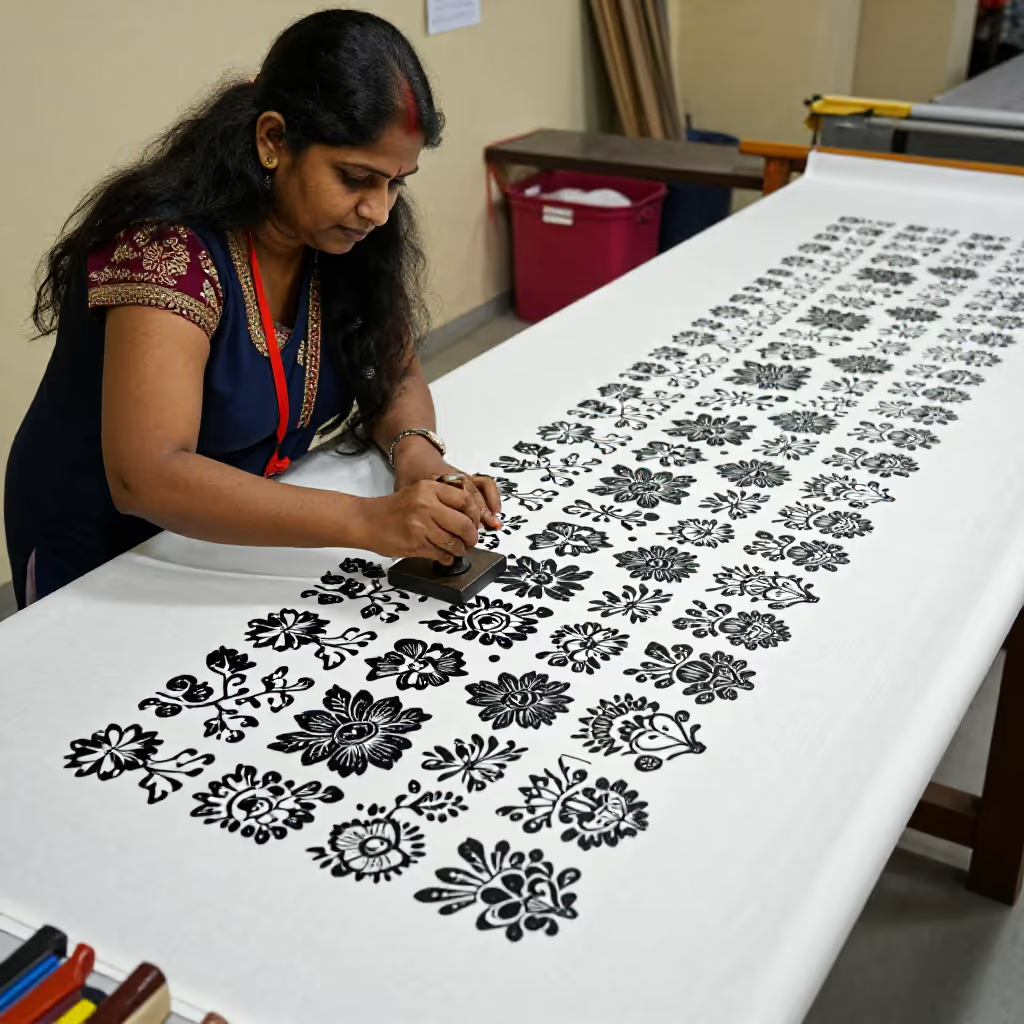
To look at someone or something carefully, closely, and often critically from head to toe in order to form an impression.
example
Der Türsteher musterte jeden Gast misstrauisch, bevor er ihn einließ.
The bouncer scrutinized every guest suspiciously before letting them in.

Usage tips
Word family
The verb 'mustern' (to scrutinize/to pattern) is closely related to the noun 'das Muster' (pattern, sample). All meanings are based on the idea of comparison with a standard: you check whether someone matches a 'Muster' (pattern/expectation), or you provide something with a pattern.
EXAMPLE
Sie musterte das Bild an der Wand, um zu sehen, ob es gerade hing.
She scrutinized the picture on the wall to see whether it was hanging straight.
Typical collocations
In the meaning 'prüfend ansehen' (to look at scrutinizingly), 'mustern' is often combined with adverbs that express a critical or curious attitude. Typical phrases are 'jemanden kritisch mustern' (to scrutinize someone critically), 'skeptisch mustern' (to scrutinize skeptically), or 'von Kopf bis Fuß mustern' (to look someone up and down).
EXAMPLE
Die Katze musterte den Besucher misstrauisch vom Sofa aus.
The cat scrutinized the visitor suspiciously from the sofa.
Register: military language
The meaning 'ärztlich untersuchen' (to medically examine) is used almost exclusively in a military context, when it is about checking fitness for military service.
EXAMPLE
Er wurde mit 18 Jahren gemustert, musste aber keinen Wehrdienst leisten.
He was examined for military service at 18, but did not have to serve.
More common form: adjective
In the meaning 'mit einem Muster versehen' (to provide with a pattern), the verb itself is rare. The past participle is used much more often as an adjective: 'gemustert' (patterned). For example, people speak of a 'gemusterten Hemd' (patterned shirt) or 'gemustertem Papier' (patterned paper).
EXAMPLE
Sie trug ein elegant gemustertes Tuch um den Hals.
She wore an elegantly patterned scarf around her neck.
Compare with
near_synonym · confusable
mustern vs ansehen
to look at / to watch
'ansehen' and 'mustern' both describe looking at someone or something. 'ansehen' is neutral and can simply mean directing your gaze at something. 'mustern' is more specific: you look at someone or something in an examining, close, and often critical way, usually from head to toe. The words can be confused because both describe a look. But 'mustern' says more about the type of look. It fits when someone wants to form an impression or examine something critically.
mustern
Der Lehrer mustert die Klasse, bevor er mit der Prüfung beginnt.
The teacher scrutinizes the class before starting the exam.
ansehen
Vor dem Training sieht sie sich kurz den neuen Plan an.
Before training, she briefly looks at the new plan.