

betrachten
to look at
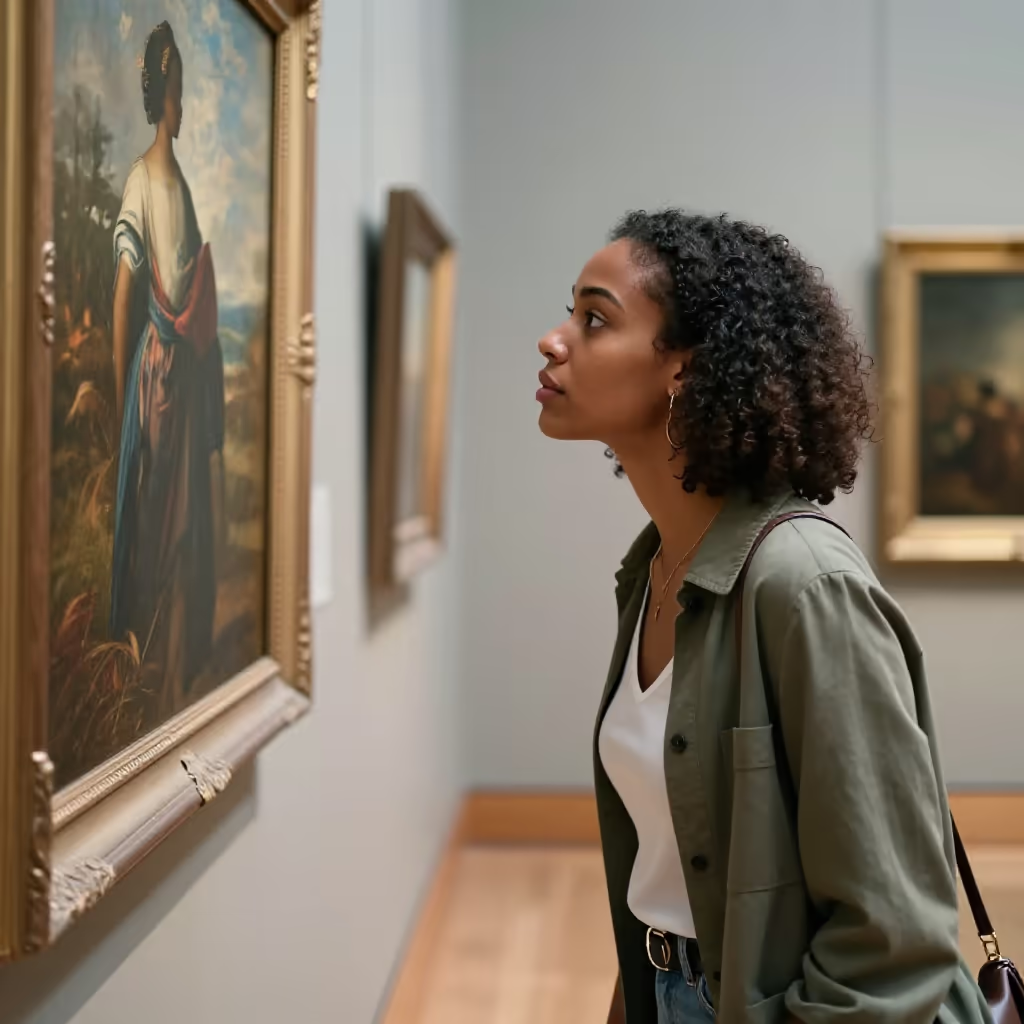
To look at or observe something or someone attentively and closely.
EXAMPLE
Sie betrachtete das Kunstwerk im Museum für eine lange Zeit.
She looked at the artwork in the museum for a long time.
to view
Loading your saved state.
to look at
To look at or observe something or someone attentively and closely.
Sie betrachtete das Kunstwerk im Museum für eine lange Zeit.
She looked at the artwork in the museum for a long time.

to regard as
To judge, assess, or view someone or something in a particular way; to consider someone or something to be something.
Ich betrachte ihn als einen meiner engsten Freunde.
I regard him as one of my closest friends.

to consider
To think about a matter or topic and analyze it from a particular point of view.
Wenn man die Situation objektiv betrachtet, war die Entscheidung falsch.
If you consider the situation objectively, the decision was wrong.

to look at oneself
To look at oneself in the mirror or in a picture.
Er betrachtete sich nach dem Friseurbesuch zufrieden im Spiegel.
After the haircut, he looked at himself in the mirror with satisfaction.
'Betrachten' (to view/look at/consider) is an inseparable verb. The prefix 'be-' remains firmly attached to the verb stem 'trachten' in all tenses and sentence constructions.
Er betrachtet die Sterne durch sein Teleskop.
He observes the stars through his telescope.
The verb 'betrachten' belongs more to written language or a more formal style. It often sounds more refined and reflective.
Wir müssen das Problem aus verschiedenen Perspektiven betrachten.
We have to consider the problem from different perspectives.
In the meaning 'für etwas halten' (to consider something to be something), 'betrachten' is always used with the preposition 'als'. The structure is: accusative object + 'als' + description in the accusative.
Sie betrachtet diese Reise als eine große Chance.
She regards this trip as a great opportunity.
When it is about thinking through a topic, 'betrachten' is often combined with abstract nouns such as 'Situation' (situation), 'Problem' (problem), or 'Frage' (question), and adverbs such as 'genauer' (more closely) or 'objektiv' (objectively).
Man muss die ganze Situation betrachten, nicht nur einen Teil.
You have to consider the whole situation, not just one part.
The reflexive form 'sich betrachten' (to look at oneself) means to look at one's own reflection or a photo of oneself. The reflexive pronoun is in the accusative.
Sie betrachtete sich kritisch im Spiegel, bevor sie aus dem Haus ging.
She looked at herself critically in the mirror before leaving the house.
to look at / to watch
Ansehen and betrachten both mean deliberately directing your gaze at something. Ansehen is neutral in everyday use and can also refer to a brief look, while betrachten usually expresses more attentive and detailed engagement. Use ansehen for an ordinary look and betrachten for a closer examination.

Ich betrachte das Bild lange, weil ich viele Einzelheiten entdecken möchte.
I study the picture for a long time because I want to discover its many details.
Ich sehe mir das Bild kurz an, bevor wir weitergehen.
I take a quick look at the picture before we move on.