


närrisch
foolish
Unreasonable, foolish, or acting with little sense; like a fool.
EXAMPLE
Es wäre närrisch, bei diesem Wetter ohne Mantel hinauszugehen.
It would be foolish to go outside without a coat in this weather.
foolish
närrisch – närrischer – am närrischsten
Loading your saved state.
foolish
Unreasonable, foolish, or acting with little sense; like a fool.
Es wäre närrisch, bei diesem Wetter ohne Mantel hinauszugehen.
It would be foolish to go outside without a coat in this weather.
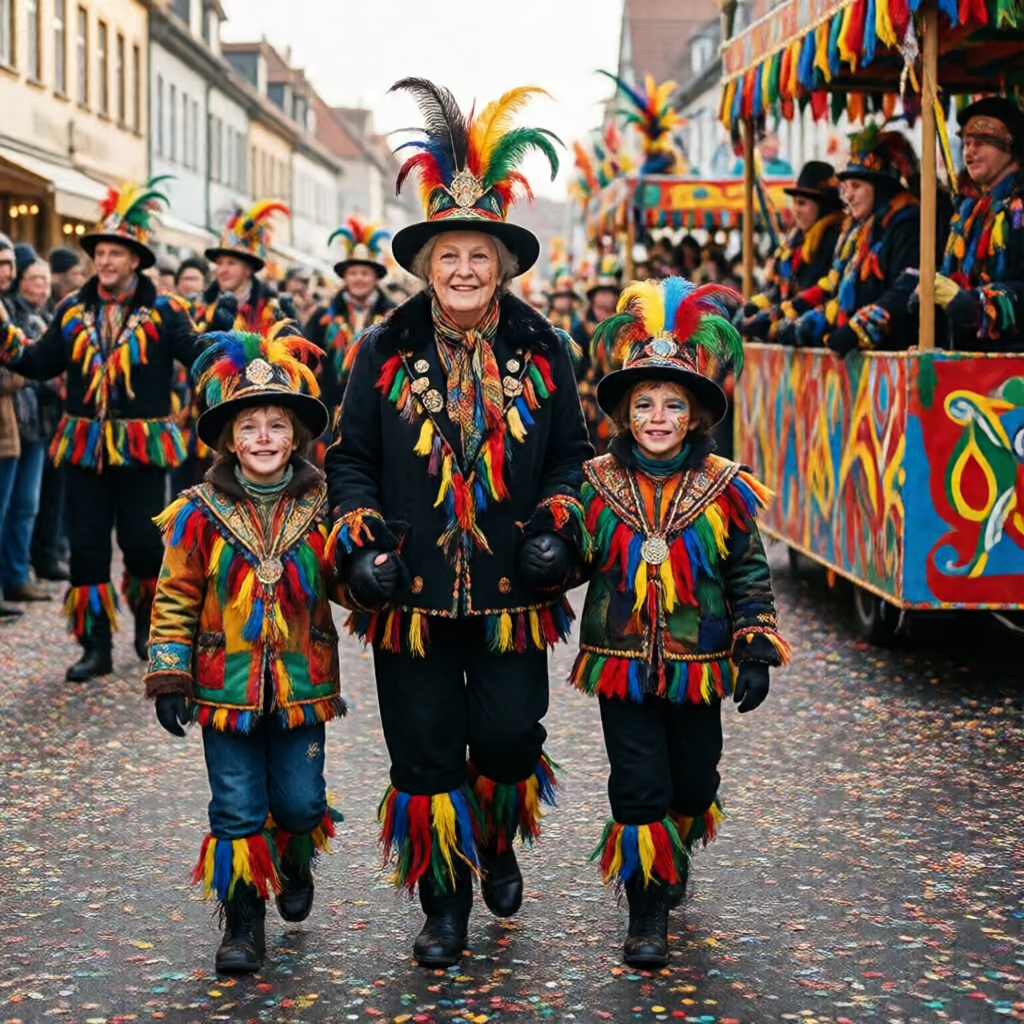
carnival-related
Belonging to the carnival season or Shrovetide and characterized by its exuberant, festive mood.
In der närrischen Zeit sind die Straßen voller kostümierter Menschen.
During the carnival season, the streets are full of people in costumes.

to be crazy about someone
To be very enthusiastic about or in love with someone.
Sie ist närrisch auf ihren neuen Kollegen.
She is crazy about her new colleague.
| basic form | närrisch |
|---|---|
| comparative | närrischer |
| superlative | am närrischsten |
| masc. | fem. | neut. | plural | |
|---|---|---|---|---|
| nom. | -e | -e | -e | -en |
| acc. | -en | -e | -e | -en |
| dat. | -en | -en | -en | -en |
| gen. | -en | -en | -en | -en |
Add the ending to närrisch.
| masc. | fem. | neut. | plural | |
|---|---|---|---|---|
| nom. | -er | -e | -es | -en |
| acc. | -en | -e | -es | -en |
| dat. | -en | -en | -en | -en |
| gen. | -en | -en | -en | -en |
Add the ending to närrisch.
| masc. | fem. | neut. | plural | |
|---|---|---|---|---|
| nom. | -er | -e | -es | -e |
| acc. | -en | -e | -es | -e |
| dat. | -em | -er | -em | -en |
| gen. | -en | -er | -en | -er |
Add the ending to närrisch.
'Närrisch' (foolish) belongs to the word family of 'Narr' (fool) and describes something that is like a fool. The ending '-isch' forms an adjective here.
Sein närrischer Plan brachte die ganze Gruppe in Schwierigkeiten.
His foolish plan got the whole group into trouble.
The carnival-related meaning is often recognizable from words such as 'Umzug' (parade), 'Kostüm' (costume), 'Fasching' (Shrovetide), or 'Karneval' (carnival). In this context, 'närrisch' describes the exuberant mood or the festive season.
Während des närrischen Umzugs tanzten die Menschen auf der Straße.
During the carnival parade, people danced in the street.
In the expression 'närrisch auf jemanden sein' (to be crazy about someone), 'auf' is followed by the accusative. Here, the adjective describes strong enthusiasm or infatuation.
Die Großeltern sind ganz närrisch auf ihr erstes Enkelkind.
The grandparents are absolutely crazy about their first grandchild.