


die Nationalität
nationality
A person's legal belonging to a particular state; citizenship.
EXAMPLE
Bei der Einreise muss man seine Nationalität angeben.
When entering the country, you have to state your nationality.
nationality
Loading your saved state.
nationality
A person's legal belonging to a particular state; citizenship.
Bei der Einreise muss man seine Nationalität angeben.
When entering the country, you have to state your nationality.

nationality
Belonging to an ethnic group or people connected by a shared language, culture, and history.
In der Donaumonarchie lebten viele verschiedene Nationalitäten zusammen.
Many different nationalities lived together in the Danube Monarchy.
The word is derived from the adjective 'national' (national). The ending '-ität' (-ity) is typical of abstract nouns formed from adjectives and means something like '-heit' or '-keit' (-ness/-ity).
Die Qualität dieses Produkts ist sehr hoch.
The quality of this product is very high.
The meaning depends strongly on the context. In the singular in official situations, such as on a form, it usually means citizenship. In the plural in historical or sociological texts, it often refers to ethnic groups.
Bitte tragen Sie hier Ihre Nationalität ein.
Please enter your nationality here.
In connection with citizenship, 'Nationalität' (nationality) is often used with certain verbs. Typical phrases are 'die Nationalität haben' (to have the nationality), 'die Nationalität besitzen' (to possess the nationality), or 'die Nationalität angeben' (to state one's nationality).
Er besitzt die doppelte Nationalität.
He has dual nationality.
citizenship
Staatsbürgerschaft and Nationalität can both refer to a person's legal membership in a state. Staatsbürgerschaft clearly refers to legal status, whereas Nationalität can also refer, depending on the context, to belonging to a people or culture. Staatsbürgerschaft is therefore less ambiguous in official information.
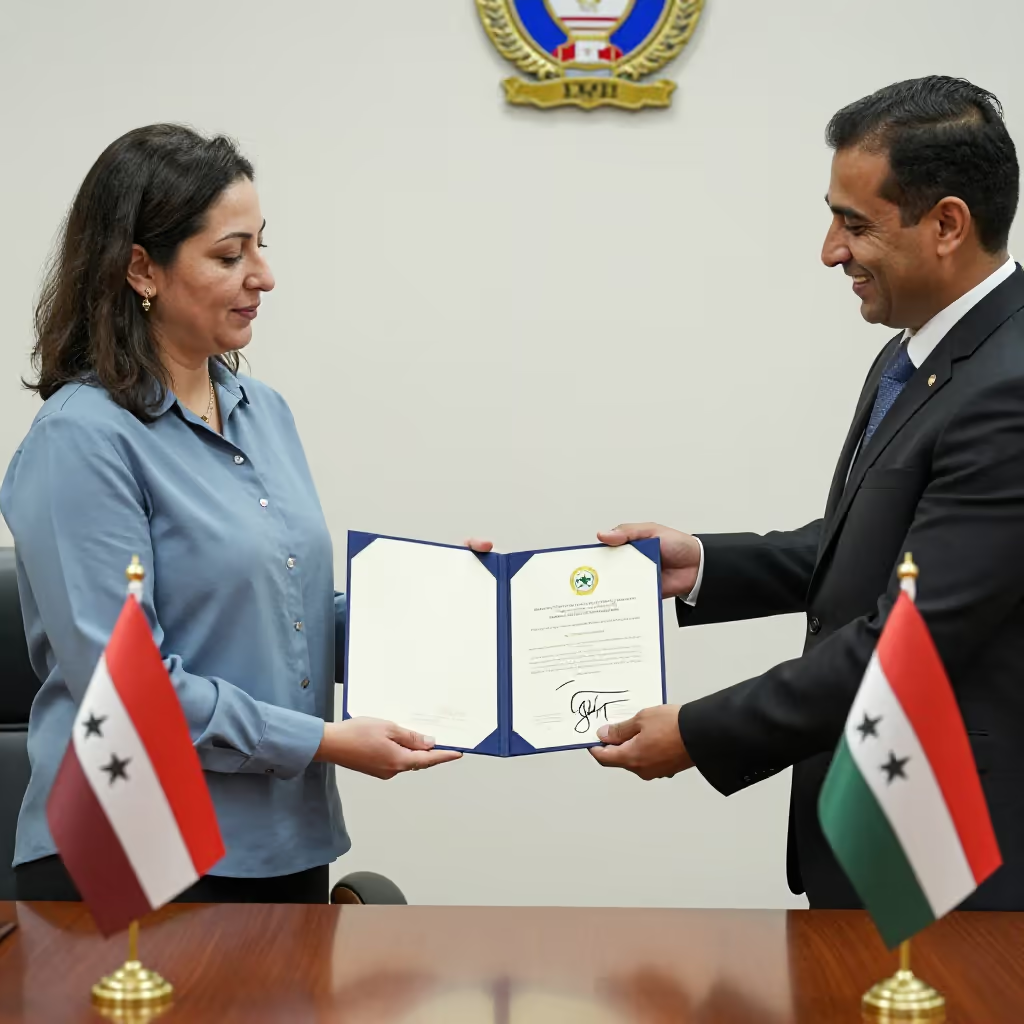
Im Gespräch über Sprache und Kultur nannte sie ihre deutsche Nationalität.
In a conversation about language and culture, she identified her nationality as German.
Im Formular gab sie ihre deutsche Staatsbürgerschaft an.
She stated her German citizenship on the form.