

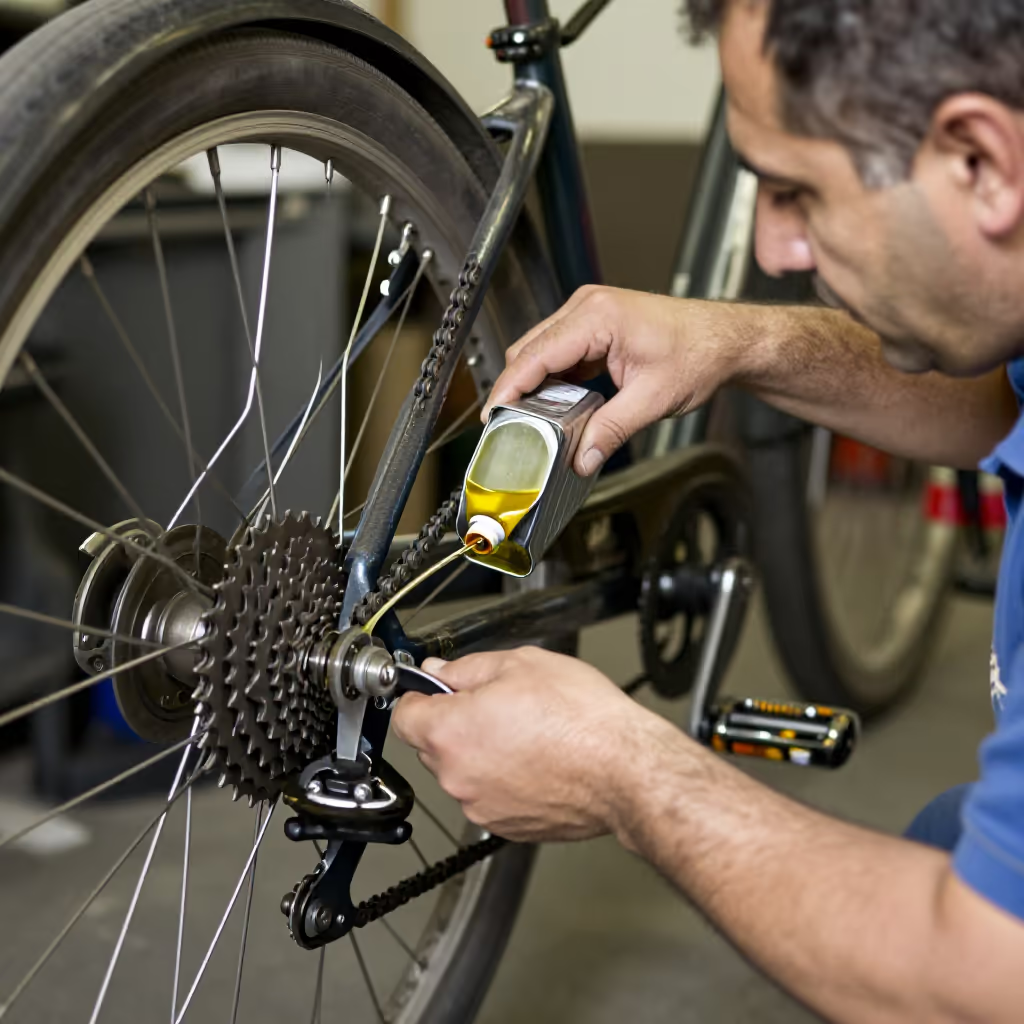
ölen
to oil
To treat something with oil in order to make it run smoothly, lubricate it, or protect it.
Du solltest die Fahrradkette mal wieder ölen, sie quietscht schon.
You should oil the bicycle chain again sometime; it's already squeaking.


to oil
Loading your saved state.
to oil
To treat something with oil in order to make it run smoothly, lubricate it, or protect it.
Du solltest die Fahrradkette mal wieder ölen, sie quietscht schon.
You should oil the bicycle chain again sometime; it's already squeaking.

The verb 'ölen' (to oil) is derived directly from the noun 'das Öl' (oil). It describes the action of applying oil to something.
Man braucht nur ein paar Tropfen Öl, um das quietschende Türscharnier zu ölen.
You only need a few drops of oil to oil the squeaky door hinge.
'Ölen' (to oil) is a transitive verb and always requires an accusative object. The structure is always: someone oils 'something'.
Ich muss dringend mein quietschendes Garagentor ölen.
I urgently need to oil my squeaky garage door.
You can recognize the meaning of 'ölen' (to oil) from the object: if it refers to technical parts like a chain or a hinge, it is about lubrication. If it refers to food like salad, it is about cooking.
Der Mechaniker ölt den Motor.
The mechanic oils the engine.
to get involved / let in
'einlassen' and 'ölen' can both mean treating a surface or object with oil. 'ölen' is the more general word: you put oil on something so that it runs more smoothly, is protected, or does not squeak. 'einlassen' fits especially with wood or similar surfaces when the oil or wax is meant to soak into the material. Learners may confuse the words because oil can be involved in both. If a door squeaks, you 'ölt' it. If you care for a wooden table and the oil is supposed to soak in, you can 'einlassen' it.

Sie ölt die alte Tür, weil sie bei jedem Öffnen quietscht.
She oils the old door because it squeaks every time it opens.
Du lässt den Holztisch nach der Arbeit mit Öl ein.
After work, you treat the wooden table with oil.