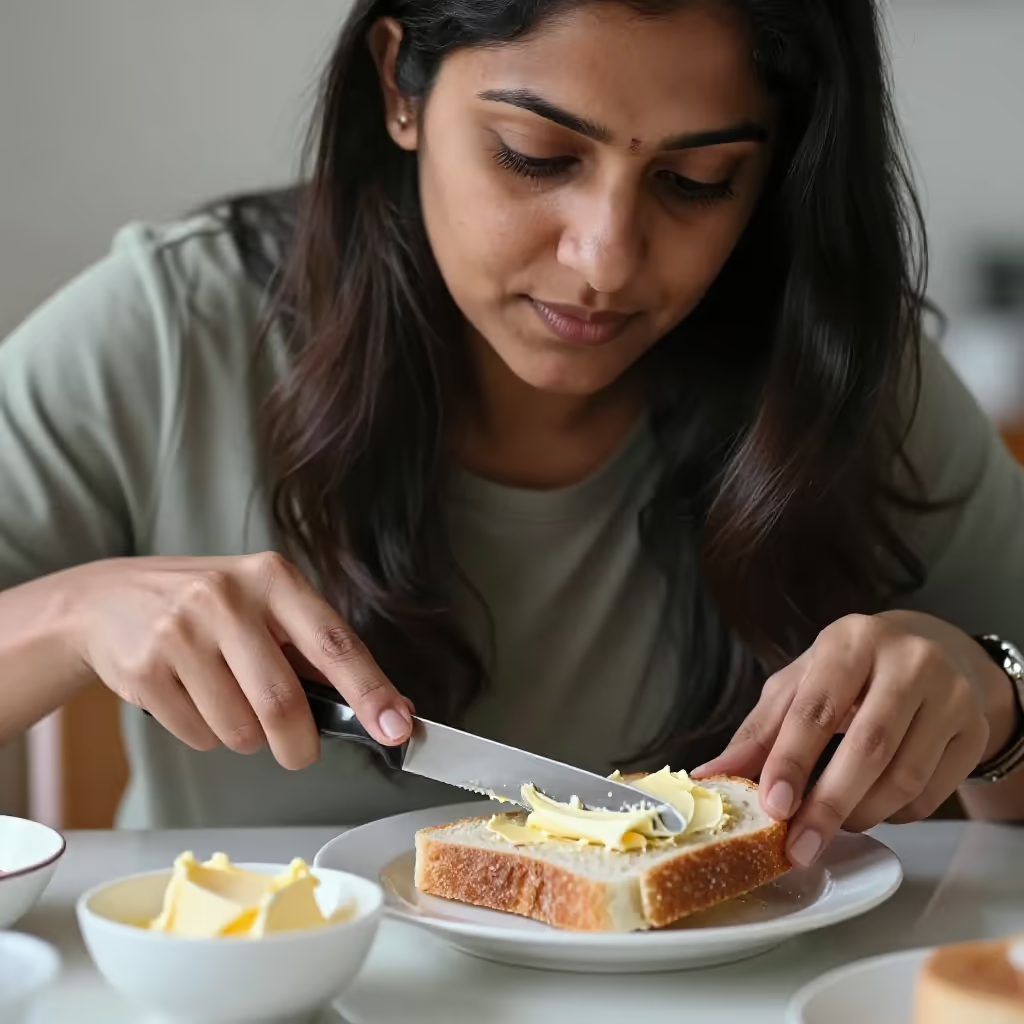
schmieren
to spread
To apply a soft, often greasy or sticky substance to a surface. This can be for moistening, as a topping, or for lubrication.
Ich schmiere mir morgens immer Honig aufs Brot.
I always spread honey on my bread in the morning.


to spread / to grease / to bribe
Loading your saved state.
to spread
To apply a soft, often greasy or sticky substance to a surface. This can be for moistening, as a topping, or for lubrication.
Ich schmiere mir morgens immer Honig aufs Brot.
I always spread honey on my bread in the morning.

When applying a substance to a surface, the structure is often: accusative object (what?) + 'auf' + accusative object (where to?).
Er schmiert sich jeden Morgen eine dicke Schicht Marmelade aufs Brötchen.
Every morning he spreads a thick layer of jam on his roll.
In the meaning 'bestechen' (to bribe), 'schmieren' is colloquial and has a strongly negative connotation. The object of the verb is always the person who receives the money or advantage.
Man munkelt, er habe den Prüfer geschmiert, um den Test zu bestehen.
Rumor has it that he bribed the examiner in order to pass the test.
When 'schmieren' is used for writing or drawing, it is colloquial and expresses that this is done very quickly, messily, and barely legibly.
Ich konnte die Notizen nicht lesen, die er auf den Zettel geschmiert hatte.
I couldn't read the notes he had scribbled on the piece of paper.
This meaning is specialized language from the world of theater and film. It is used to describe exaggerated and unprofessional acting and is not understood outside this context.
Das Publikum fand, dass der Schauspieler in der letzten Szene fürchterlich geschmiert hat.
The audience thought that the actor hammed it up terribly in the final scene.
to buy
'kaufen' and 'schmieren' can both be used in connection with bribery. 'kaufen' then means that you get a person to do something dishonest through money or advantages. 'schmieren' also means to bribe, but it is colloquial and clearly derogatory. It sounds more direct and harsher. In official or neutral texts, 'bestechen' or a description with 'kaufen' is more appropriate, while 'schmieren' is more likely to occur in conversations about corruption.

Der Fahrer wollte den Kontrolleur schmieren, aber der lehnte das Geld ab.
The driver wanted to bribe the inspector, but he refused the money.
Der Zeuge sagt, dass der Politiker mehrere Beamte gekauft hat.
The witness says that the politician bought off several officials.