


die Ohnmacht
fainting
A brief, temporary loss of consciousness, often caused by circulatory problems or shock.
Wegen der großen Hitze und des Flüssigkeitsmangels fiel sie in Ohnmacht.
Because of the intense heat and lack of fluids, she fainted.
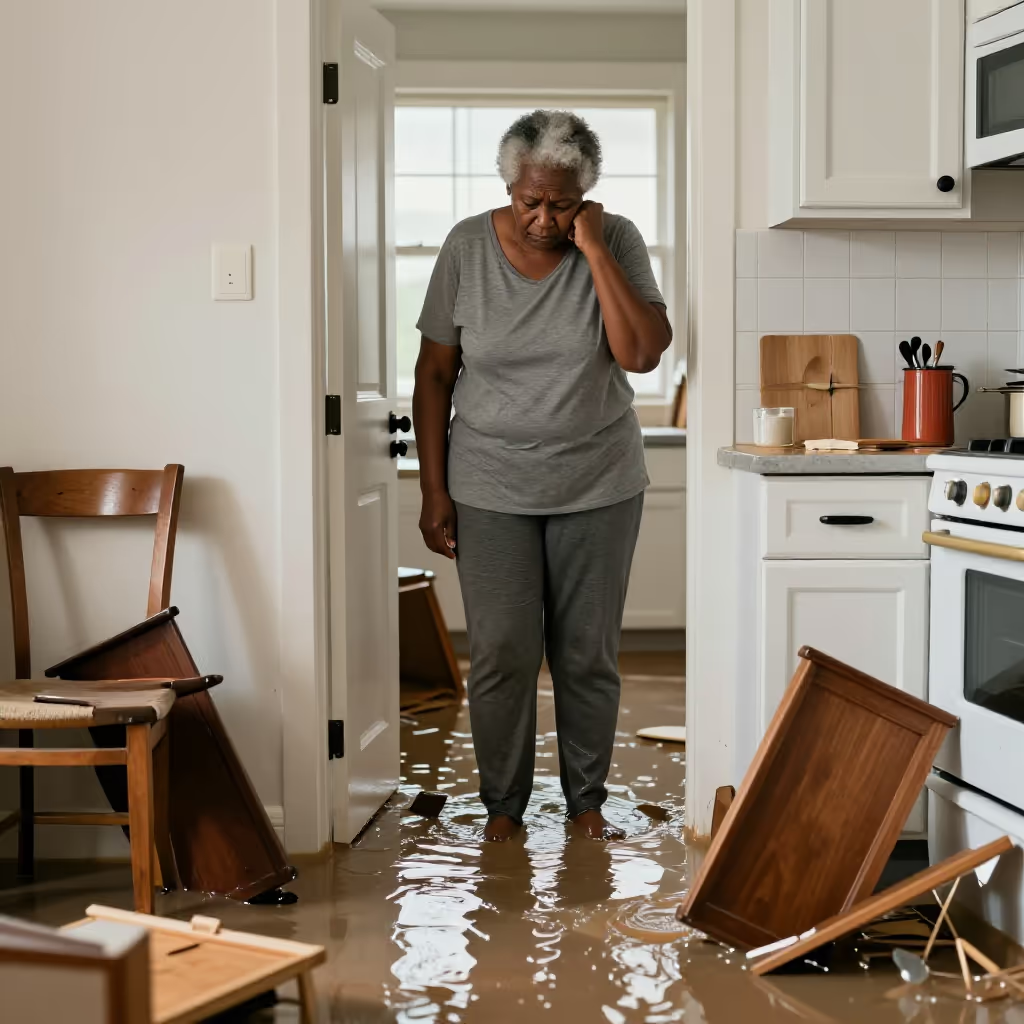

fainting / powerlessness
Loading your saved state.
fainting
A brief, temporary loss of consciousness, often caused by circulatory problems or shock.
Wegen der großen Hitze und des Flüssigkeitsmangels fiel sie in Ohnmacht.
Because of the intense heat and lack of fluids, she fainted.

The word is made up of 'ohn-' (an old form of 'ohne', meaning 'without') and 'Macht' (power). So it literally means 'without power' or 'powerlessness,' which explains both meanings well.
Angesichts der Bürokratie fühlte er eine totale Ohnmacht.
In the face of the bureaucracy, he felt total powerlessness.
You can usually recognize the medical meaning from the verb 'fallen' (to fall). The figurative meaning of helplessness is often expressed through verbs of feeling such as 'spüren' (to feel) or 'empfinden' (to feel/experience), or as 'Gefühl der Ohnmacht' (feeling of powerlessness).
Er ist vor Schreck fast in Ohnmacht gefallen.
He almost fainted from fright.
To describe losing consciousness, the fixed expression 'in Ohnmacht fallen' (to faint) is used. The person who loses consciousness is the subject.
Als sie die schlechte Nachricht hörte, fiel sie in Ohnmacht.
When she heard the bad news, she fainted.
To express the feeling of helplessness, 'Ohnmacht' (powerlessness) is often used with verbs such as 'fühlen' (to feel) or 'spüren' (to feel), or in the combination 'ein Gefühl der Ohnmacht' (a feeling of powerlessness).
Gegenüber der Entscheidung des Chefs spürten die Mitarbeiter nur Ohnmacht.
In response to the boss's decision, the employees felt only powerlessness.
coma
'das Koma' and 'die Ohnmacht' both describe a state in which a person is not conscious. But the difference is very important. 'die Ohnmacht' is normally brief and temporary, for example because of circulatory problems or shock. 'das Koma' is a deep and longer-lasting state, often after a serious illness or injury. The words can be confused because the person does not respond in either case. For a brief loss of consciousness, you say 'Ohnmacht'; for a serious medical condition, 'Koma'.

Wegen der Hitze fiel Simon kurz in Ohnmacht.
Because of the heat, Simon briefly fainted.
Nach dem schweren Unfall lag der Patient mehrere Tage im Koma.
After the serious accident, the patient was in a coma for several days.