


die Ordnung
order
A state in which everything is in its proper place, tidy, and clearly arranged.
EXAMPLE
Nach dem Fest mussten wir erst einmal wieder Ordnung schaffen.
After the party, we first had to restore order.
order
Loading your saved state.
order
A state in which everything is in its proper place, tidy, and clearly arranged.
Nach dem Fest mussten wir erst einmal wieder Ordnung schaffen.
After the party, we first had to restore order.

okay / in order
An expression that indicates that something is acceptable, correct, or working properly.
Der Mechaniker hat das Auto geprüft und gesagt, es sei alles in Ordnung.
The mechanic checked the car and said everything was okay.
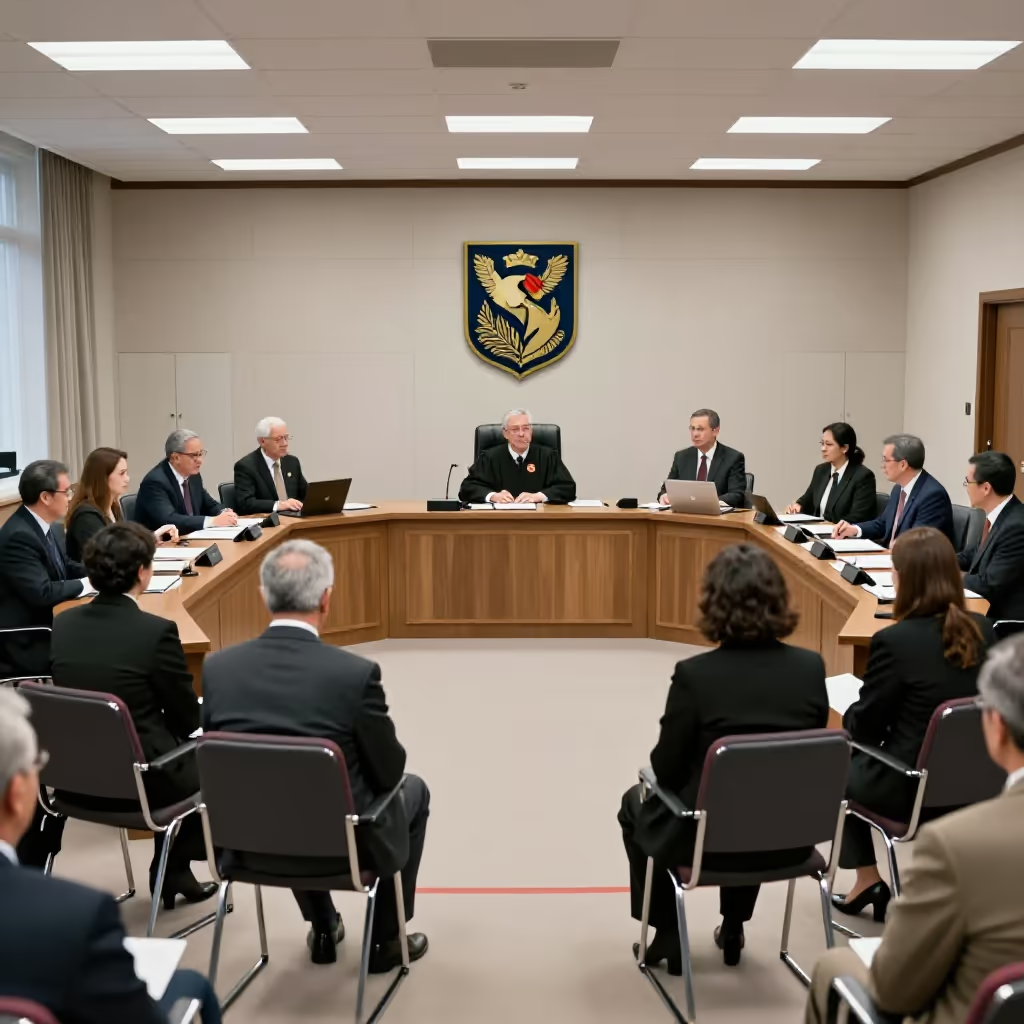
order
A system of rules, laws, or principles that structures coexistence or a process.
Die öffentliche Ordnung wird von der Polizei aufrechterhalten.
Public order is maintained by the police.
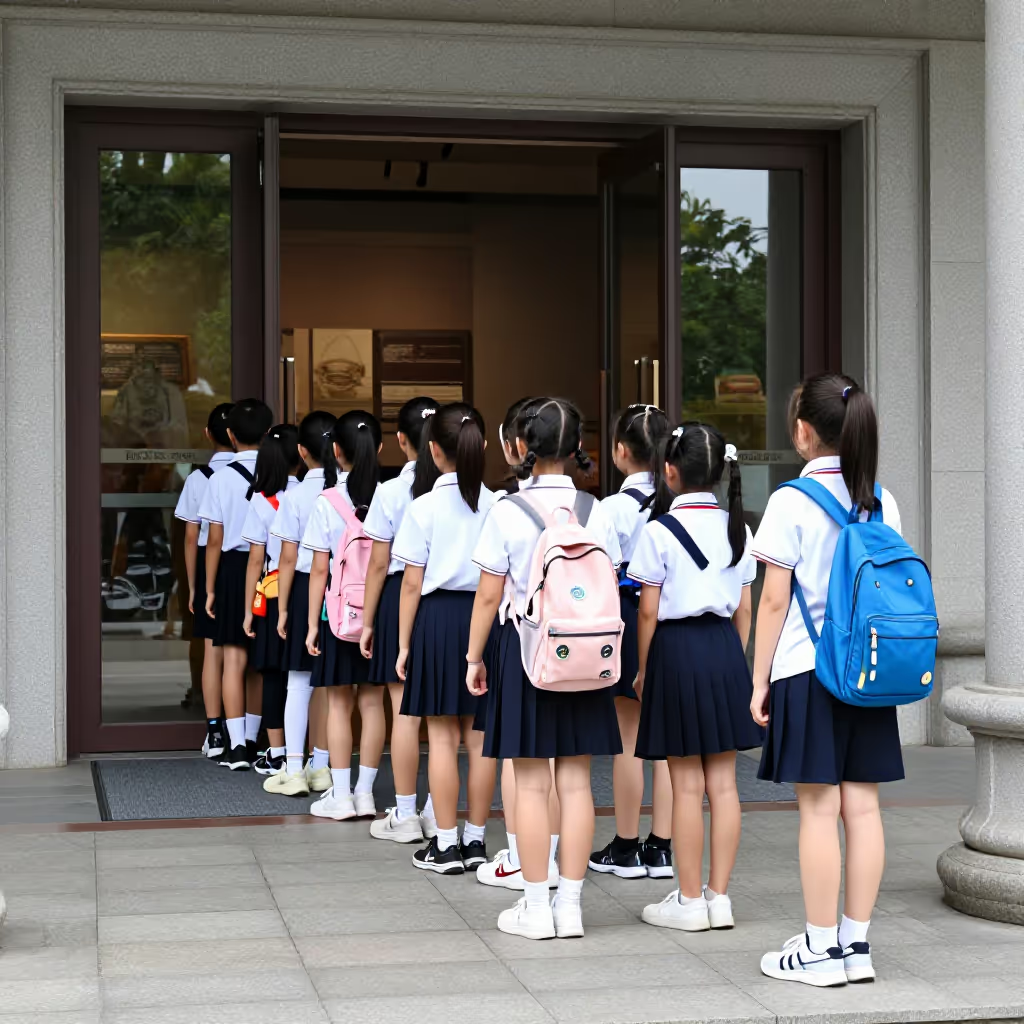
order
A specific sequence or arrangement of elements.
Die Dateien sind in chronologischer Ordnung sortiert.
The files are sorted in chronological order.

order
In biology, a level of classification for living organisms that stands between class and family.
Raubtiere sind eine Ordnung innerhalb der Klasse der Säugetiere.
Carnivores are an order within the class of mammals.
'Ordnung' (order) belongs to the word family of the verb 'ordnen' (to arrange/sort). The verb describes the action of bringing something into an ordered state or sorting it.
Kannst du bitte deine Bücher im Regal ordnen?
Could you please arrange your books on the shelf?
The expression 'in Ordnung' is very common and means 'okay', 'in good condition', or 'acceptable'. It can be used as a short answer or as part of a sentence.
Keine Sorge, mit dem Auto ist alles in Ordnung.
Don't worry, everything is okay with the car.
The fixed expression 'etwas in Ordnung bringen' means to repair something, solve a problem, or clarify a matter. The 'etwas' (something) is in the accusative.
Der Techniker hat die Heizung wieder in Ordnung gebracht.
The technician fixed the heating again.
To create or maintain the state of tidiness, fixed verb-noun combinations are used. The most common are 'Ordnung machen' (to tidy up), 'Ordnung schaffen' (to create/restore order), and 'Ordnung halten' (to keep things tidy).
In meinem Zimmer muss ich dringend Ordnung schaffen.
I urgently need to restore order in my room.
When referring to a sequence, 'Ordnung' (order) is often combined with an adjective that describes the type of sorting. Typical examples are 'alphabetische Ordnung' (alphabetical order), 'chronologische Ordnung' (chronological order), or 'numerische Ordnung' (numerical order).
Bitte sortieren Sie die Dokumente in alphabetischer Ordnung.
Please sort the documents in alphabetical order.
The meaning 'system of rules' is often used in formal, legal, or political contexts. A very common collocation is 'die öffentliche Ordnung' (public order).
Ruhestörung kann als Störung der öffentlichen Ordnung gelten.
Disturbing the peace can be considered a disturbance of public order.
system
Ordnung emphasizes the rules and principles in force in the political or social sphere. System places greater emphasis on interconnected institutions and power structures and can sound critical. If you mean the legal framework, Ordnung is usually the better choice; System is more appropriate for the structures in power.
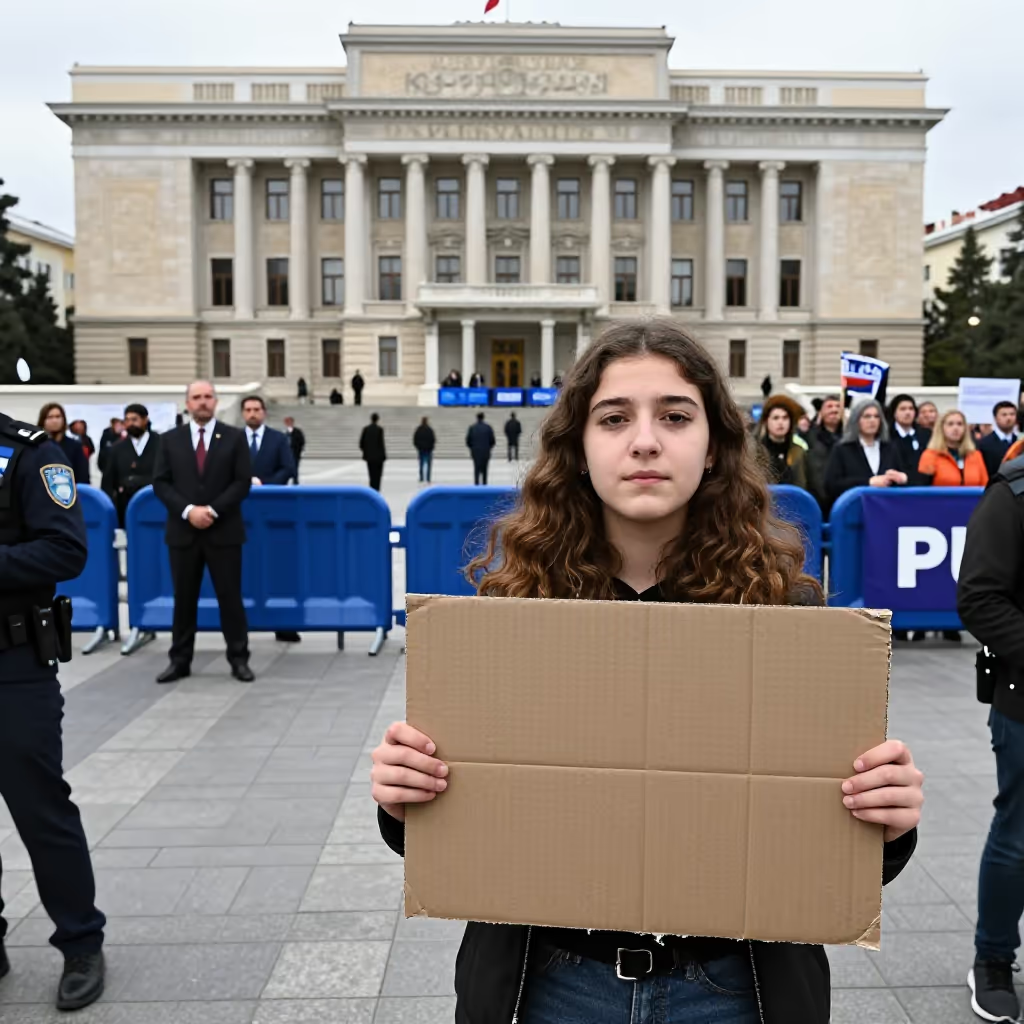
Die Verfassung bildet die Grundlage der politischen Ordnung.
The constitution forms the foundation of the political order.
Die Opposition kritisiert das politische System und seine Machtstrukturen.
The opposition criticizes the political system and its power structures.