An instrumental piece of music that serves as the introduction to an opera, oratorio, or ballet. It often introduces the most important musical themes of the work that follows.
example
Die Ouvertüre zur Oper „Die Zauberflöte“ ist weltberühmt.
The overture to the opera 'The Magic Flute' is world-famous.

Usage tips
Word structure
The word comes from the French 'ouverture', meaning 'opening' or 'beginning.' This helps explain both meanings: the opening of a musical work and the beginning of an event.
EXAMPLE
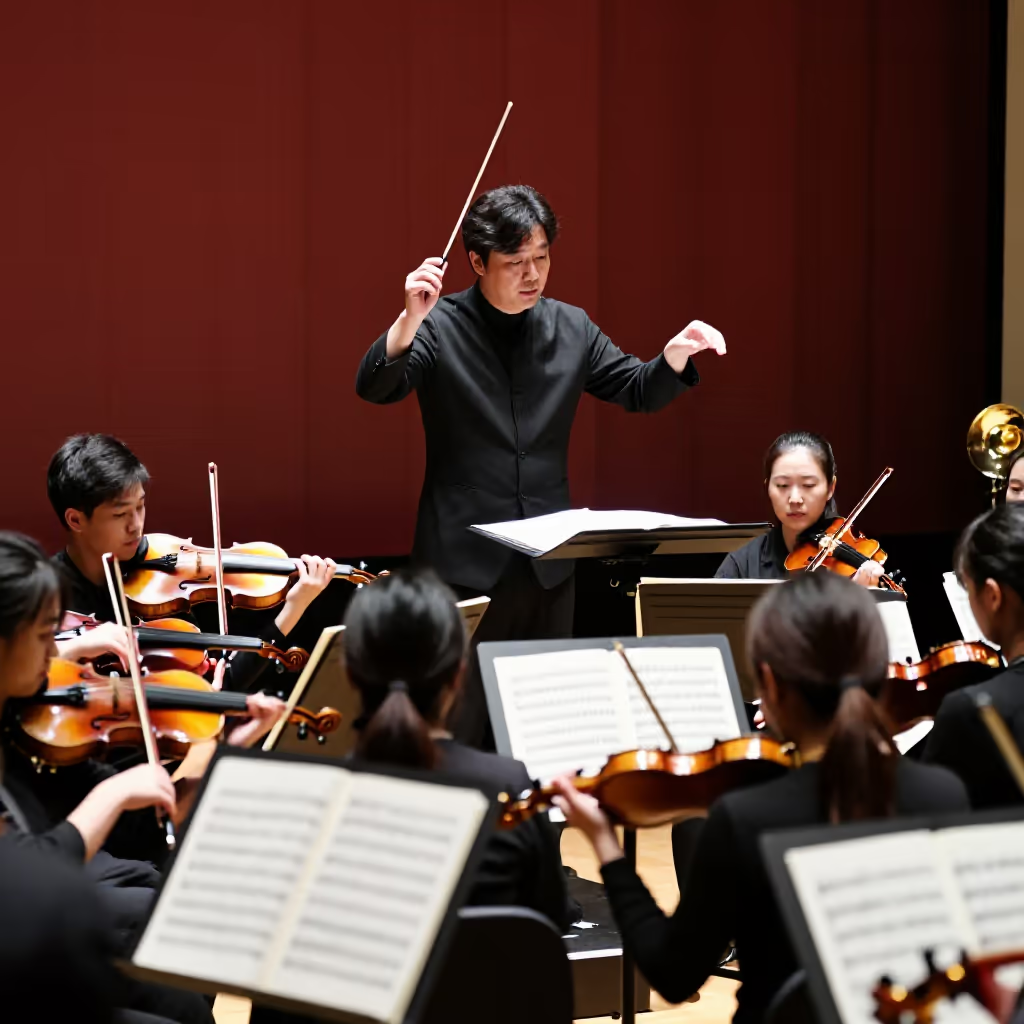
Der Dirigent hob den Taktstock für die Ouvertüre.
The conductor raised the baton for the overture.
Register
'Ouvertüre' (overture) belongs to an elevated, educated vocabulary. You find it mainly in texts about culture, politics, or in literature.
EXAMPLE
Der Leitartikel beschrieb die Wahl als Ouvertüre für politische Veränderungen.
The editorial described the election as the overture to political change.
Typical collocations
In a musical context, 'Ouvertüre' (overture) often appears with the preposition 'zu' (to) to name the work it introduces. Typical verbs are 'spielen' (to play), 'dirigieren' (to conduct), or 'komponieren' (to compose).
EXAMPLE
Das Orchester spielte die Ouvertüre zur Oper „Carmen“.
The orchestra played the overture to the opera 'Carmen.'
Figurative meaning
In the figurative meaning, the word is often combined with 'nur' (only) to emphasize that an event is just the beginning of something larger. It is frequently used in connection with processes, conflicts, or negotiations.
EXAMPLE
Die ersten Gespräche waren nur die Ouvertüre zu einem langen Friedensprozess.
The first talks were only the prelude to a long peace process.
Compare with
antonym
Ouvertüre vs Finale
finale / final
'das Finale' and 'die Ouvertüre' occur at opposite points in a performance. 'Die Ouvertüre' is a piece of music at the beginning, for example before an opera or a ballet. 'Das Finale' is the concluding part of a performance. So both words fit especially well in the context of music and the stage, but they do not mean the same thing: the overture opens the work, the finale ends it.
Ouvertüre
Die Ouvertüre beginnt leise und stellt die Stimmung der Oper vor.
The overture begins quietly and introduces the mood of the opera.
Finale
Im Finale der Oper singen alle wichtigen Figuren zusammen.
In the finale of the opera, all the important characters sing together.