

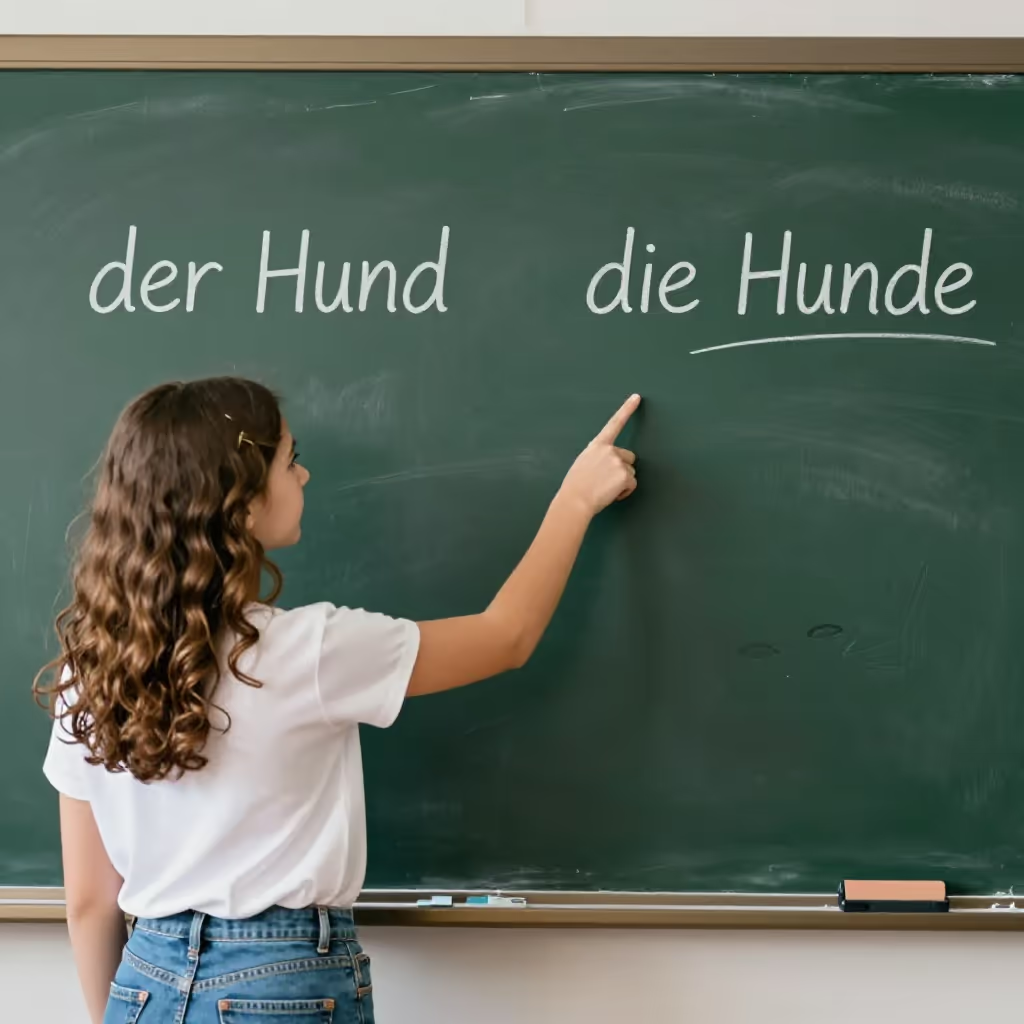
der Plural
plural
The grammatical form of a word, especially a noun, that is used to express a quantity of more than one; the plural form.
EXAMPLE
Der Plural des Wortes „Kind“ lautet „Kinder“.
The plural of the word 'Kind' is 'Kinder.'
plural
Loading your saved state.
plural
The grammatical form of a word, especially a noun, that is used to express a quantity of more than one; the plural form.
Der Plural des Wortes „Kind“ lautet „Kinder“.
The plural of the word 'Kind' is 'Kinder.'
'Plural' is a grammatical technical term. It is used especially when learning or talking about language, for example in German class.
In der Prüfung mussten wir den Plural von unregelmäßigen Nomen bilden.
In the exam, we had to form the plural of irregular nouns.
To ask about or state the plural form, the sentences 'Wie lautet der Plural von ...?' (What is the plural of ...?) and 'Der Plural von ... ist ...' (The plural of ... is ...) are very common.
Kannst du mir sagen, wie der Plural von „Status“ lautet?
Can you tell me what the plural of 'Status' is?
Common verbs used together with 'Plural' are 'bilden' (to form) and 'in den Plural setzen' (to put into the plural).
Bitte setzen Sie für diese Übung alle markierten Wörter in den Plural.
Please put all the marked words into the plural for this exercise.
majority / plural
“Mehrzahl” and “Plural” both refer to the grammatical form used for more than one person or thing. “Plural” is the neutral technical term in modern grammar, while “Mehrzahl” is found especially in traditional or school-related language. In a modern description of grammar, “Plural” is usually the better choice.

In der Grammatikbeschreibung heißt die Form von „Haus“ im Plural „Häuser“.
In the grammatical description, the form of “Haus” in the plural is “Häuser.”
Im Grammatikunterricht lernen die Kinder die Mehrzahl von „Haus“.
In grammar class, the children learn the plural of “Haus.”