The pressure wave of blood caused by the heartbeat that can be felt in the arteries. The pulse rate is an important indicator of cardiovascular function.
example
Die Ärztin fühlte den Puls des Patienten am Handgelenk.
The doctor felt the patient's pulse at the wrist.
Usage tips
Typical verbs
In a medical context, 'Puls' (pulse) is often combined with the verbs 'messen' (to measure) or 'fühlen' (to feel). When talking about your own condition, you use 'haben' (to have).
EXAMPLE
Die Krankenschwester misst dem Patienten den Puls.
The nurse takes the patient's pulse.
Typical adjectives
The pulse is often described with certain adjectives. A pulse can be 'hoch' (high) or 'niedrig' (low) in terms of rate, 'schnell' (fast) or 'langsam' (slow) in terms of speed, as well as 'regelmäßig' (regular) or 'unregelmäßig' (irregular).
EXAMPLE
Ein ruhiger, regelmäßiger Puls ist ein Zeichen für Entspannung.
A calm, regular pulse is a sign of relaxation.
Fixed expression
The expression 'am Puls der Zeit sein' (to have one's finger on the pulse of the times) means to be modern and well informed about current developments and trends. It is often used in the context of fashion, technology, or culture.
EXAMPLE
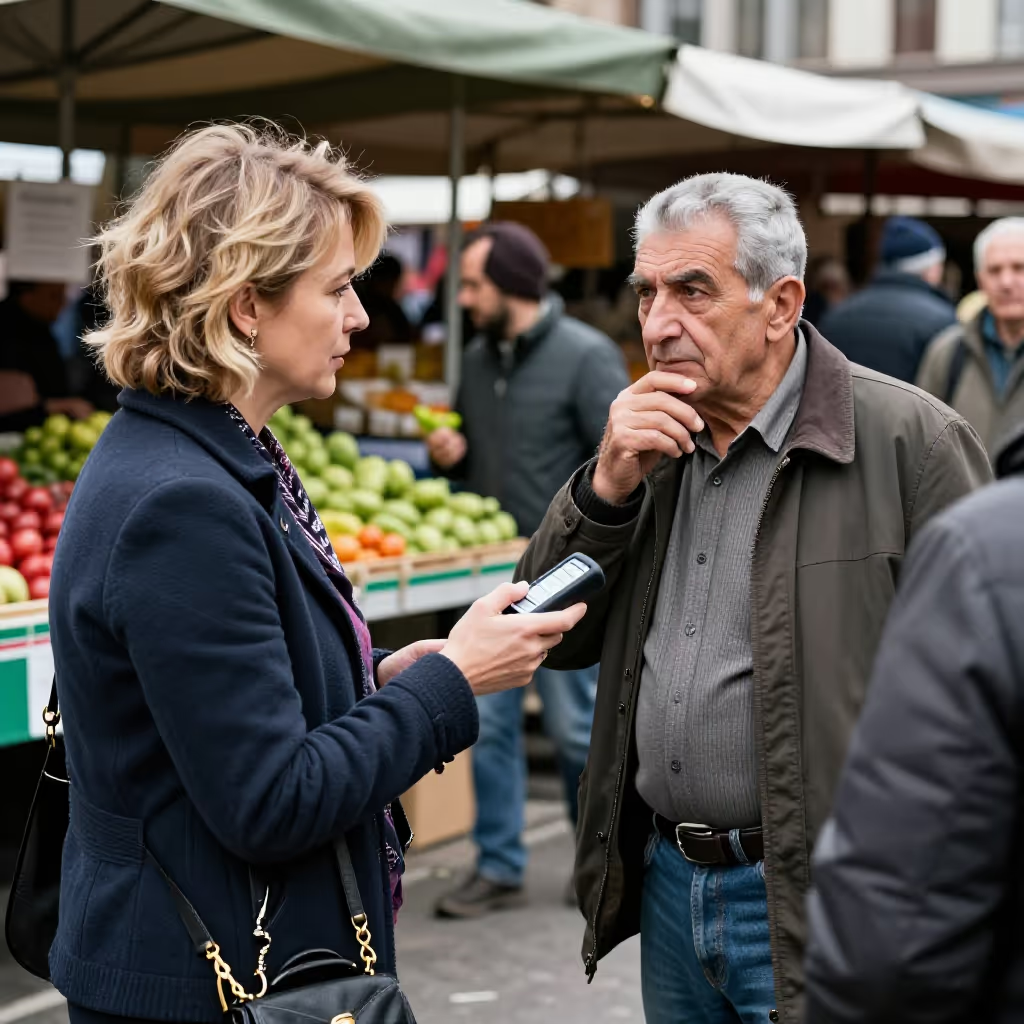
Als Journalist muss man immer am Puls der Zeit sein.
As a journalist, you always have to have your finger on the pulse of the times.
Dative construction
In the idiom 'jemandem auf den Puls fühlen' (to take someone's pulse), the person whose opinion you want to find out is in the dative. The expression means to carefully question someone in order to learn their intentions.
EXAMPLE
Die Chefin wollte ihren Mitarbeitern auf den Puls fühlen, bevor sie die Änderungen ankündigte.
The boss wanted to take her employees' pulse before announcing the changes.
Compare with
near_synonym
Puls vs Rhythmus
rhythm
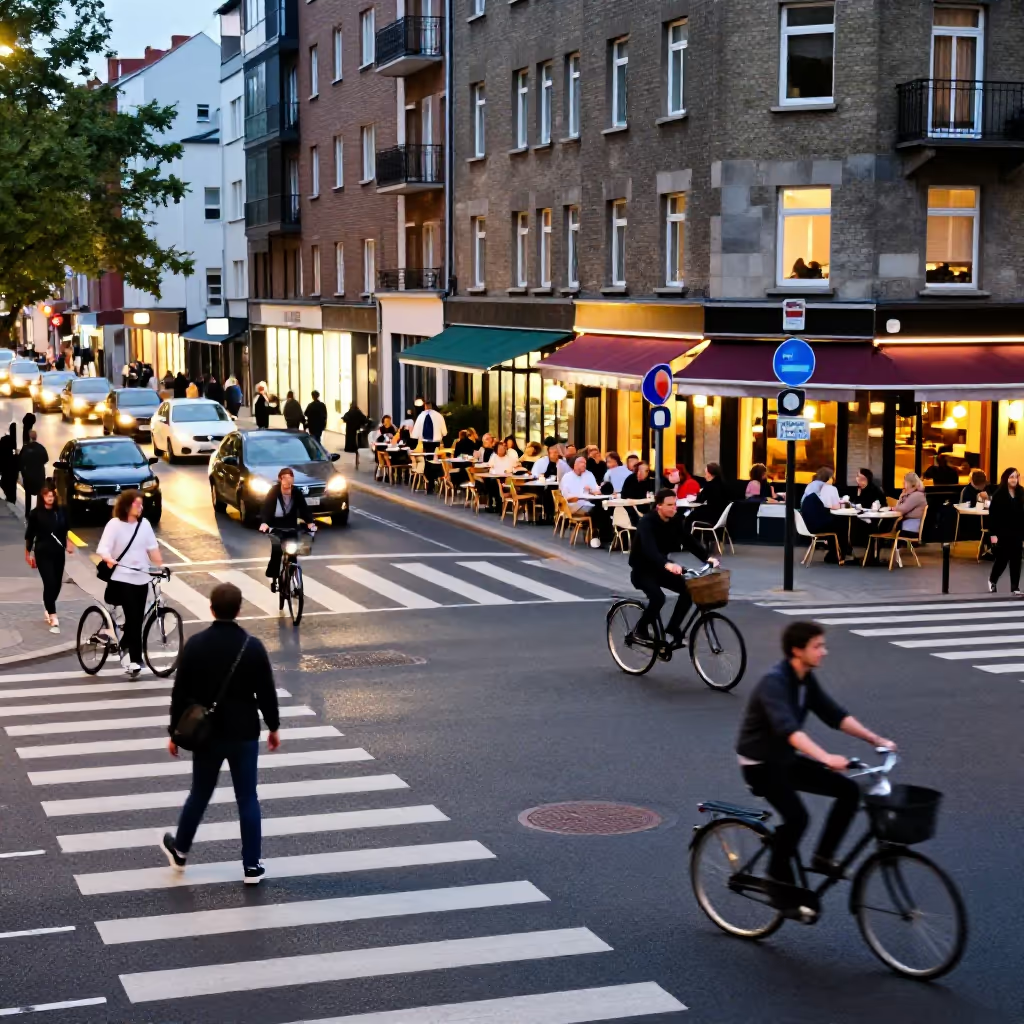
'der Rhythmus' and 'der Puls' can both describe a regular movement or liveliness. 'Puls' first refers to the heartbeat, which you can feel or measure on the body. 'Rhythmus' is more general and fits music, movement, speech, or recurring processes in everyday life. In a figurative sense, 'Puls' can also mean the energy or dynamism of something, for example a city. In that case, it is more figurative than 'Rhythmus'. So 'Puls' fits especially well when it is about the body or a lively feeling; 'Rhythmus' is broader and fits regular processes.
Puls
Nach dem Lauf ist sein Puls noch sehr hoch.
After the run, his pulse is still very high.
Rhythmus
Im Urlaub findet sie schnell einen ruhigeren Rhythmus für den Tag.
On vacation, she quickly finds a calmer rhythm for the day.