

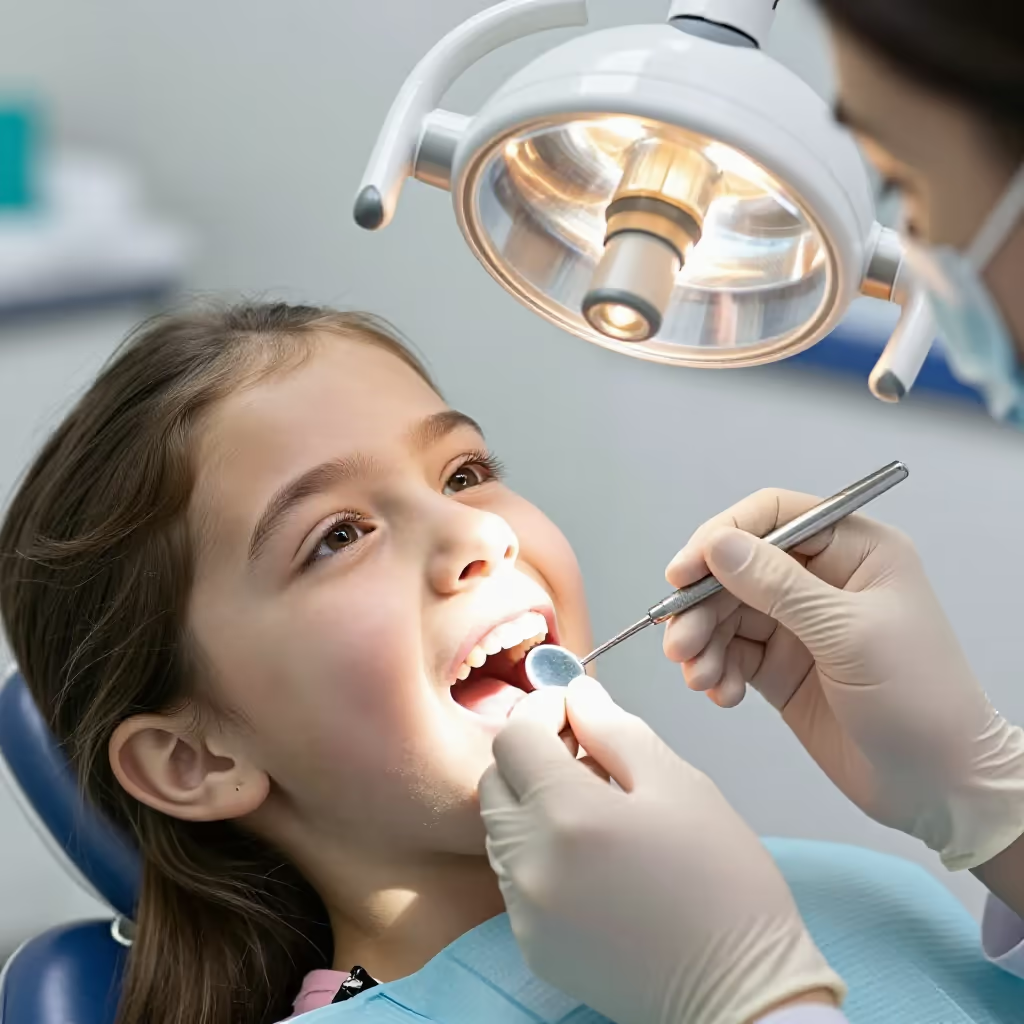
der Zahn
tooth
One of the hard, bone-like structures in the jaw of humans and vertebrates that is used for biting and chewing.
EXAMPLE
Ich muss zum Zahnarzt, weil mir ein Zahn wehtut.
I have to go to the dentist because one of my teeth hurts.
tooth
Loading your saved state.
tooth
One of the hard, bone-like structures in the jaw of humans and vertebrates that is used for biting and chewing.
Ich muss zum Zahnarzt, weil mir ein Zahn wehtut.
I have to go to the dentist because one of my teeth hurts.
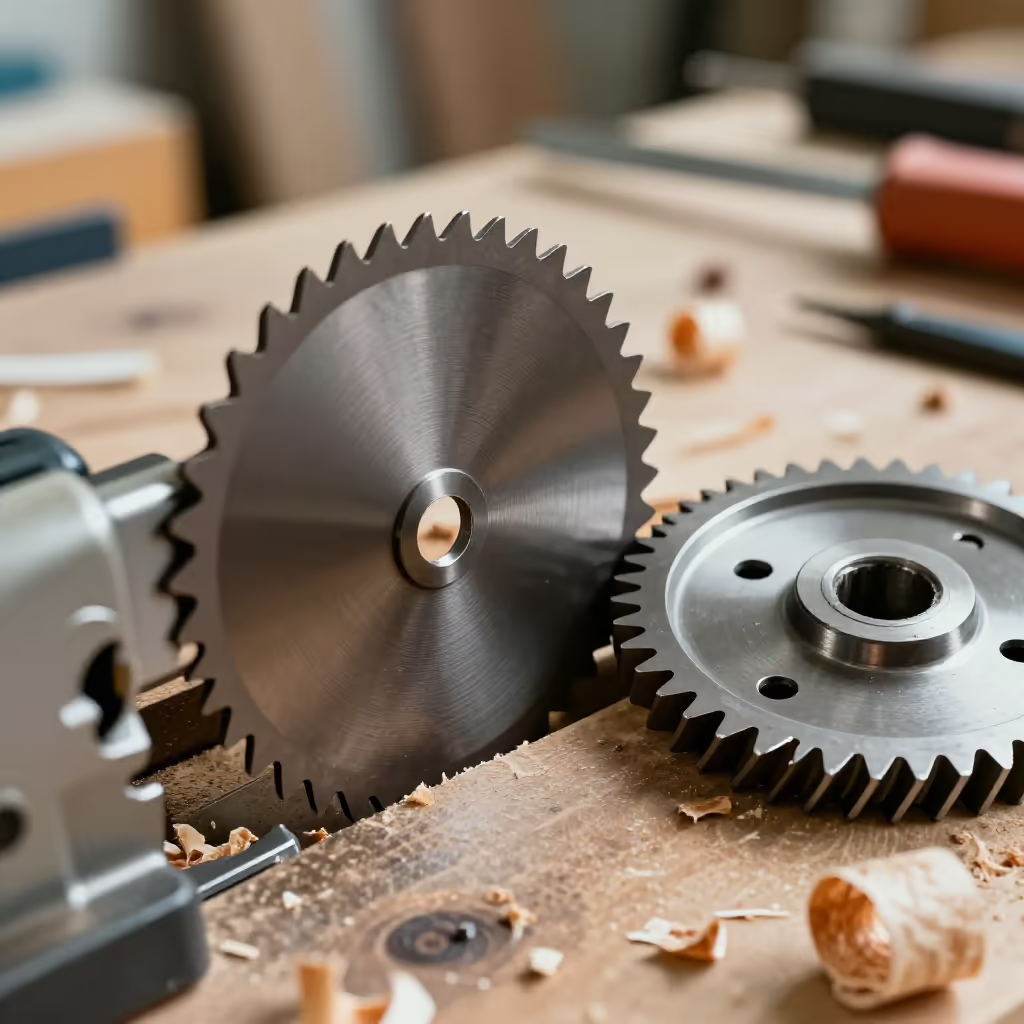
tooth
A jagged projection on a tool or machine part, e.g., on a saw blade or gear wheel.
An dem großen Zahnrad ist ein Zahn abgebrochen.
A tooth has broken off the large gear wheel.

to grill someone
To examine or question someone closely in order to find out their true intentions, knowledge, or opinion.
Im Vorstellungsgespräch hat der Personaler dem Bewerber ordentlich auf den Zahn gefühlt.
In the job interview, the HR manager really grilled the applicant.

to pick up the pace
To increase speed; to hurry up or work faster.
Wir müssen einen Zahn zulegen, wenn wir den Zug noch erwischen wollen.
We need to pick up the pace if we still want to catch the train.
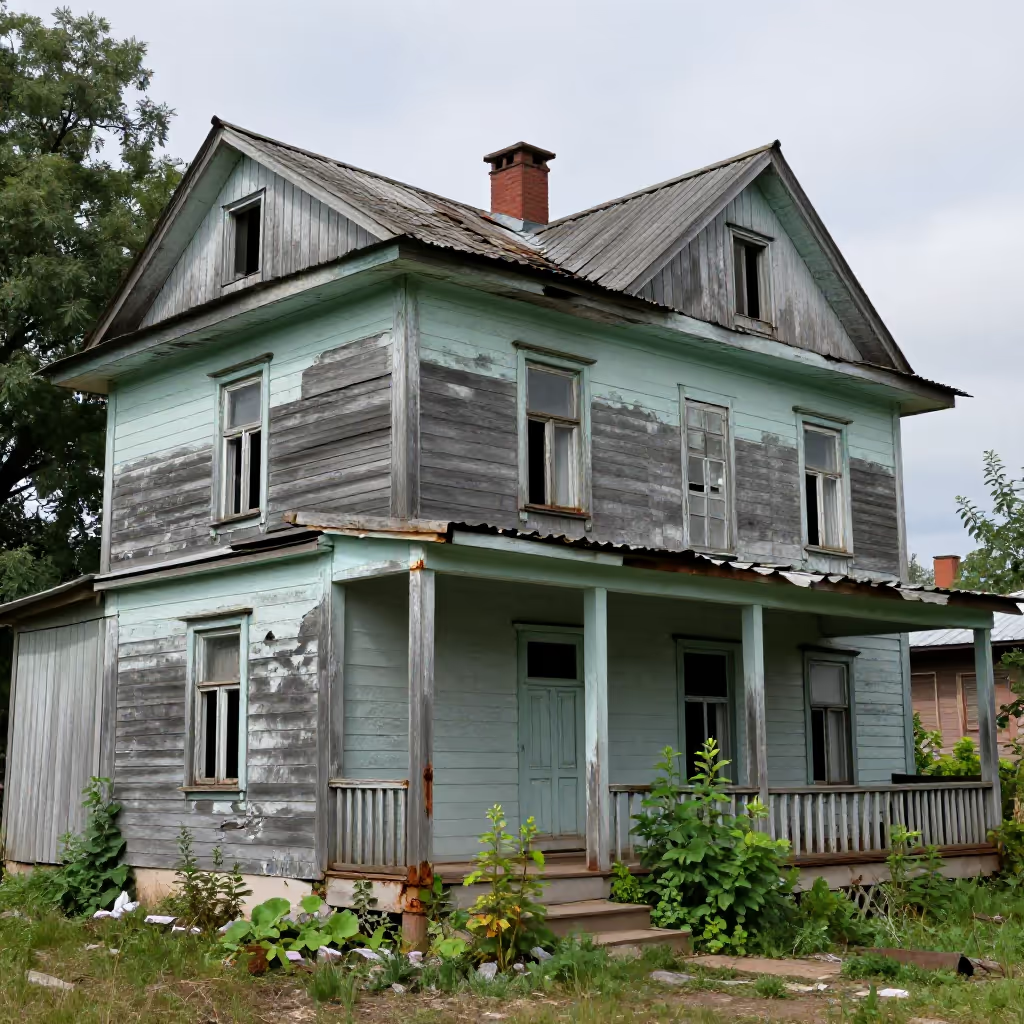
the ravages of time
A metaphorical description of the destructive, wearing effect of age and time on things.
Der Zahn der Zeit hat an der alten Burgruine deutlich genagt.
The ravages of time have clearly gnawed away at the old castle ruins.
'Zahn' (tooth) is a very productive base word in German. Many compound nouns related to teeth are formed with it, for example 'Zahnschmerzen' (toothache), 'Zahnarzt' (dentist), 'Zahnpasta' (toothpaste), or 'Zahnlücke' (gap between teeth).
Bei Zahnschmerzen sollte man schnell einen Termin beim Zahnarzt machen.
If you have a toothache, you should quickly make an appointment with the dentist.
In connection with the body part 'Zahn' (tooth), there are fixed verb combinations. You say 'sich die Zähne putzen' (to brush one's teeth), 'einen Zahn ziehen lassen' (to have a tooth pulled), or 'einen Zahn verlieren' (to lose a tooth).
Kinder sollten lernen, sich morgens und abends die Zähne zu putzen.
Children should learn to brush their teeth in the morning and evening.
The meaning 'Zacken' (tooth / prong) can be recognized from context. When the text refers to machines, tools, or devices such as a 'Zahnrad' (gear wheel), a 'Säge' (saw), or a 'Kamm' (comb), it does not mean the tooth in the mouth.
Die Kette ist vom Zahnrad gesprungen.
The chain has jumped off the gear wheel.
The idiom 'jemandem auf den Zahn fühlen' means to question a person closely. The person being questioned is always in the dative.
Die Journalistin wollte dem Politiker mit ihren Fragen auf den Zahn fühlen.
The journalist wanted to grill the politician with her questions.
The colloquial idiom 'einen Zahn zulegen' is a request to hurry up or work faster. It is used as a fixed unit.
Wenn wir pünktlich sein wollen, müssen wir jetzt einen Zahn zulegen.
If we want to be on time, we need to pick up the pace now.
'Der Zahn der Zeit' is a metaphor for the natural decay of things over a long period of time. This expression is often combined with the verb 'nagen' (to gnaw): 'Der Zahn der Zeit nagt an etwas (Dativ)' (the ravages of time gnaw away at something).
Man sieht, wie der Zahn der Zeit an der alten Fassade genagt hat.
You can see how the ravages of time have gnawed away at the old facade.
pulse
Both idioms mean that you want to find out more about someone. Jemandem auf den Zahn fühlen emphasizes close examination or direct questioning. Jemandem auf den Puls fühlen sounds more like carefully exploring or testing someone’s attitude or condition.
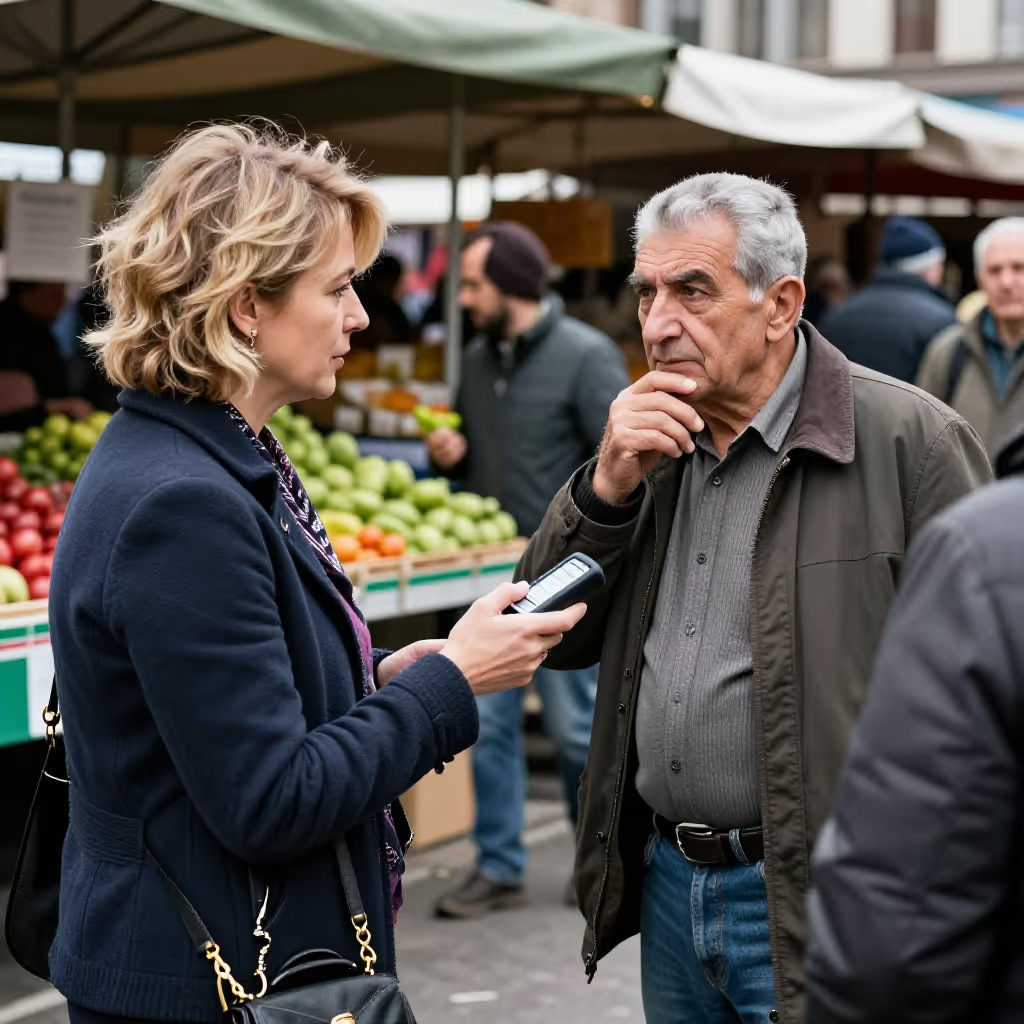
Die Journalistin fühlte dem Kandidaten mit genauen Fragen auf den Zahn.
The journalist grilled the candidate with detailed questions.
Die Journalistin fühlte dem Kandidaten zunächst vorsichtig auf den Puls.
The journalist initially took the candidate’s pulse cautiously.