

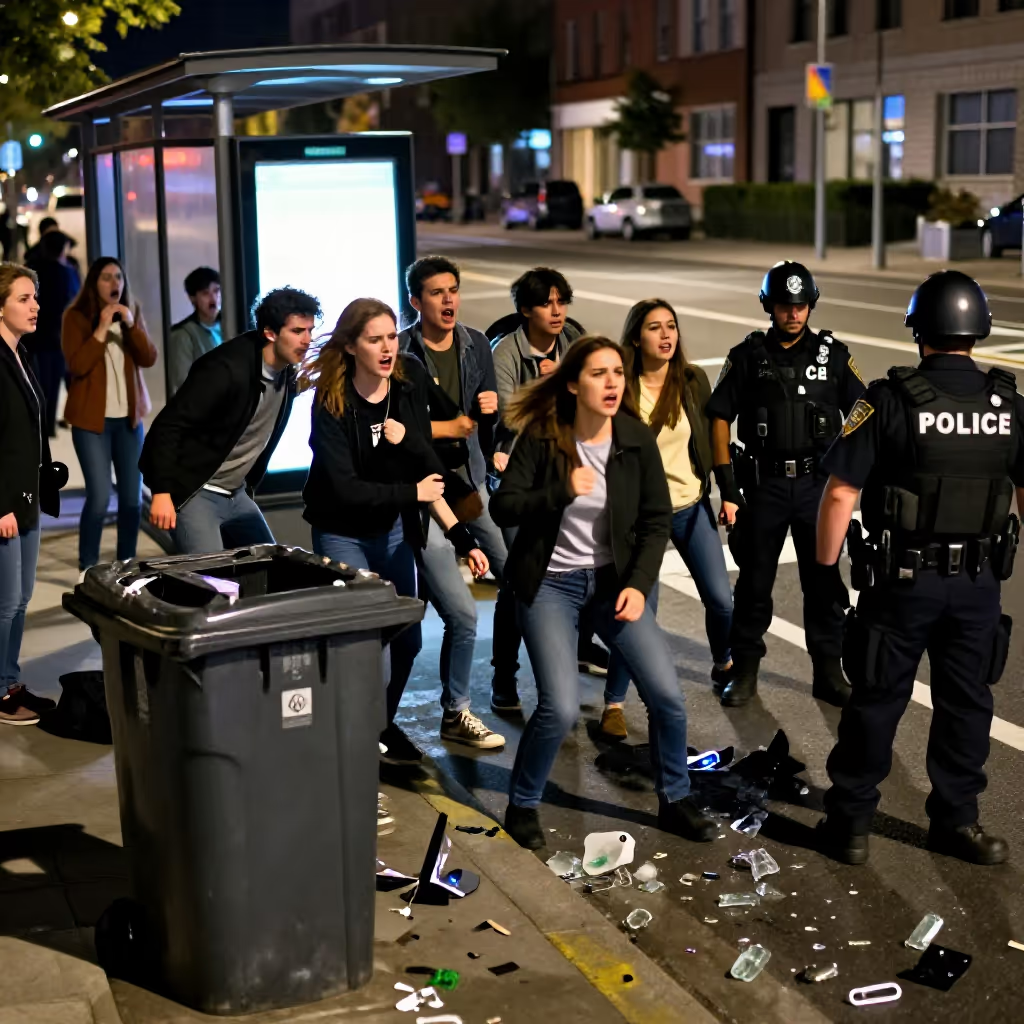
A violent and noisy disturbance by a group of people, often involving the destruction of property. The word is a plural word in origin, but is usually treated like a singular.
example
Nach dem Fußballspiel kam es in der Innenstadt zu heftiger Randale.
After the football match, there was heavy rioting in the city center.
Usage tips
Word family
The noun 'die Randale' (rioting) is closely connected with the verb 'randalieren' (to riot / make violent noise) and the person 'der Randalierer' (rioter). If you know one word in the family, you can understand the others more easily.
EXAMPLE
Die Polizei verhaftete mehrere Randalierer.
The police arrested several rioters.
Grammatical use
'Randale' (rioting) is a collective term and is almost always used without an article or with the definite article 'die'. It always appears in the singular and is also combined with a singular verb. You cannot count it.
EXAMPLE
Die Polizei war im Einsatz, weil es Randale gab.
The police were on duty because there was rioting.
Typical collocations
Common verbs used with 'Randale' (rioting) are 'Randale machen' (to cause trouble / riot) and 'zu Randale kommen' (for rioting to occur). The trigger or location is often mentioned as well.
EXAMPLE
Einige Fans machten nach der Niederlage ihres Teams Randale.
Some fans caused trouble after their team's defeat.
Compare with
near_synonym · confusable
Randale vs Ausschreitung
riot
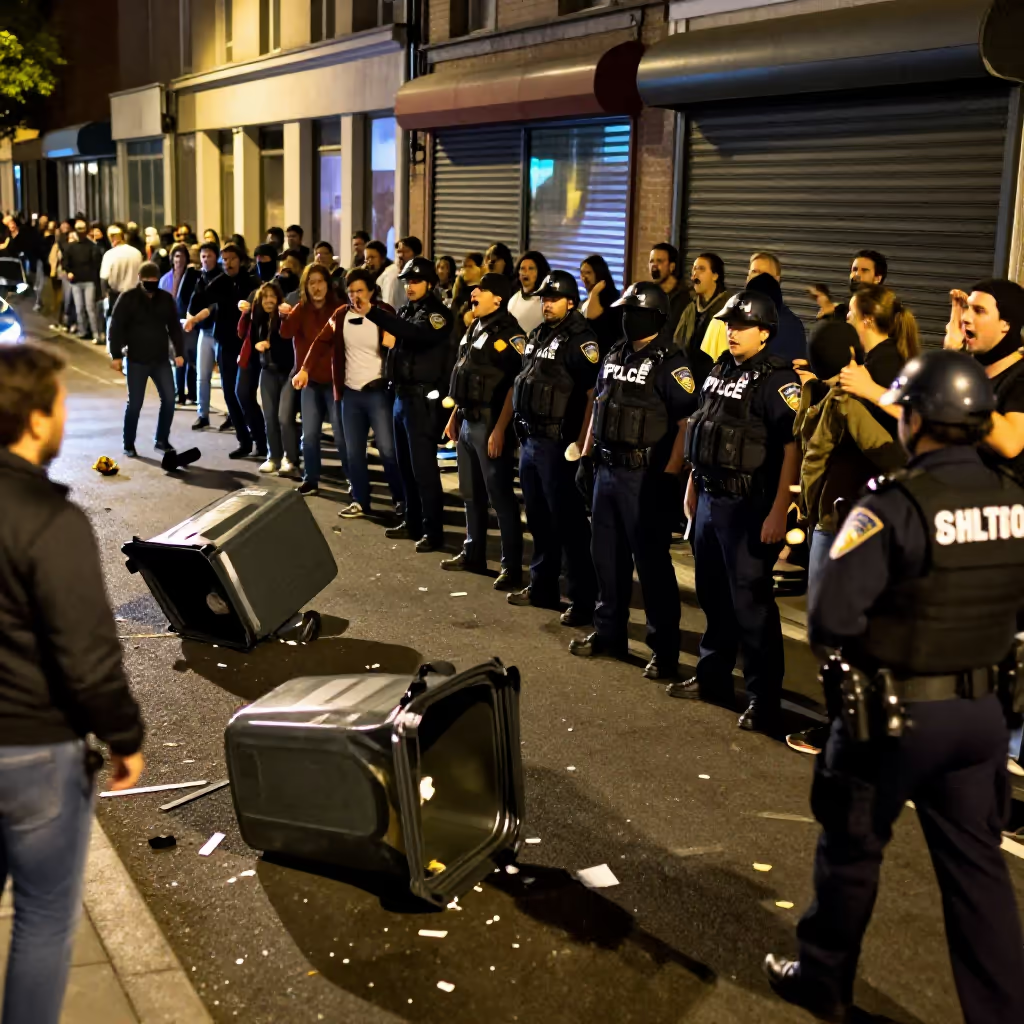
'die Ausschreitung' and 'die Randale' both describe violent or disruptive behavior by people, often in a group. 'Ausschreitung' sounds more neutral and is often used in news reports or official reports. It is about violence or a disturbance of public order. 'Randale' sounds more colloquial and emphasizes noise, wild behavior, and often destruction as well. The words can be confused because they refer to similar situations. In a report about a demonstration, you would be more likely to say 'Ausschreitungen'. If you want to emphasize the loud, destructive side, 'Randale' fits well.
Randale
Nach der Randale waren zwei Fensterscheiben im Bahnhof kaputt.
After the rioting, two window panes in the train station were broken.
Ausschreitung
Bei der Demonstration gab es am Abend mehrere Ausschreitungen.
There were several riots at the demonstration in the evening.