

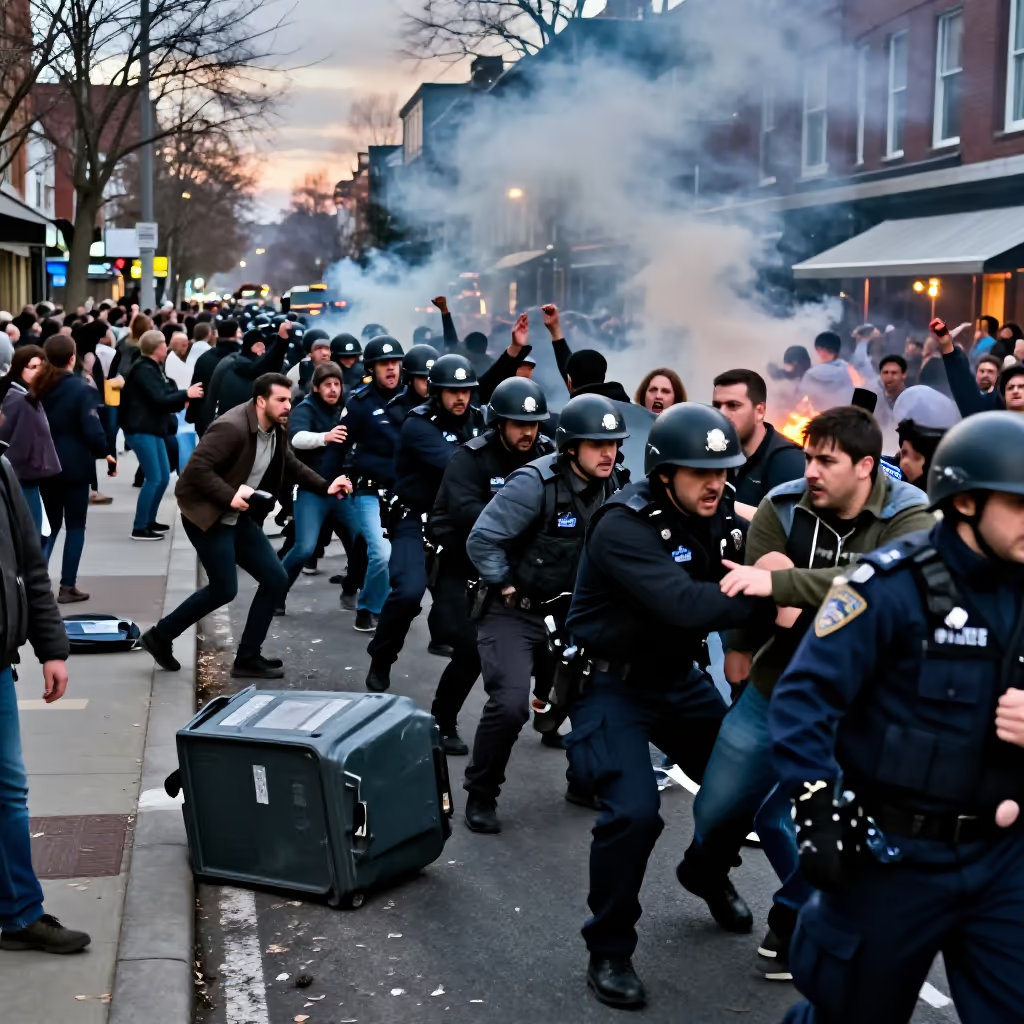
der Krawall
riot
A loud, often violent conflict or disturbance, usually caused by a larger crowd of people.
EXAMPLE
Nach dem Fußballspiel kam es in der Innenstadt zu Krawallen.
After the soccer match, riots broke out in the city center.
riot / racket
Loading your saved state.
riot
A loud, often violent conflict or disturbance, usually caused by a larger crowd of people.
Nach dem Fußballspiel kam es in der Innenstadt zu Krawallen.
After the soccer match, riots broke out in the city center.
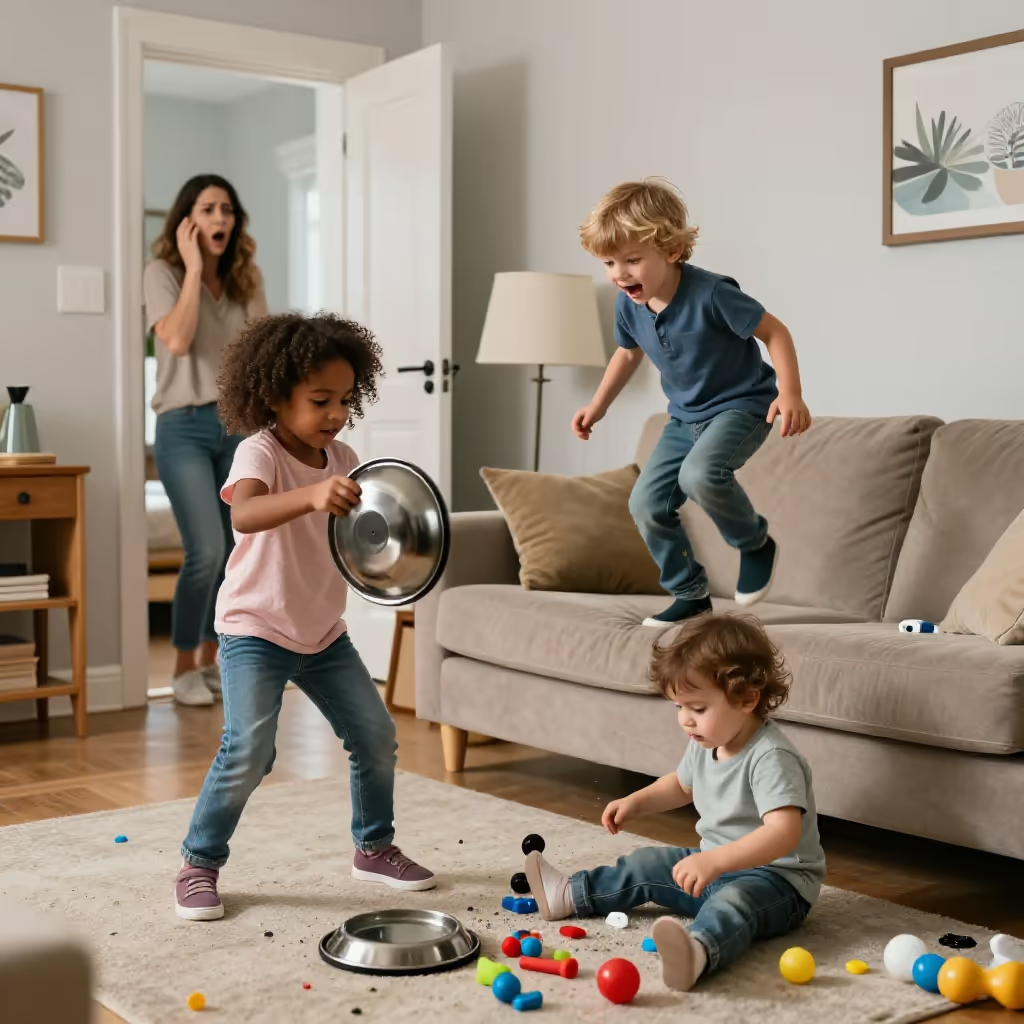
racket
Colloquial term for loud noise or wild chaos, often caused by children.
Die Nachbarn haben sich beschwert, weil die Kinder gestern so einen Krawall gemacht haben.
The neighbors complained because the children made such a racket yesterday.
You can easily recognize the meaning of 'Krawall' (riot/racket) from the context. In public spaces, in connection with demonstrations or soccer matches, it means violent disturbances. In private settings, often with children, it simply means loud noise.
Die Polizei war im Einsatz, um die Krawalle zu beenden.
The police were deployed to end the riots.
In connection with unrest, 'Krawall' (riot) is often used in fixed phrases. Common ones are 'es kommt zu Krawallen' (riots break out), 'Krawalle anzetteln' (to incite riots), or 'Krawalle niederschlagen' (to suppress riots).
Nach der Urteilsverkündung kam es vor dem Gerichtsgebäude zu Krawallen.
After the verdict was announced, riots broke out in front of the courthouse.
In the colloquial meaning of noise, the fixed combination 'Krawall machen' (to make a racket) is almost always used.
Hört auf, so einen Krawall zu machen, die Nachbarn schlafen schon!
Stop making such a racket; the neighbors are already asleep!
The meaning 'lauter Lärm' (loud noise) clearly belongs to colloquial language. In a formal text, you would generally avoid this formulation.
Meine Güte, was ist das für ein Krawall nebenan?
Good grief, what is that racket next door?
noise
When a group of children is loud, both words can describe the disturbing impression they create. „Lärm“ mainly refers to the sound they produce, whereas „Krawall“ is colloquial and also highlights the children's wild and disruptive commotion. Choose „Lärm“ for the sound and „Krawall“ for the behavior.
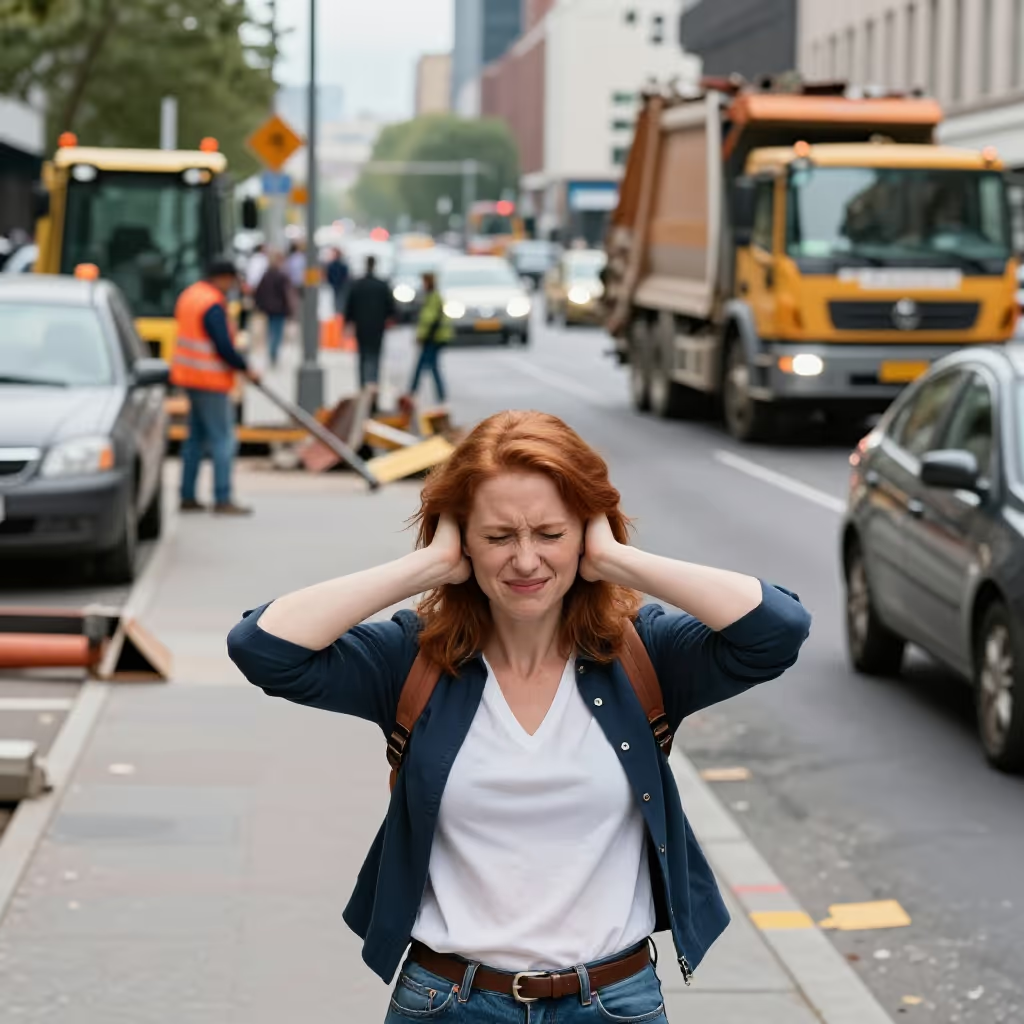
Vor dem Haus machten die Kinder so viel Krawall, dass niemand schlafen konnte.
The children made such a racket in front of the house that no one could sleep.
Der Lärm der spielenden Kinder drang bis in die Wohnung.
The noise from the children playing reached all the way into the apartment.