

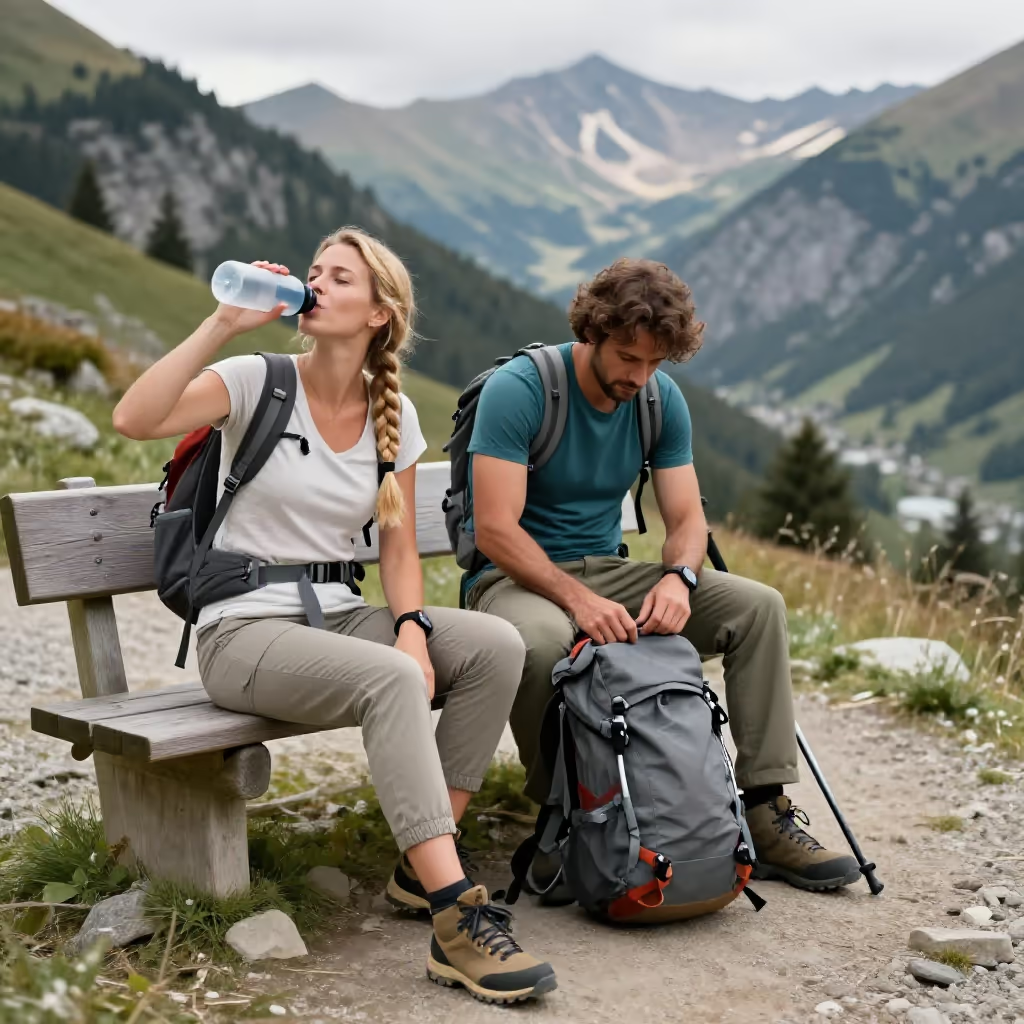
die Rast
rest / break
A break for recovery that you take during a trip, a hike, or another strenuous activity.
Nach zwei Stunden Wanderung machten wir an einem Aussichtspunkt eine Rast.
After two hours of hiking, we took a rest at a viewpoint.

rest / break
Loading your saved state.

rest / break
A break for recovery that you take during a trip, a hike, or another strenuous activity.
Nach zwei Stunden Wanderung machten wir an einem Aussichtspunkt eine Rast.
After two hours of hiking, we took a rest at a viewpoint.

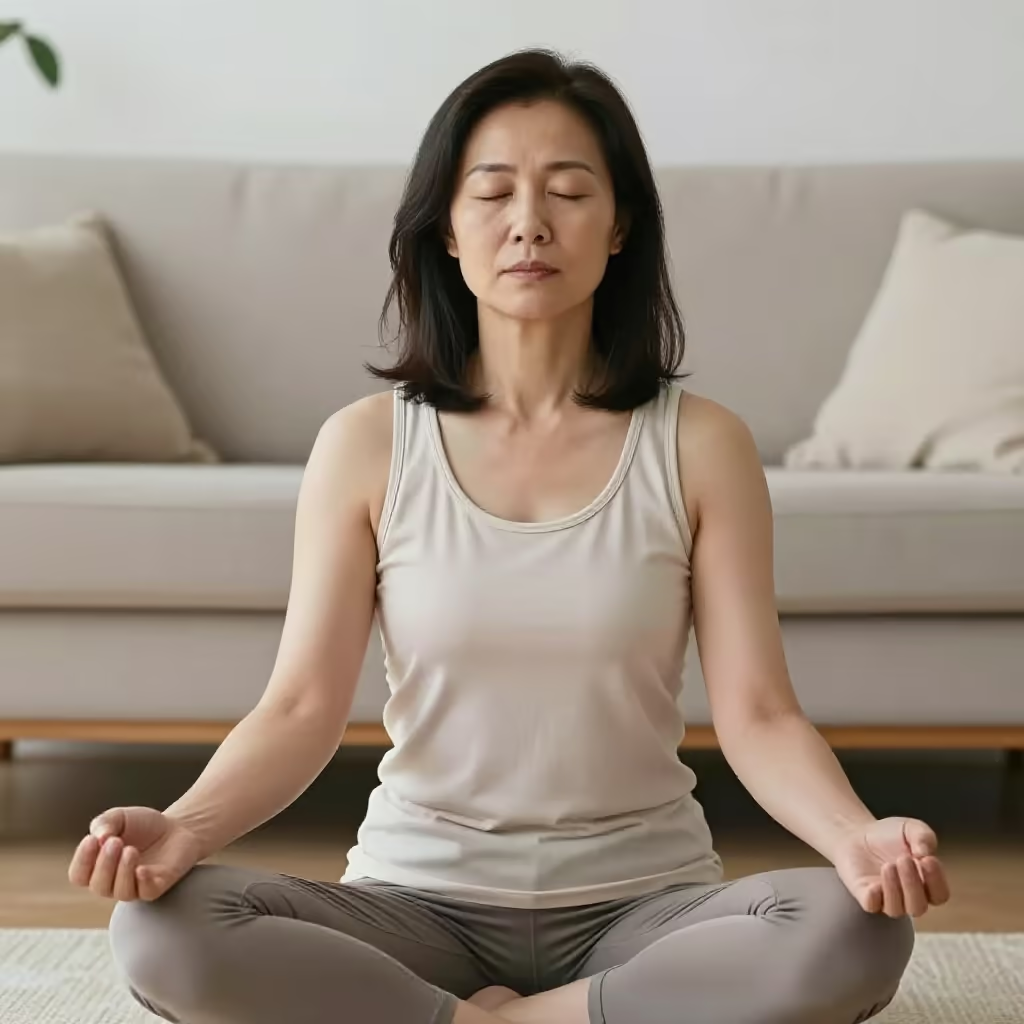
without rest
A fixed expression meaning that someone is active or working continuously and without a break.
Sie arbeitete ohne Rast und Ruh, um das Projekt rechtzeitig fertigzustellen.
She worked without rest to finish the project on time.
'Die Rast' (rest/break) belongs to the word family of the verb 'rasten' (to take a break). The word 'Raststätte' (a service area on the highway) is also derived from it.
Wir sollten bald rasten, um neue Energie zu tanken.
We should take a break soon to recharge our energy.
The most common and natural formulations are 'eine Rast machen' or 'eine Rast einlegen'. Both mean to take a break to recover.
Die Wandergruppe legte am Gipfel eine lange Rast ein.
The hiking group took a long rest at the summit.
The word 'Rast' (rest/break) is almost always used in the context of travel, hikes, bike tours, or other longer, strenuous activities.
Auf unserer langen Autofahrt nach Italien machten wir alle zwei Stunden eine Rast.
On our long car trip to Italy, we took a rest every two hours.
The expression 'ohne Rast und Ruh' is a fixed idiom. 'Ruh' is an old-fashioned form of 'Ruhe' (rest/peace). The whole phrase means 'continuously' or 'without a break'.
Die Helfer waren nach der Katastrophe ohne Rast und Ruh im Einsatz.
After the disaster, the helpers were working without rest.
quiet / calm
Ruhe and Rast can both be associated with recovery while traveling. Rast explicitly refers to a break taken during a journey or strenuous activity; Ruhe refers to the undisturbed and relaxed state desired during that break. When you name the interruption itself, you use Rast.

Am See machen die Wanderer Rast, bevor sie ihren Weg fortsetzen.
By the lake, the hikers take a break before continuing on their way.
Am See genießen die Wanderer etwas Ruhe und entspannen sich ungestört.
By the lake, the hikers enjoy some Ruhe and relax undisturbed.