


rau
rough
Describing a surface that is uneven, coarse, and not smooth.
EXAMPLE
Nach der Arbeit im Garten hatte er raue Hände.
After working in the garden, he had rough hands.
rough
Loading your saved state.
rough
Describing a surface that is uneven, coarse, and not smooth.
Nach der Arbeit im Garten hatte er raue Hände.
After working in the garden, he had rough hands.

harsh
Describing the weather or the sea when it is stormy, cold, and inhospitable.
An der Küste herrscht oft ein raues Klima.
The coast often has a harsh climate.

hoarse
Describing a voice that sounds hoarse, scratchy, and deep.
Nach dem Konzert war seine Stimme vom vielen Singen ganz rau.
After the concert, his voice was completely hoarse from all the singing.

rough
Describing behavior or tone when it is crude, unfriendly, and unpolished.
Unter der rauen Schale des Kapitäns verbarg sich ein weicher Kern.
Under the captain's rough exterior, there was a soft heart.
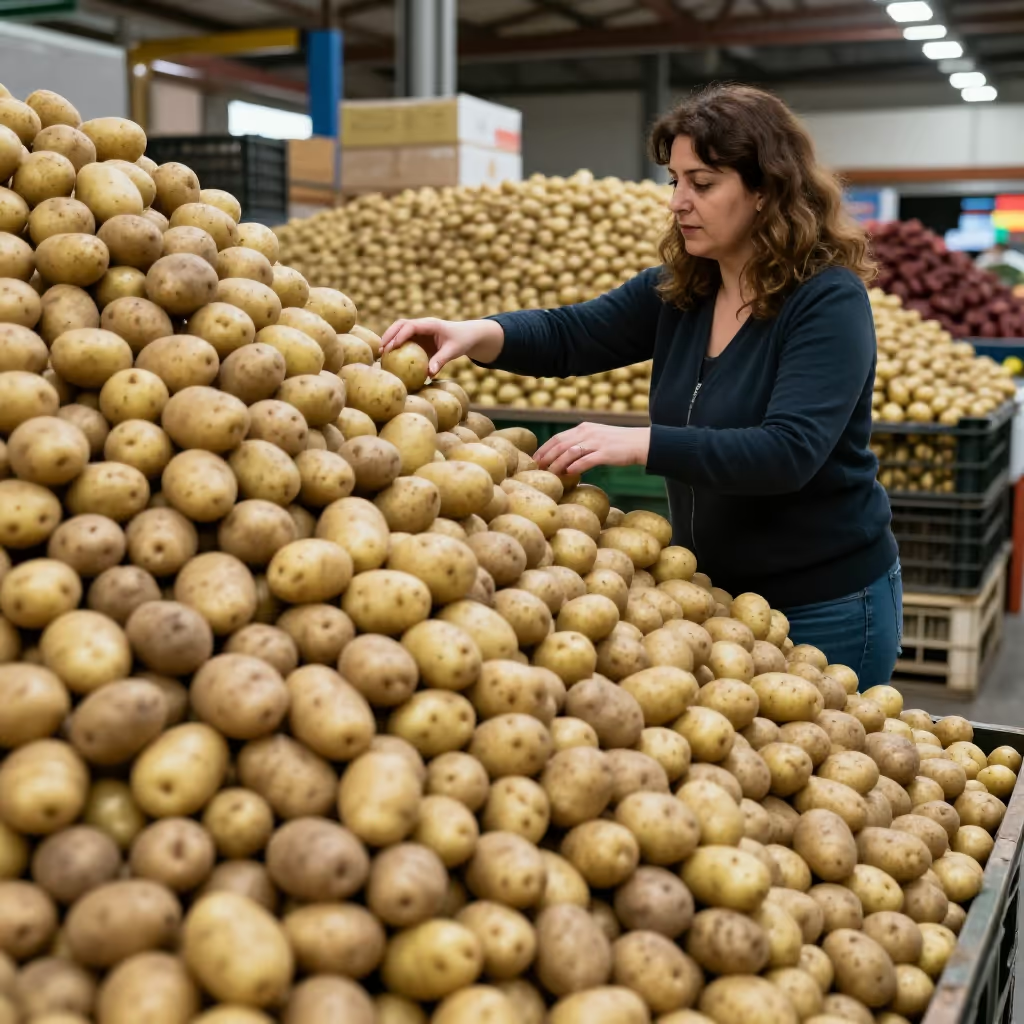
large quantities
A very large, uncounted amount of something.
Auf dem Festival gab es Bier in rauen Mengen.
At the festival, there was beer in large quantities.
You can recognize the exact meaning of 'rau' (rough) from the noun it describes. A 'raue Hand' (rough hand) is uneven, a 'raues Klima' (harsh climate) is inhospitable, and a 'raue Stimme' (hoarse voice) is hoarse.
Die raue Oberfläche des Steins fühlte sich interessant an.
The rough surface of the stone felt interesting.
In its literal meaning, 'rau' (rough) often describes surfaces. Typical combinations are 'raue Hände' (rough hands), 'raue Haut' (rough skin), 'raues Holz' (rough wood), or 'rauer Stoff' (rough fabric).
Für diese Arbeit brauchst du Handschuhe, sonst bekommst du raue Hände.
You need gloves for this work, otherwise you'll get rough hands.
In connection with nature, 'rau' (harsh) describes inhospitable and stormy conditions. Common phrases are 'ein raues Klima' (a harsh climate), 'eine raue See' (a rough sea), or 'ein rauer Wind' (a harsh wind).
Die Seefahrer kämpften gegen die raue See.
The sailors fought against the rough sea.
When a voice is 'rau' (hoarse), it sounds hoarse or scratchy. The reason for it is often mentioned, for example 'vom Schreien' (from shouting), 'vom Singen' (from singing), or 'durch eine Erkältung' (because of a cold).
Seine Stimme ist von der Erkältung noch immer ganz rau.
His voice is still completely hoarse from the cold.
The expression 'raue Schale, weicher Kern' (rough shell, soft core) describes a person who seems crude or unfriendly on the outside but actually has a good character.
Lass dich von seiner Art nicht täuschen. Er hat eine raue Schale, aber einen weichen Kern.
Don't be fooled by his manner. He has a rough exterior but a soft heart.
The phrase 'in rauen Mengen' means 'a great deal' or 'in large quantities'. It is a fixed combination and is often used for things like food, drinks, or other consumer goods.
Auf der Party gab es Essen und Trinken in rauen Mengen.
At the party, there was food and drink in large quantities.
hard
When describing the climate or living conditions, both „hart“ and „rau“ can fit. „Rau“ refers more strongly to cold, wind, and inhospitability, while „hart“ evaluates how demanding and difficult life there is. Choose „rau“ for the external conditions and „hart“ for their effect on people.

Das Leben in den Bergen war rau, weil kalter Wind und Sturm häufig waren.
Life in the mountains was harsh because cold winds and storms were frequent.
Das Leben in den Bergen war hart, weil die Menschen täglich schwere Arbeit leisten mussten.
Life in the mountains was hard because people had to do heavy work every day.