

rauh
rough
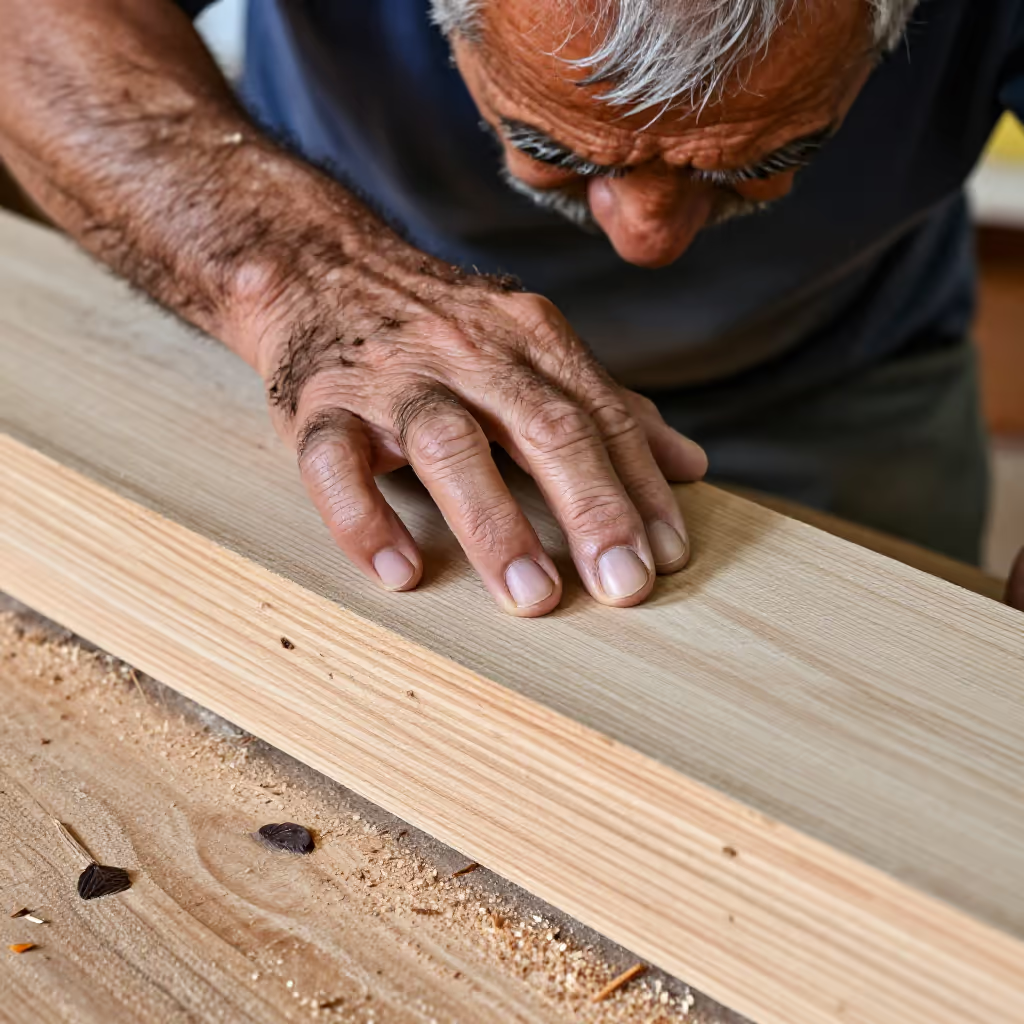
Describing a surface that is not smooth, but uneven, grainy, or irregular. This is an outdated spelling of 'rau' (rough).
EXAMPLE
Die rauhe Zunge der Katze fühlte sich an wie Sandpapier.
The cat's rough tongue felt like sandpaper.
rough
Loading your saved state.
rough
Describing a surface that is not smooth, but uneven, grainy, or irregular. This is an outdated spelling of 'rau' (rough).
Die rauhe Zunge der Katze fühlte sich an wie Sandpapier.
The cat's rough tongue felt like sandpaper.

harsh / rough
Unpleasant, harsh, or inhospitable. It can refer to a voice, the climate, the wind, or someone's tone.
An der Küste herrscht oft ein rauhes Klima.
The coast often has a harsh climate.

rough / approximate
Approximate, roughly estimated, and not exact or detailed.
Ich habe nur eine rauhe Vorstellung davon, wie viel die Reparatur kosten wird.
I only have a rough idea of how much the repair will cost.
The spelling 'rauh' is outdated. Since the German spelling reform of 1996, only the spelling 'rau' is correct. In modern texts, you should always use 'rau'.
Die Oberfläche des Steins ist sehr rau.
The surface of the stone is very rough.
The word can literally describe an uneven surface, but it is also often used figuratively. It can then refer to an unpleasant climate, a scratchy voice, or an unfriendly tone.
Nach der Gartenarbeit hatte er raue Hände.
After gardening, he had rough hands.
In the meaning 'grob' (rough) or 'ungefähr' (approximate), the word is often combined with concepts such as estimates, plans, or ideas. A typical phrase is 'in rauen Zügen' (in broad outline).
Können Sie mir eine raue Schätzung der Kosten geben?
Can you give me a rough estimate of the costs?
rude / rough / approximate
Grob and rauh can both describe a texture that is not smooth. Grob tends to emphasize a large, non-fine structure, while rauh emphasizes an uneven or grainy surface. Rauh is the outdated spelling of “rau.”
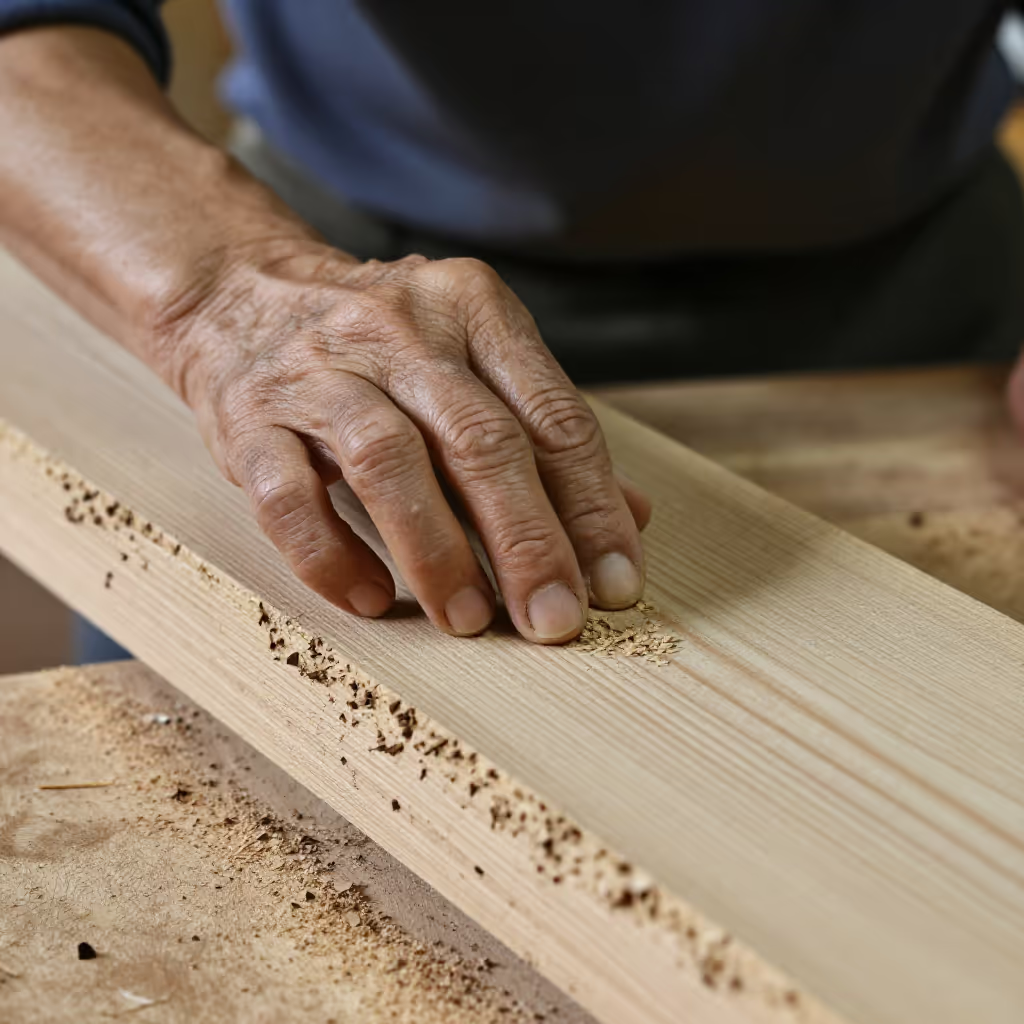
Der Wollstoff fühlt sich rauh an, weil seine Oberfläche nicht glatt ist.
The wool fabric feels rough because its surface is not smooth.
Der Wollstoff hat eine grobe Struktur mit deutlich sichtbaren Fasern.
The wool fabric has a coarse texture with clearly visible fibers.