

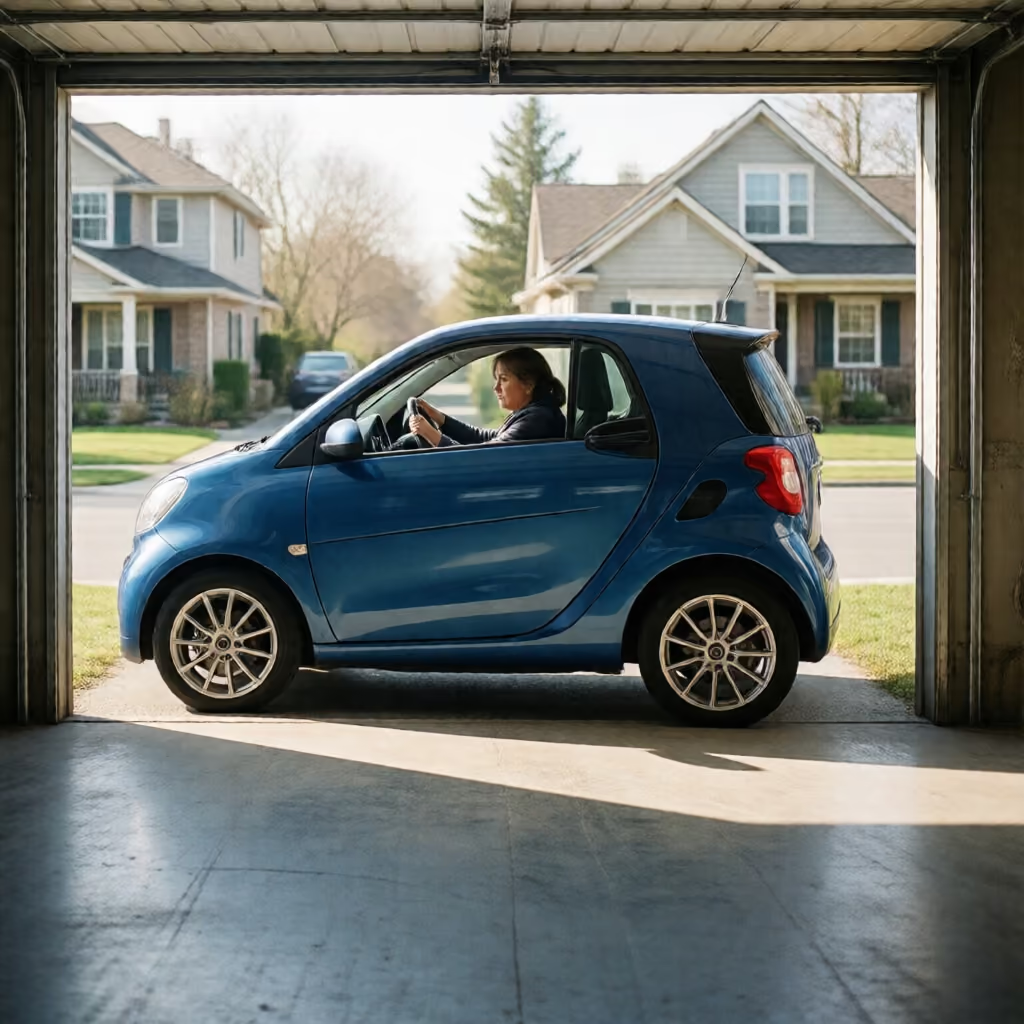
rausfahren
to drive out
To drive out of a place, building, or confined area in a vehicle.
EXAMPLE
Wir fahren morgen früh aus der Stadt raus.
We're driving out of the city early tomorrow morning.
to drive out
rausfahren – fuhr raus – ist rausgefahren
Loading your saved state.
to drive out
To drive out of a place, building, or confined area in a vehicle.
Wir fahren morgen früh aus der Stadt raus.
We're driving out of the city early tomorrow morning.
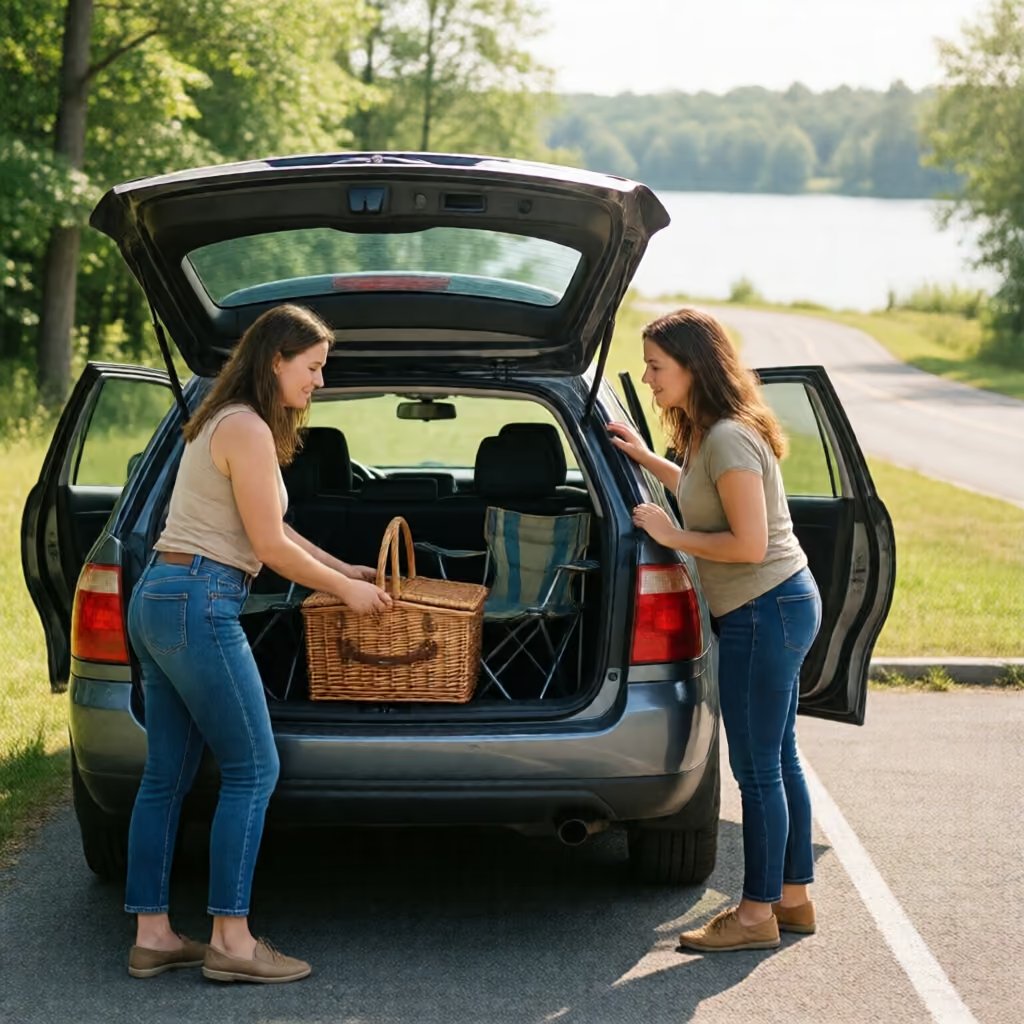
to drive out
To drive outside or to another place, usually to spend time there or do something.
Bei dem schönen Wetter fahren wir an den See raus.
The weather is so nice that we're driving out to the lake.
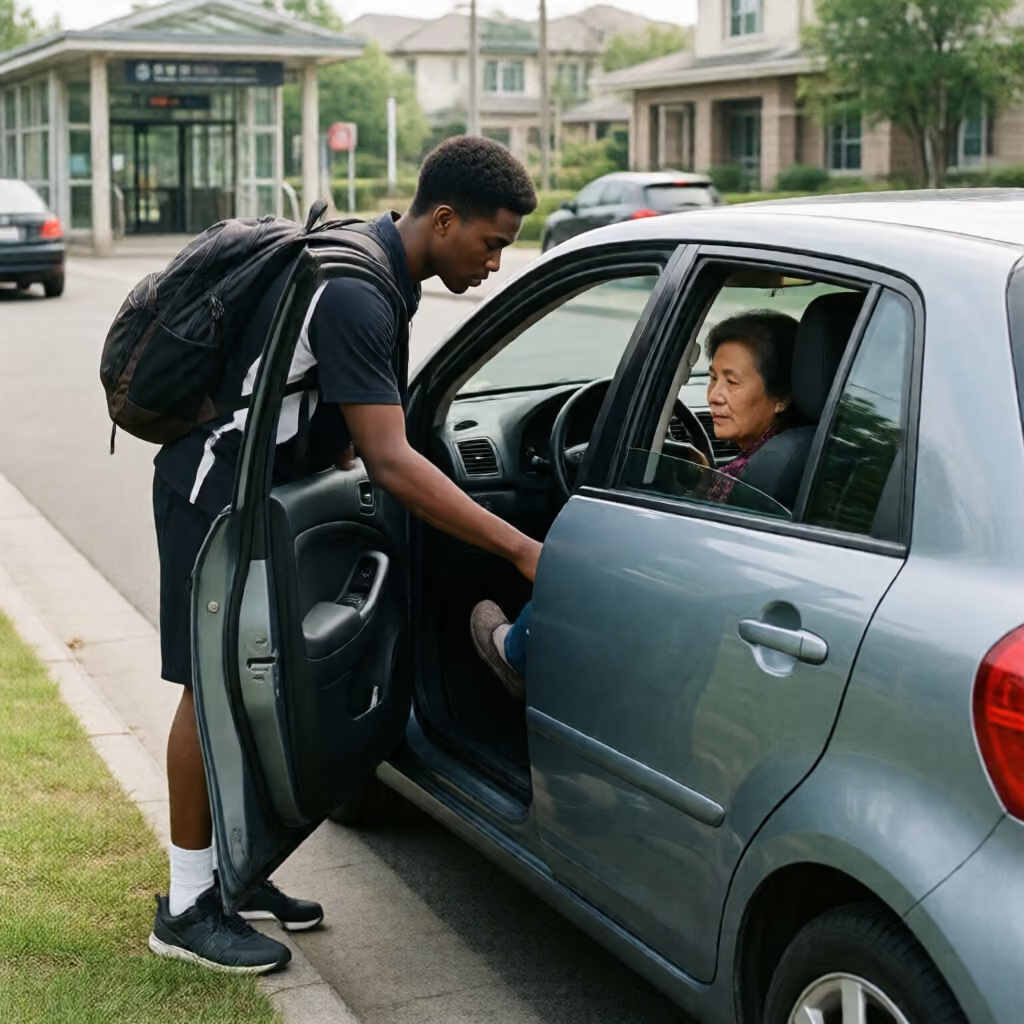
to drive someone out
To take someone by vehicle to a place outside the area where you are currently staying.
Kannst du mich kurz zum Bahnhof rausfahren?
Can you drive me to the train station?
| ich | fahre raus |
|---|---|
| du | fährst raus |
| er/sie/es | fährt raus |
| wir | fahren raus |
| ihr | fahrt raus |
| sie | fahren raus |
| ich | fuhr raus |
|---|---|
| du | fuhrst raus |
| er/sie/es | fuhr raus |
| wir | fuhren raus |
| ihr | fuhrt raus |
| sie | fuhren raus |
| ich | bin rausgefahren habe rausgefahren |
|---|---|
| du | bist rausgefahren hast rausgefahren |
| er/sie/es | ist rausgefahren hat rausgefahren |
| wir | sind rausgefahren haben rausgefahren |
| ihr | seid rausgefahren habt rausgefahren |
| sie | sind rausgefahren haben rausgefahren |
| du | fahr raus! |
|---|---|
| ihr | fahrt raus! |
| Sie | fahren Sie raus! |
| ich | war rausgefahren hatte rausgefahren |
|---|---|
| du | warst rausgefahren hattest rausgefahren |
| er/sie/es | war rausgefahren hatte rausgefahren |
| wir | waren rausgefahren hatten rausgefahren |
| ihr | wart rausgefahren hattet rausgefahren |
| sie | waren rausgefahren hatten rausgefahren |
| ich | werde rausfahren |
|---|---|
| du | wirst rausfahren |
| er/sie/es | wird rausfahren |
| wir | werden rausfahren |
| ihr | werdet rausfahren |
| sie | werden rausfahren |
| ich | fahre raus |
|---|---|
| du | fahrest raus |
| er/sie/es | fahre raus |
| wir | fahren raus |
| ihr | fahret raus |
| sie | fahren raus |
Used for reported speech.
| ich | führe raus |
|---|---|
| du | führest raus |
| er/sie/es | führe raus |
| wir | führen raus |
| ihr | führet raus |
| sie | führen raus |
Used for wishes and “would”.
| infinitive | rausfahren |
|---|---|
| with zu | rauszufahren |
| present participle | rausfahrend |
| past participle | rausgefahren |
'Rausfahren' (to drive out) consists of 'raus' (out) and 'fahren' (to drive) and is separated in main clauses. In subordinate clauses and in the infinitive with 'zu', the verb remains together; in the form with 'zu', 'zu' comes between 'raus' and 'fahren'.
Wir fahren nach dem Frühstück raus.
We're driving out after breakfast.
Sie bleibt zu Hause, weil sie heute nicht rausfährt.
She's staying at home because she isn't driving out today.
Es macht Spaß, am Wochenende rauszufahren.
It's fun to drive out on the weekend.
'Rausfahren' (to drive out) is used mainly in spoken and colloquial language. It is often used when a drive out of a confined area or to a destination outside the current location is meant.
Wir fahren heute Abend noch raus.
We're driving out later this evening.
Die Nachbarn sind mit dem Wohnmobil rausgefahren.
The neighbors drove out in their motorhome.
When 'rausfahren' (to drive someone out) means taking someone to a destination, the person is in the accusative, and the destination is often introduced with 'zu' (to) or 'bis' (as far as). The verb then refers to a trip during which someone is given a ride and dropped off.
Kannst du mich morgen zum Flughafen rausfahren?
Can you drive me to the airport tomorrow?
Mein Bruder fährt seine Freundin bis zum Bahnhof raus.
My brother is driving his girlfriend as far as the train station.