

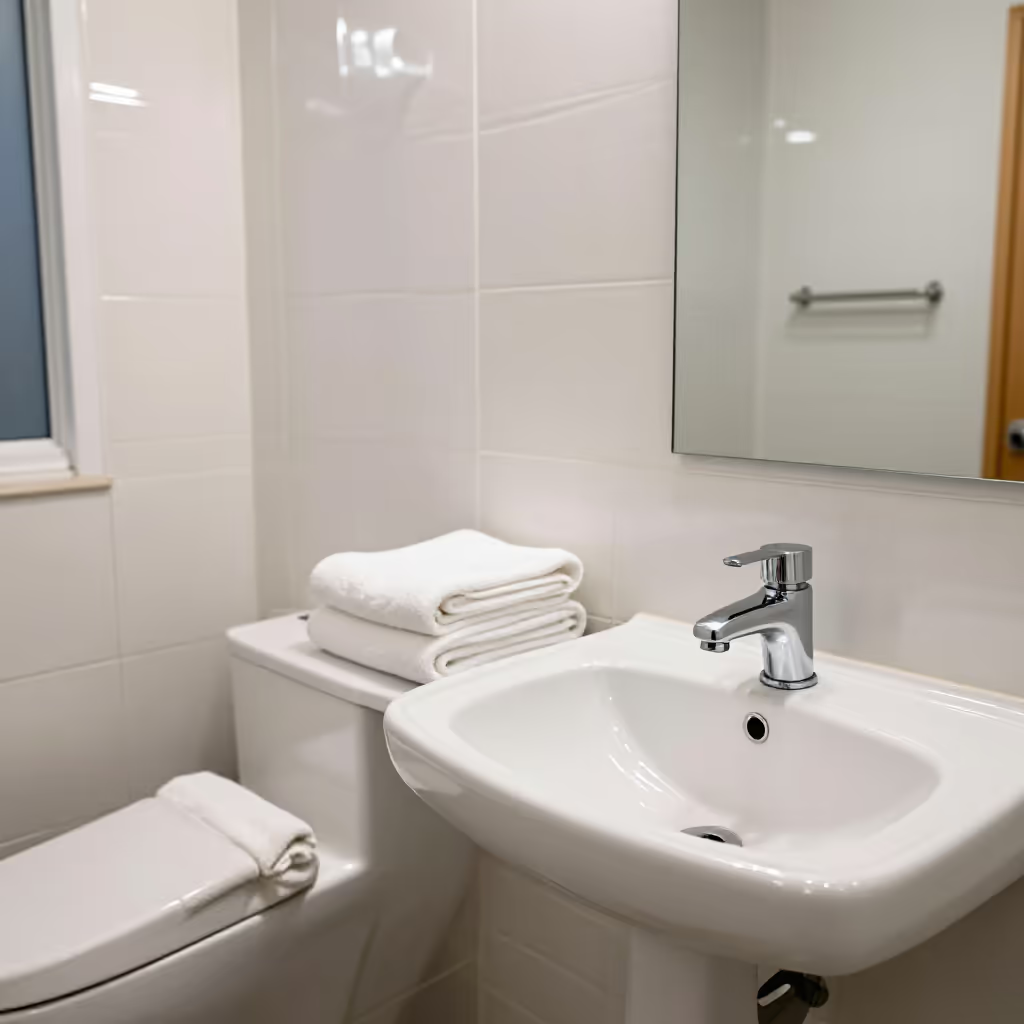
sauber
clean
Free from dirt, stains, or impurities. The opposite of dirty.
EXAMPLE
Nach dem Putzen war die ganze Wohnung wieder sauber.
After cleaning, the whole apartment was clean again.
clean
Loading your saved state.
clean
Free from dirt, stains, or impurities. The opposite of dirty.
Nach dem Putzen war die ganze Wohnung wieder sauber.
After cleaning, the whole apartment was clean again.

clean / precise
With regard to work or craftsmanship: precise, exact, and carefully executed.
Der Handwerker hat eine sehr saubere Arbeit geleistet.
The craftsman did very clean work.

clean / honest
In a moral or ethical sense: honest, fair, and decent. Often used in the negative to describe dishonest behavior.
Das war kein sauberes Geschäft, da liefen illegale Dinge ab.
That was not a clean deal; illegal things were going on.
The adjective 'sauber' (clean) belongs to the word family around the verb 'säubern' (to clean something) and the noun 'die Sauberkeit' (cleanliness). All the words relate to the idea of purity or cleanliness.
Die Reinigungskraft hat das ganze Büro gesäubert.
The cleaner cleaned the whole office.
In its basic meaning, 'sauber' (clean) is often combined with everyday things that should be clean. Typical examples are 'saubere Wäsche' (clean laundry), 'sauberes Wasser' (clean water), or 'saubere Hände' (clean hands).
Bitte wasch dir vor dem Essen die Hände, damit sie sauber sind.
Please wash your hands before eating so they are clean.
In the meaning of 'präzise' (precise), 'sauber' (cleanly/precisely) is often used as an adverb to describe the quality of an action. It then stands directly with the verb.
Der Chirurg hat den Schnitt sehr sauber ausgeführt.
The surgeon made the incision very cleanly.
The moral meaning of 'sauber' (clean) is very often used in the negative to criticize unfair or dishonest actions. Watch for phrases like 'kein sauberes Spiel' (not a fair game) or 'nicht sauber' (not clean/not honest).
Sei vorsichtig, das ist keine saubere Angelegenheit.
Be careful, this is not a clean matter.
pure / in
When referring to water, both „rein“ and „sauber“ can express the absence of impurities. „Sauber“ usually describes a state without dirt. „Rein“ emphasizes more strongly that no foreign substances or admixtures are present.
Zum Trinken braucht sie sauberes Wasser ohne Schmutz und Schadstoffe.
She needs clean water without dirt or harmful substances to drink.
Für den Versuch braucht sie reines Wasser ohne gelöste Zusätze.
She needs pure water without any dissolved additives for the experiment.