


wirklich
really
As an adverb to emphasize or confirm a statement, in the sense of 'actually', 'really', or 'indeed'.
EXAMPLE
Das Konzert war wirklich fantastisch.
The concert was really fantastic.
really
Loading your saved state.
really
As an adverb to emphasize or confirm a statement, in the sense of 'actually', 'really', or 'indeed'.
Das Konzert war wirklich fantastisch.
The concert was really fantastic.
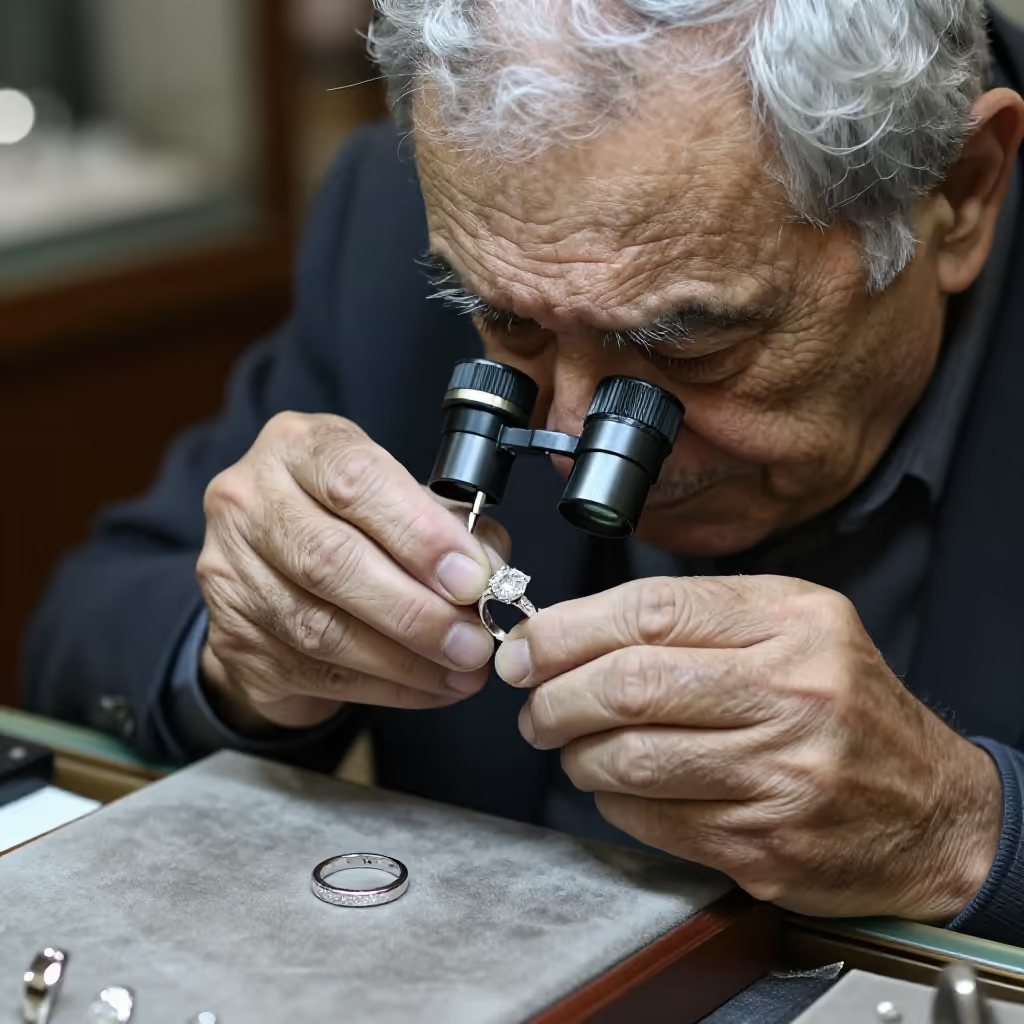
real / actual
As an adjective describing the reality or authenticity of something, as opposed to something false, imagined, or apparent.
Was ist der wirkliche Grund für seine Entscheidung?
What is the real reason for his decision?
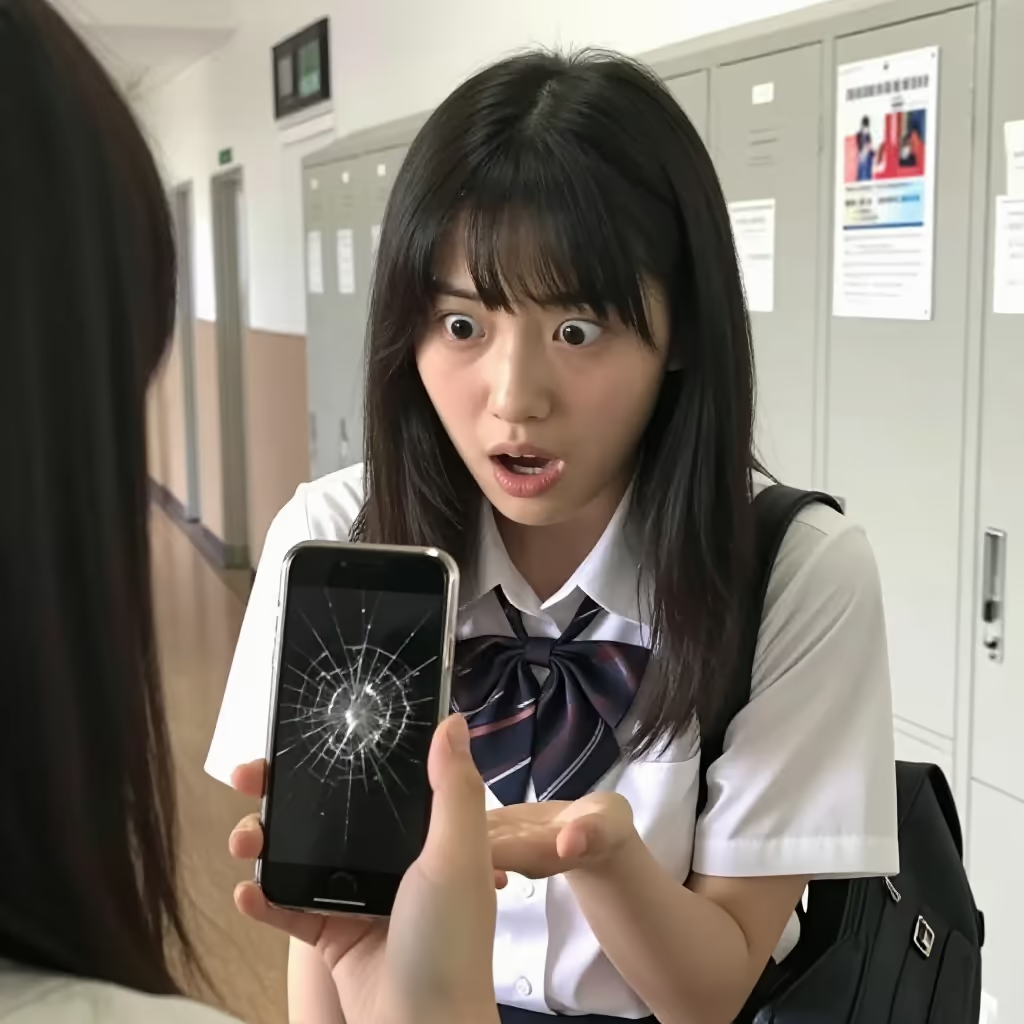
really?
As a particle in a question to express disbelief, surprise, or doubt.
Er hat im Lotto gewonnen. – Wirklich?
He won the lottery. – Really?
'Wirklich' (really) belongs to the word family of 'wirken' (to have an effect) and 'die Wirklichkeit' (reality). So it always has to do with what is real and actual.
Die Medizin hat schnell gewirkt.
The medicine worked quickly.
As an adjective, 'wirklich' (real/actual) stands before a noun and is declined (e.g., 'der wirkliche Grund' – the real reason). As an adverb, it remains unchanged in the sentence and intensifies a statement (e.g., 'das ist wirklich gut' – that is really good).
Was ist der wirkliche Plan hinter dieser Aktion?
What is the real plan behind this action?
As an adverb for emphasis, 'wirklich' (really) often stands directly before the word it is meant to intensify. But it can also stand at the beginning or end of a sentence to reinforce the whole statement.
Das war ein wirklich schöner Tag.
That was a really lovely day.
As a single-word question, 'Wirklich?' (Really?) expresses disbelief or great surprise. It is a common reaction in conversations to question or confirm a piece of information.
Ich habe meinen Job gekündigt. – Wirklich? Warum das denn?
I quit my job. – Really? Why is that?
so / therefore
Also and wirklich can confirm a statement. Also presents the confirmation as the result of what one has learned or realized previously. Wirklich, on the other hand, emphasizes that the statement is true and can also express surprise.

Zu meiner Überraschung hast du die Prüfung wirklich bestanden.
To my surprise, you really passed the exam.
Nach deiner Nachricht weiß ich, dass du die Prüfung also bestanden hast.
After your message, I know that you did pass the exam.