

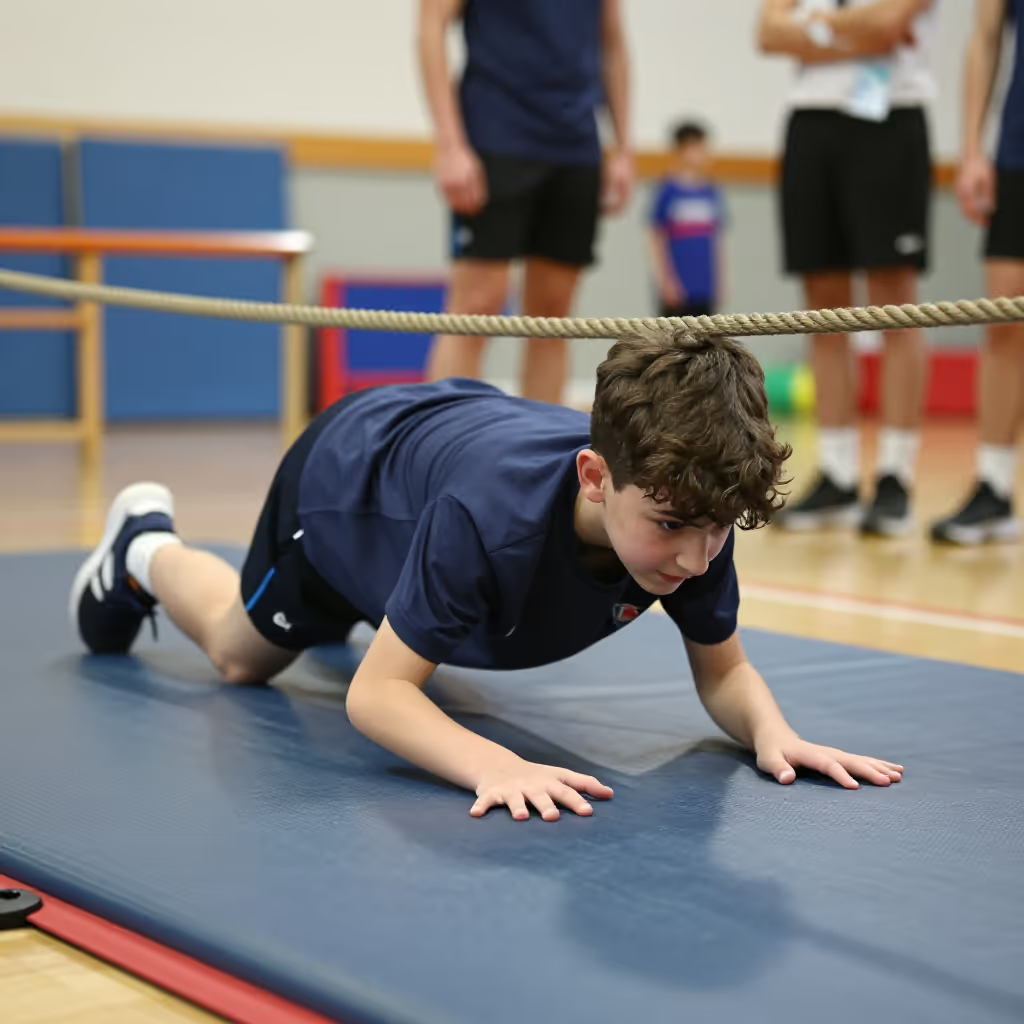
robben
to crawl
To move forward while lying on one's stomach by pulling the body across the ground, similar to a seal.
EXAMPLE
Die Soldaten mussten unter dem Stacheldraht hindurch robben.
The soldiers had to crawl under the barbed wire.
to crawl
Loading your saved state.
to crawl
To move forward while lying on one's stomach by pulling the body across the ground, similar to a seal.
Die Soldaten mussten unter dem Stacheldraht hindurch robben.
The soldiers had to crawl under the barbed wire.
The verb 'robben' (to crawl) is derived directly from the noun 'die Robbe' (the seal, the animal). It describes the typical movement of a seal on land, where it pulls its body across the ground.
Wir haben am Strand die Robben beobachtet.
We watched the seals on the beach.
The perfect tense of 'robben' (to crawl) can be formed with 'haben' (to have) or 'sein' (to be). Use 'sein' when a directed movement from A to B is described. Use 'haben' when the duration or the action itself is emphasized, without a clear destination.
Der Soldat ist über das ganze Feld gerobbt.
The soldier crawled across the entire field.
This verb is often used in specific contexts. Typical examples are descriptions of soldiers in training, babies learning to crawl, or people who have to move under an obstacle.
Das Baby kann schon auf dem Bauch durch das ganze Zimmer robben.
The baby can already crawl on its stomach across the whole room.
to crawl / grovel
Robben and kriechen both describe moving close to the ground. Robben more specifically means lying on your stomach and pulling your body across the ground, while kriechen also includes moving on all fours. Use robben for this particular body position and kriechen as the more general expression.

Der Soldat musste bäuchlings durch das nasse Gras robben.
The soldier had to crawl on his stomach through the wet grass.
Das Kind kroch auf allen Vieren durch das nasse Gras.
The child crawled on all fours through the wet grass.