

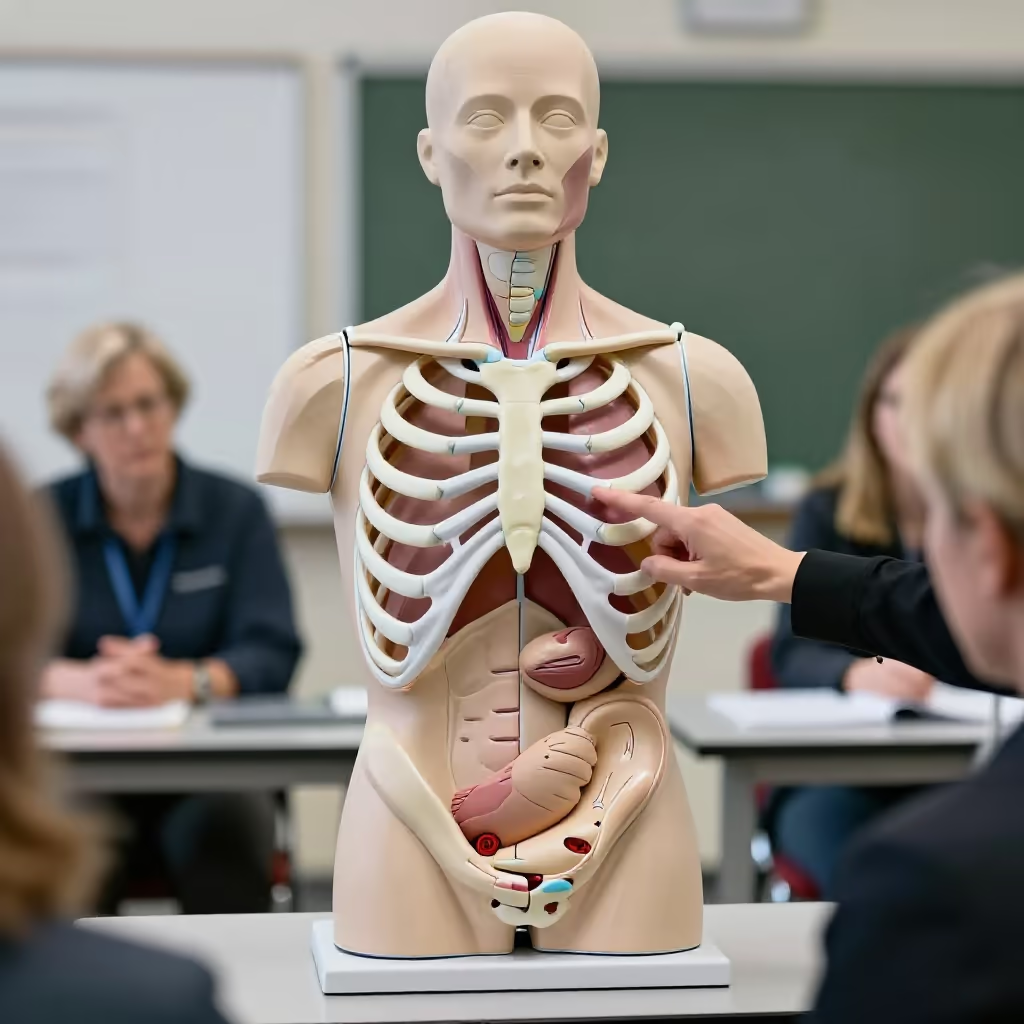
der Rumpf
torso
The body of a human or animal without the head and limbs; the torso.
EXAMPLE
Beim Turnen wird besonders die Muskulatur im Rumpf gestärkt.
In gymnastics, the muscles in the torso are strengthened in particular.
torso / hull
Loading your saved state.
torso
The body of a human or animal without the head and limbs; the torso.
Beim Turnen wird besonders die Muskulatur im Rumpf gestärkt.
In gymnastics, the muscles in the torso are strengthened in particular.

hull / fuselage
The main body of a ship (ship's hull) or airplane (fuselage) without attachments such as masts, wings, or tail assembly.
Nach der Kollision mit dem Eisberg hatte der Rumpf des Schiffes ein großes Leck.
After the collision with the iceberg, the ship's hull had a large leak.

remnant
The incomplete, remaining part of something after other parts have been removed or are missing.
Nach dem Rücktritt vieler Abgeordneter blieb nur noch ein Rumpf des Parlaments übrig.
After the resignation of many members of parliament, only a remnant of the parliament was left.
The basic idea of 'Rumpf' is the same in all meanings: it is the central main part of something, without the outer, protruding parts such as arms, wings, or masts.
Vom alten Schloss steht nur noch der Rumpf.
Only the main structure of the old castle is still standing.
To make the meaning more precise, 'Rumpf' is often used as part of compound words, for example 'Schiffsrumpf' (ship's hull), 'Flugzeugrumpf' (aircraft fuselage), or 'Rumpfmannschaft' (a skeleton crew or incomplete team).
Der Flugzeugrumpf muss extrem stabil sein.
The aircraft fuselage has to be extremely stable.
In the meaning 'Torso' (torso), the word is mainly used in the areas of sports, fitness, and medicine. Typical expressions are 'den Rumpf trainieren' (to train the torso/core) or 'die Rumpfmuskulatur' (the core muscles).
Eine starke Rumpfmuskulatur ist wichtig für eine gute Haltung.
Strong core muscles are important for good posture.
When 'Rumpf' describes an incomplete remainder, this is often signaled by words such as 'nur noch' (only still/only left) or 'übrig bleiben' (to be left over/remain). It often has a negative connotation, suggesting that something is no longer fully functional.
Nach den Kündigungen ist von der Abteilung nur noch ein Rumpf übrig geblieben.
After the resignations, only a remnant of the department was left.
body
Both words can refer to the central part of the human body without the head and limbs. Körper is unambiguous only in the right context, while Rumpf refers to this part more precisely in anatomical terms. When the exact distinction matters, Rumpf is the better choice; Körper remains the more general option.
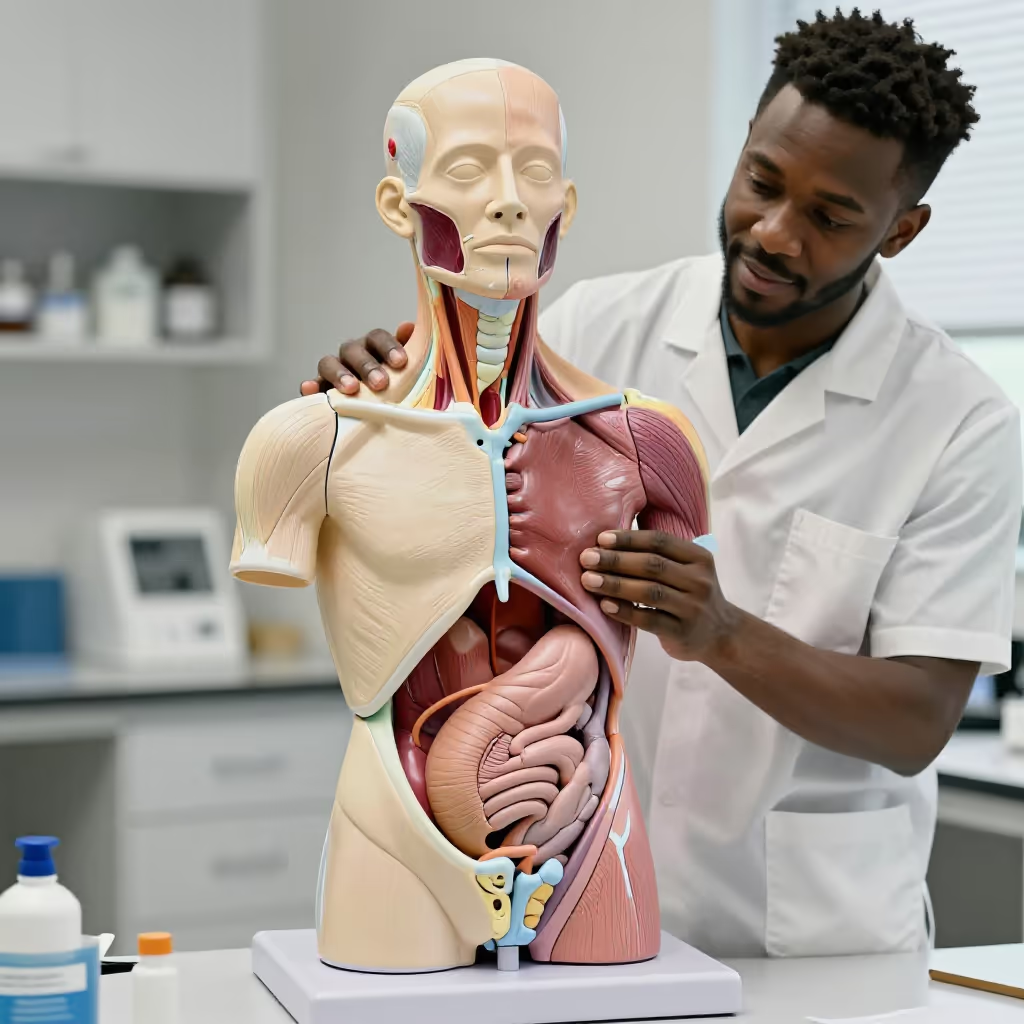
Bei dieser Übung spannt sie den Rumpf zwischen Schultern und Hüfte an.
During this exercise, she engages her torso between her shoulders and hips.
Bei dieser Übung spannt sie den Körper zwischen Schultern und Hüfte an.
During this exercise, she engages her body between her shoulders and hips.