

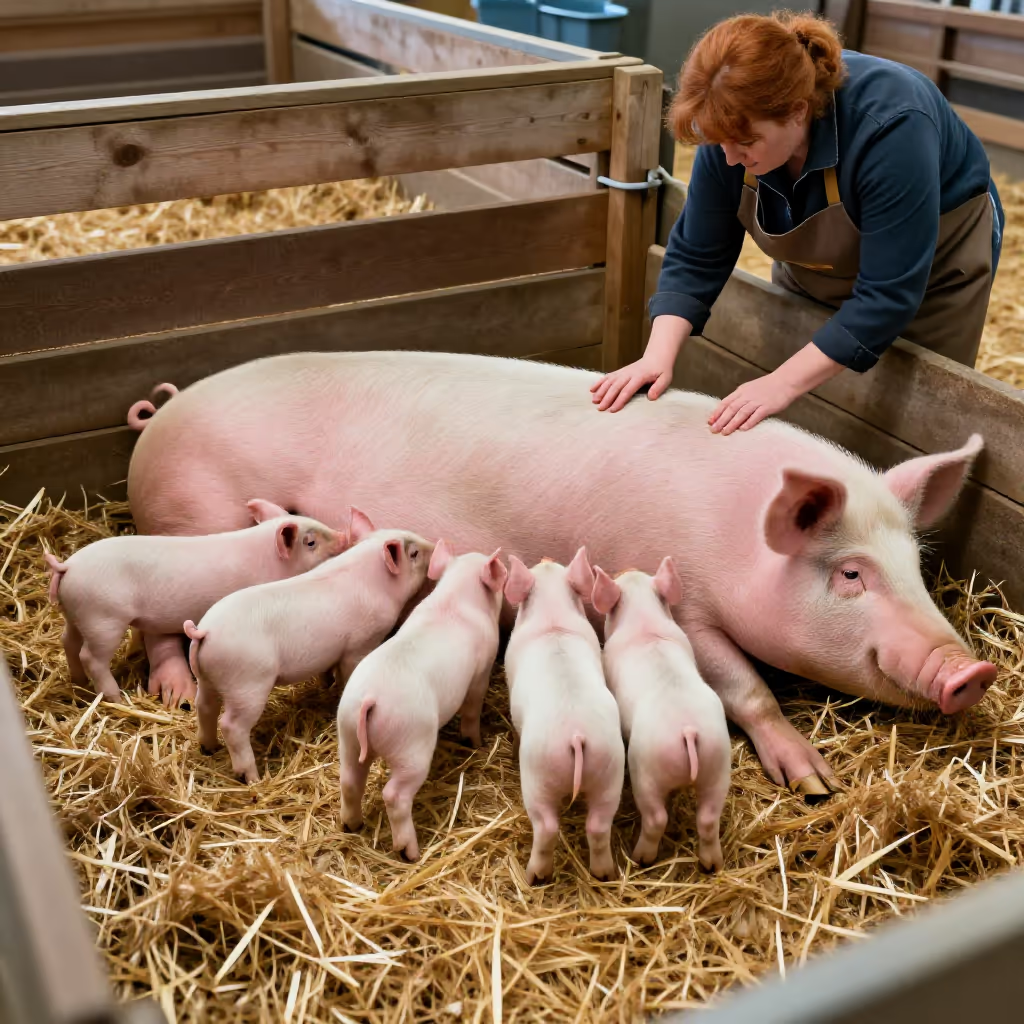
die Sau
sow
A female domestic pig, especially one that has already given birth to piglets.
EXAMPLE
Auf dem Bauernhof hat die Sau letzte Woche zehn Ferkel bekommen.
On the farm, the sow had ten piglets last week.
sow / pig
Loading your saved state.
sow
A female domestic pig, especially one that has already given birth to piglets.
Auf dem Bauernhof hat die Sau letzte Woche zehn Ferkel bekommen.
On the farm, the sow had ten piglets last week.

pig
A crude insult for a person who is seen as messy, dirty, or morally bad.
Räum endlich dein Zimmer auf, du faules Schwein!
Clean up your room already, you lazy pig!

not a soul
A colloquial, crude expression meaning 'absolutely nobody'.
Keine Sau hat sich dafür interessiert, was ich zu sagen hatte.
Not a soul was interested in what I had to say.

absolutely awful
A colloquial, crude expression used to say that something is of extremely poor quality or unacceptable.
Das Benehmen der Fans im Stadion war wirklich unter aller Sau.
The fans' behavior in the stadium was absolutely awful.

to let loose
A colloquial expression meaning to celebrate wildly and without restraint, or to blow off steam.
Nach den Prüfungen wollen wir am Wochenende mal so richtig die Sau rauslassen.
After the exams, we want to really let loose this weekend.
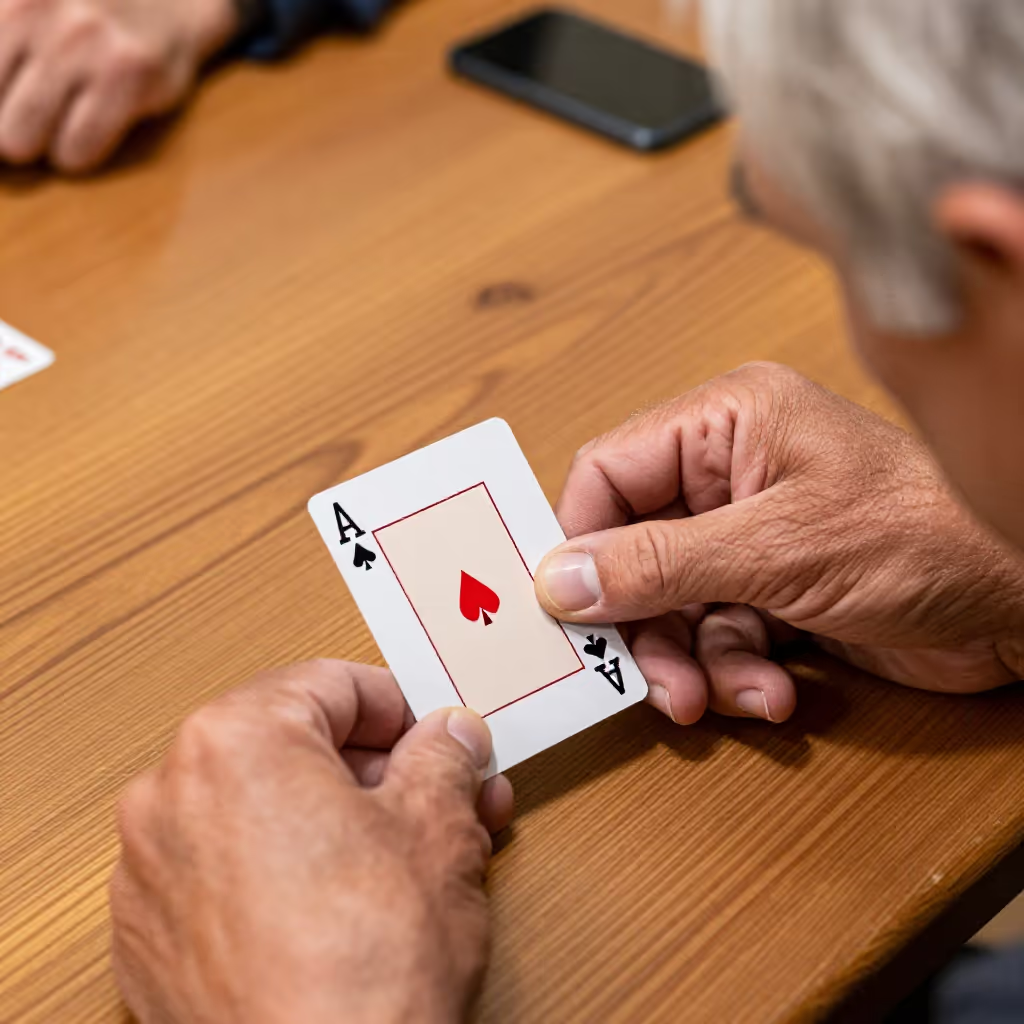
ace
The highest playing card, the ace, in certain German card games such as Schafkopf or Skat.
Er hat den Stich mit der Eichel-Sau gewonnen.
He won the trick with the ace of acorns.
Apart from the meanings as an animal and as a playing card, 'Sau' (sow/pig) is used in most expressions as crude colloquial language. You should use the word only in very informal situations and with caution.
Sein Verhalten war wirklich unter aller Sau.
His behavior was really absolutely awful.
The prefix 'sau-' is used colloquially to intensify adjectives or adverbs, similar to 'very'. It is considered crude and very informal.
Zieh dich warm an, draußen ist es saukalt.
Dress warmly; it's damn cold outside.
The expression 'keine Sau' (not a soul / nobody) is a very colloquial and crude way to say 'niemand' (nobody). It is often used to express annoyance or frustration.
Ich habe stundenlang aufgeräumt, aber keine Sau hat es bemerkt.
I cleaned up for hours, but not a soul noticed.
The expression 'unter aller Sau' (absolutely awful / below all standards) means that something or someone is of extremely poor quality or unacceptable. The phrase is very colloquial.
Der Service in diesem Hotel war unter aller Sau.
The service in this hotel was absolutely awful.
When someone 'die Sau rauslässt' (lets loose), that person celebrates very wildly and without restraint. This expression is informal and is often used in connection with parties.
Nach der Arbeit lassen wir heute Abend mal richtig die Sau raus!
After work tonight, we're really going to let loose!
In certain German card games such as Skat or Schafkopf, 'die Sau' is the colloquial name for the highest card, the ace. Outside this context, this meaning is not understood.
Mit der Gras-Sau hat er den letzten Stich gemacht.
With the ace of leaves, he took the last trick.
slut / slob
Schlampe is a highly insulting term for a woman and can accuse her in particular of having an allegedly immoral sex life. Sau is a crude insult for a person considered dirty, messy, or morally bad. Sau is not limited to women or to a sexual judgment.

Er beschimpfte den Mann wegen seiner völlig verdreckten Wohnung als Sau.
He called the man a pig because his apartment was completely filthy.
Er beschimpfte die Frau wegen ihrer wechselnden Partner als Schlampe.
He called the woman a slut because she had changing partners.