

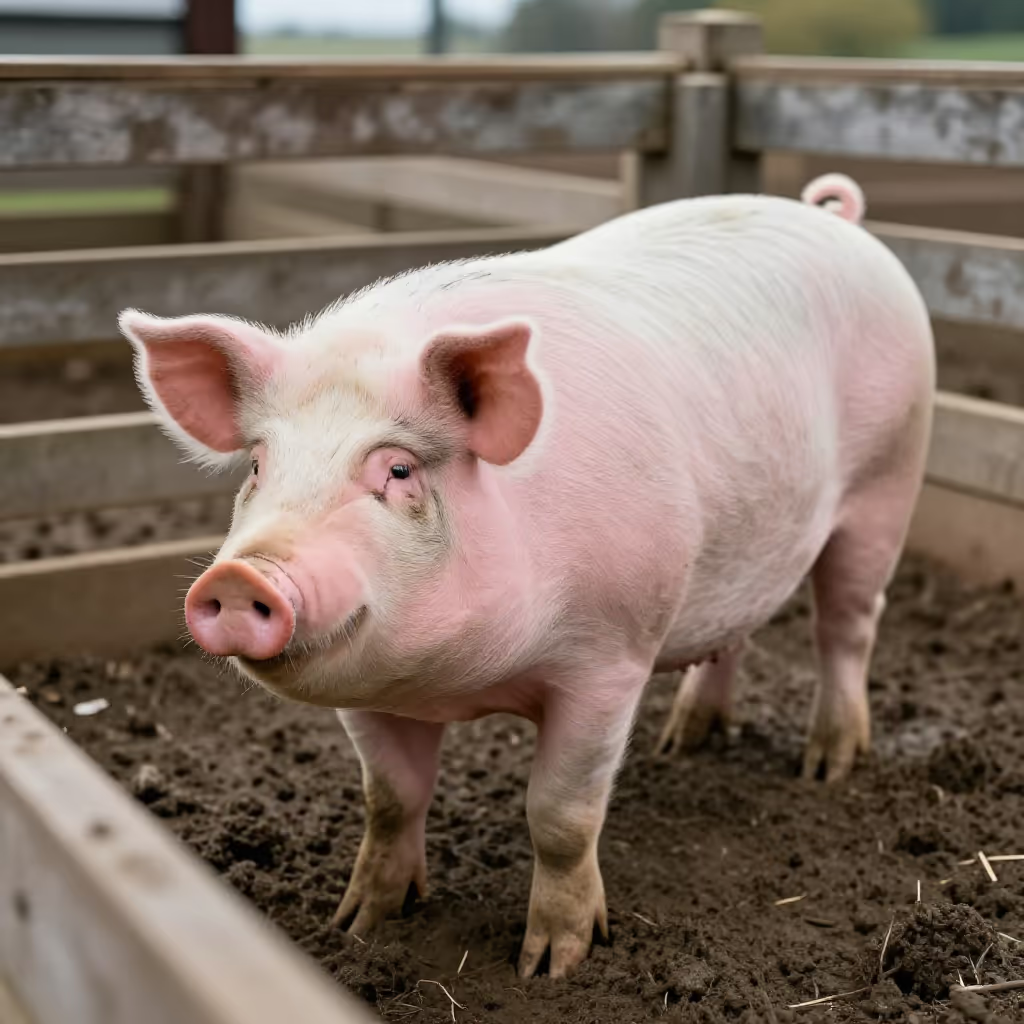
das Schwein
pig
A mammal kept as livestock to produce meat. It is known for its pink skin and curly tail.
EXAMPLE
Auf dem Bauernhof leben viele Schweine im Stall.
Many pigs live in the stable on the farm.
pig
Loading your saved state.
pig
A mammal kept as livestock to produce meat. It is known for its pink skin and curly tail.
Auf dem Bauernhof leben viele Schweine im Stall.
Many pigs live in the stable on the farm.

pig
A derogatory term for a person who behaves in an unclean, messy, or morally bad way.
Sei nicht so ein Schwein und räum endlich dein Zimmer auf!
Don't be such a pig and finally clean up your room!

to be lucky
A colloquial expression meaning to have unexpected luck.
Ich habe die Prüfung nur knapp bestanden, da habe ich echt Schwein gehabt.
I only just passed the exam; I was really lucky there.
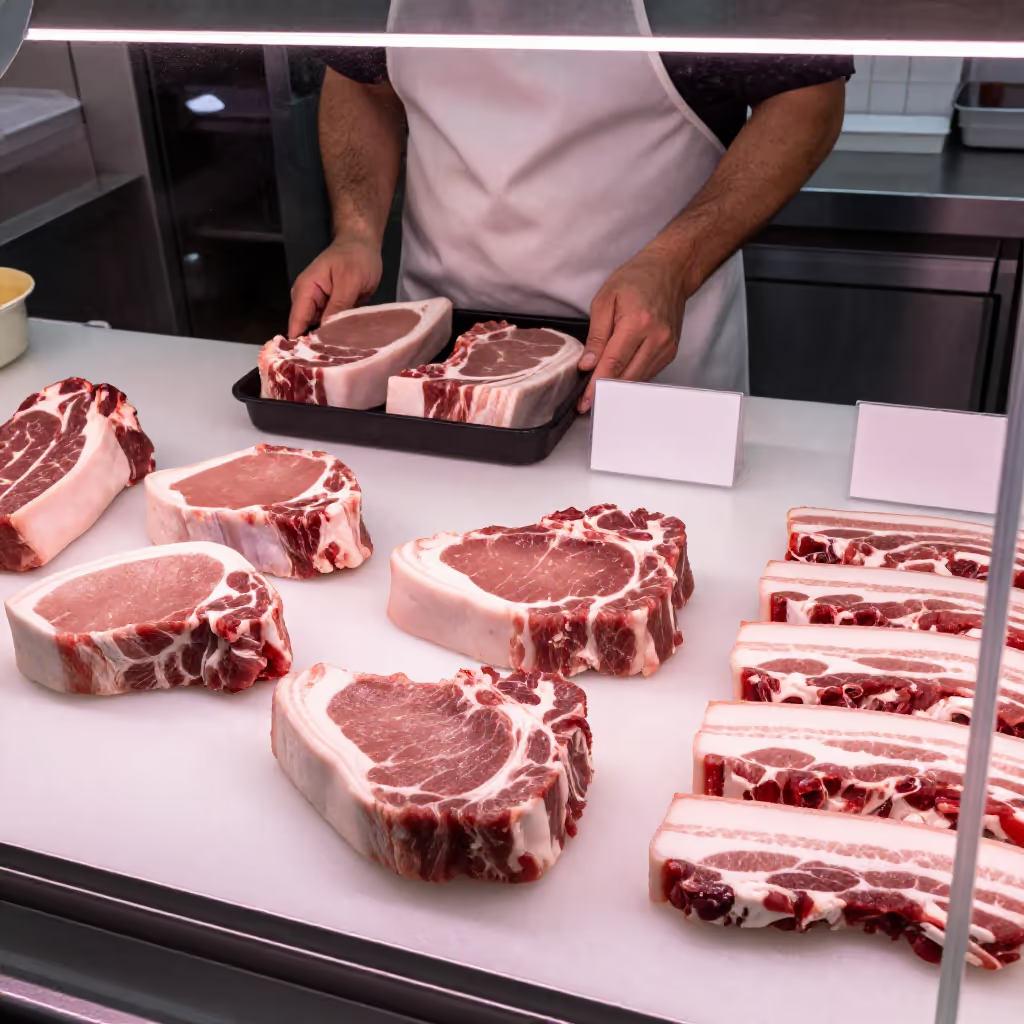
pork
The meat from a pig that is used as food; pork.
Für das Gulasch nehme ich am liebsten Schwein, weil es so zart wird.
For goulash, I like using pork best because it turns out so tender.
The word 'Schwein' (pig) is the basis for many compound nouns. They often describe things related to the animal or its meat, such as 'Schweinebraten' (roast pork), 'Schweinestall' (pigsty), or 'Wildschwein' (wild boar).
Am Sonntag gibt es bei uns oft Schweinebraten mit Klößen.
On Sundays, we often have roast pork with dumplings.
When 'Schwein' (pig) is used as an insult for a person, it often appears in direct address or with an article. It is a very strong and colloquial insult.
Du Schwein! Warum hast du das getan?
You pig! Why did you do that?
The colloquial idiom 'Schwein haben' (to be lucky) is fixed and means 'Glück haben' (to be lucky). The person who is lucky is the subject of the sentence. The expression is often used in the perfect tense.
Ich habe den letzten Zug noch erwischt, da habe ich wirklich Schwein gehabt!
I still caught the last train; I was really lucky!
The idiom 'Schwein haben' (to be lucky) comes from the fact that the pig is considered a symbol of luck in German culture. A 'Glücksschwein' (lucky pig) is a popular gift for New Year.
Zum neuen Jahr hat sie mir ein kleines Marzipan-Schwein geschenkt.
For the New Year, she gave me a little marzipan pig.
You can tell from context whether the animal or the meat is meant. Verbs like 'essen' (to eat), 'kaufen' (to buy), or 'zubereiten' (to prepare) point to the meat, while 'im Stall leben' (to live in the stable) or 'auf dem Bauernhof' (on the farm) refer to the animal.
Ich esse kein Schwein, sondern nur Geflügel.
I don't eat pork, only poultry.
sow / pig
Sau and Schwein can be used as insults for a dirty or morally bad person. Sau usually sounds cruder and often draws attention to messiness or dirt, while Schwein more often expresses general moral condemnation. Choose Sau for a particularly harsh insult and Schwein for broader disapproval.

Du bist ein Schwein, weil du deine Freunde absichtlich belogen hast.
You're a pig because you deliberately lied to your friends.
Du bist so eine Sau, überall in deinem Zimmer liegen schmutzige Sachen.
You're such a pig; dirty things are lying all over your room.