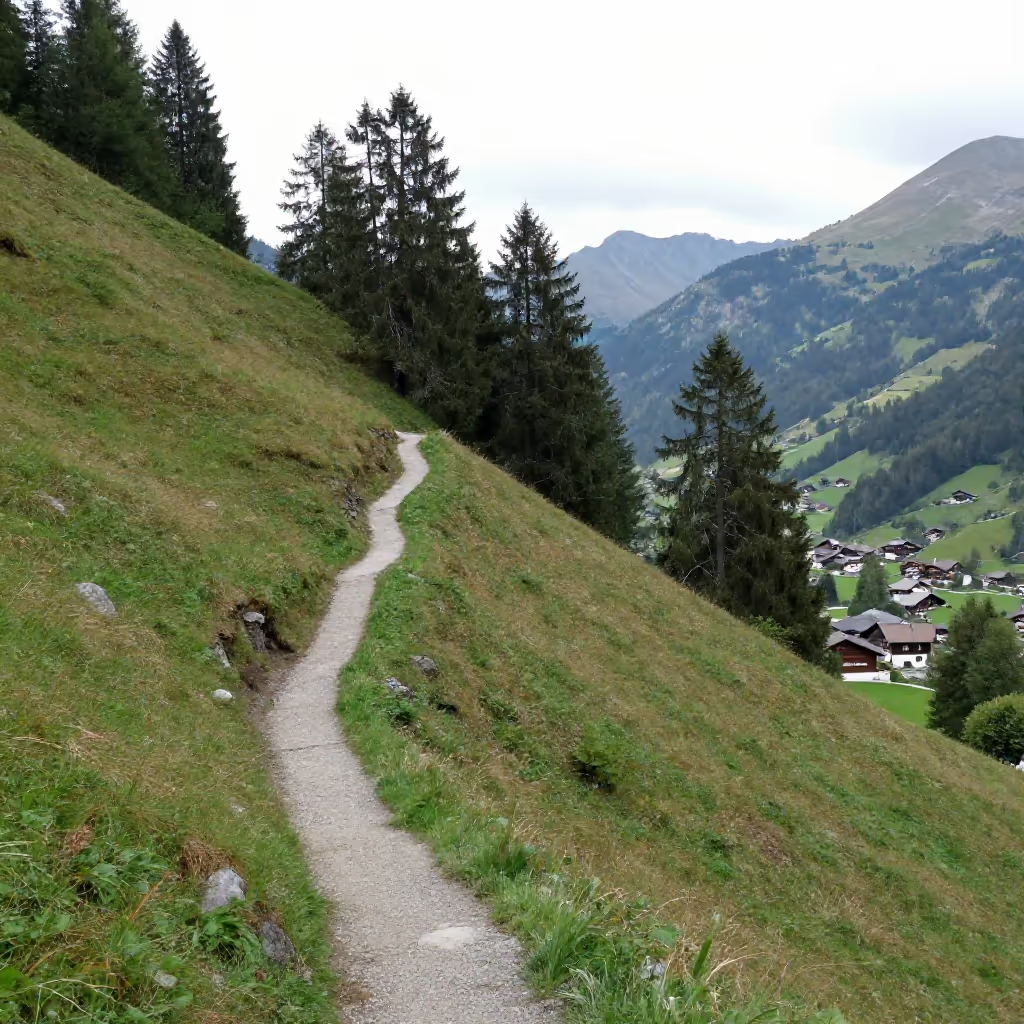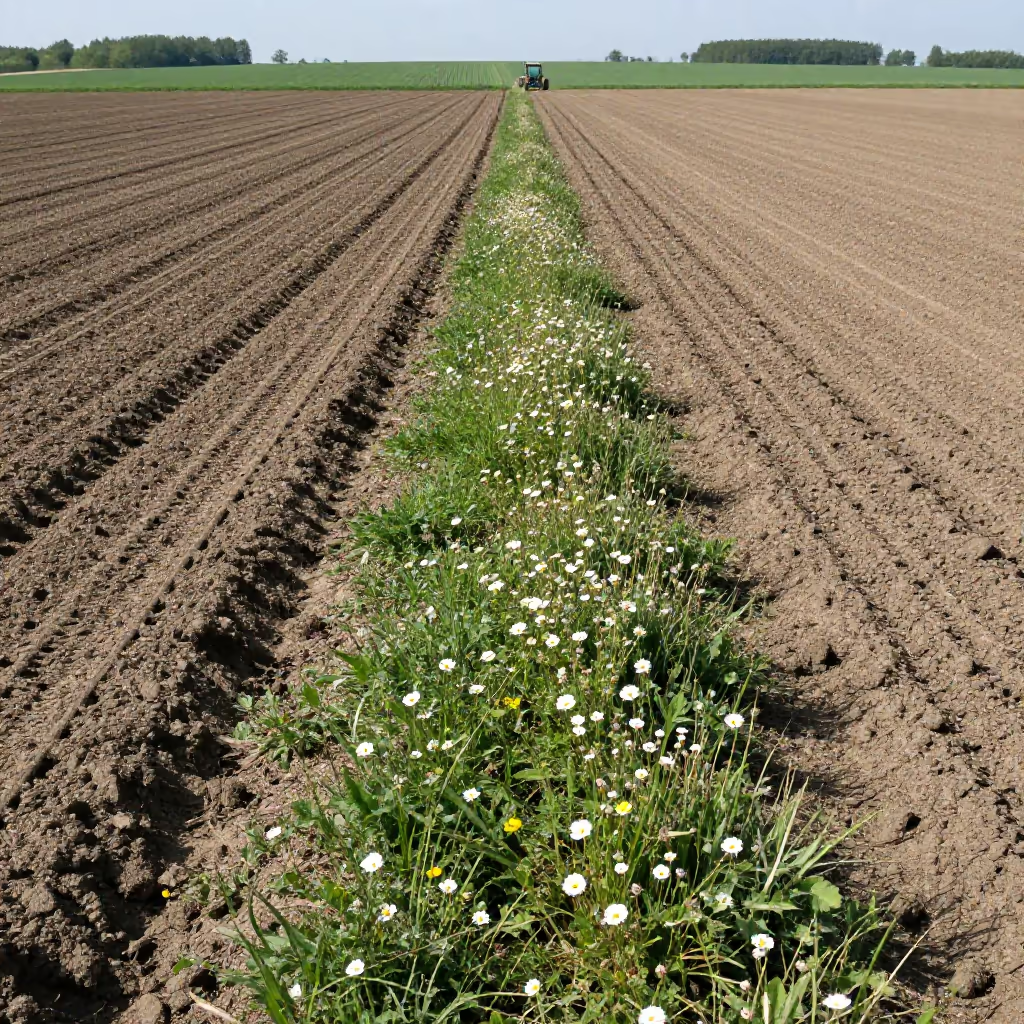
A narrow, undeveloped strip of land, usually covered with grass or wild herbs, that serves as a boundary between two fields or plots of land.
example
Am Rain zwischen den Feldern wachsen Mohnblumen und Kornblumen.
Poppies and cornflowers grow along the field boundary between the fields.
Usage tips
False friend
'Der Rain' has nothing to do with the English word 'rain' (Regen). It refers to a strip of grass that often serves as a boundary between fields.
EXAMPLE
Die Kinder pflückten bunte Blumen am Rain.
The children picked colorful flowers along the field boundary.
Register: literary
The word 'Rain' has become rare in everyday language. Today you mainly find it in literature, in poems, or in texts that describe a rural, nature-oriented atmosphere.
EXAMPLE
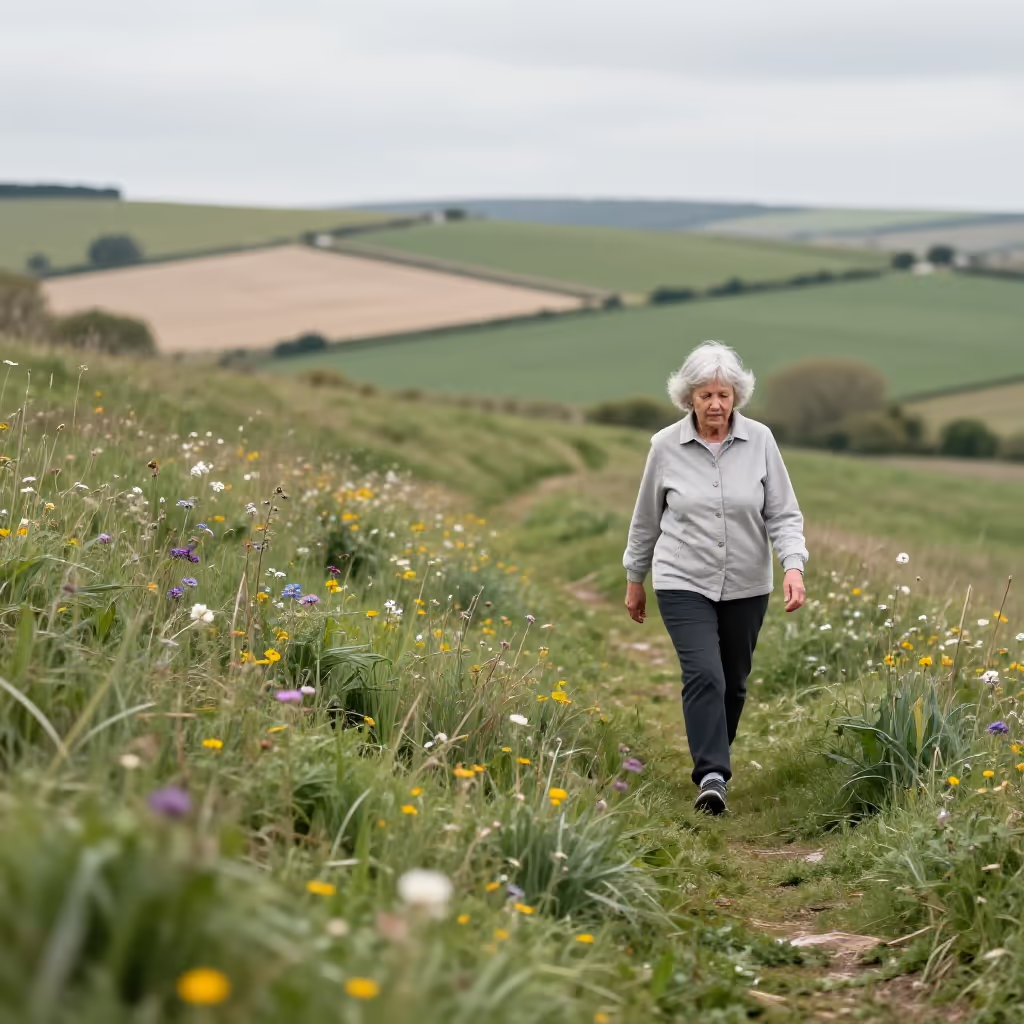
Der Wanderweg führte an einem langen, blühenden Rain entlang.
The hiking trail led along a long, blooming field boundary.
Typical collocations
'Rain' is often used with prepositions that describe a position at a boundary, for example 'am Rain' (along/at the field boundary) or 'auf dem Rain' (on the field boundary). It is also common to describe what grows there.
EXAMPLE
Am Rain wuchsen viele Wildkräuter.
Many wild herbs grew along the field boundary.
Compare with
near_synonym · confusable
Rain vs Rand
edge / margin
'der Rand' and 'der Rain' can both have to do with a boundary. 'der Rand' is a very general word for the outer edge of almost anything. 'der Rain' is much more specific: it usually means a narrow, overgrown strip of land between fields or plots of land. Learners can easily confuse the words because they look similar. In normal everyday situations, 'Rand' is almost always correct; 'Rain' fits mainly in rural or older texts.
Rain
Zwischen den zwei Feldern wächst Gras auf dem alten Rain.
Grass grows on the old field boundary between the two fields.
Rand
Ich schreibe die Telefonnummer an den Rand des Notizzettels.
I write the phone number in the margin of the note.